IN Brief:
- PEJ and Westinghouse–Bechtel signed a letter of intent covering further long-lead procurement planning.
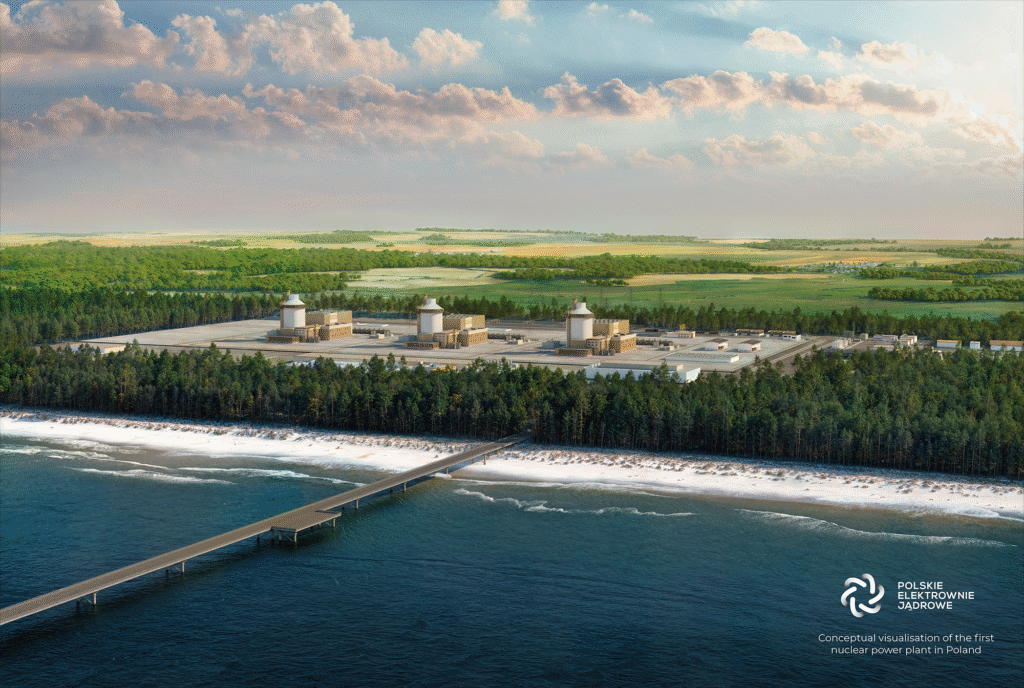
- Poland’s planned first nuclear station at Lubiatowo-Kopalino would use three AP1000 reactors.
- Individual orders and the complete EPC contract remain separate steps, with first electricity targeted for 2036.
Polskie Elektrownie Jądrowe (PEJ) has signed a letter of intent with the Westinghouse–Bechtel consortium concerning further procurement of components with long manufacturing lead times for Poland’s first nuclear power station. The proposed work would expand activities under the parties’ Engineering Development Agreement, particularly for the initial AP1000 unit at Lubiatowo-Kopalino in Pomerania. The letter was signed during the Partnership for Transatlantic Energy Cooperation ministerial meeting in Warsaw; individual purchase orders and the main construction contract remain separate steps.
PEJ is developing a three-reactor AP1000 station with approximately 3.75GWe of combined generating capacity. Westinghouse supplies the reactor technology and Bechtel is the construction partner in the consortium. The letter of intent establishes a basis for negotiating additional early procurement work within the existing development agreement. It does not constitute a signed engineering, procurement and construction contract for the whole plant, nor does it mean that all components identified for potential purchase have already entered manufacturing.
Large nuclear projects require decisions about certain components before all on-site construction activities begin because manufacturing schedules can extend over several years. Reactor containment structures and major prefabricated modules require specialised production facilities, quality documentation and tightly controlled fabrication procedures. Ordering work too late can put pressure on the overall project schedule, but placing orders early also requires clarity about technical specifications and the allocation of commercial risk. The latest agreement addresses the mechanism for taking additional procurement work forward within the existing project framework.
Previous procurement work has already covered identified components for the first reactor, including prefabricated structural modules known as CA02, CA03 and CA05. In October, PEJ and Westinghouse moved forward on the first long-lead purchasing activities under the existing engineering framework. Those steps allow engineering definitions, supplier qualifications and contractual arrangements to advance before the full construction agreement is executed. The new Warsaw letter concerns an extension of that process rather than a wholly separate reactor programme or an indication that the complete nuclear island has been ordered.
An AP1000 reactor building incorporates substantial prefabricated steel and concrete assemblies. Fabrication can take place in specialist factories before completed sections are transported to the site, positioned and integrated with other building and mechanical systems. The approach changes the balance of work between factory production and field assembly, but it introduces demanding requirements for dimensional accuracy, traceability and the management of interfaces between modules. Conditional purchase orders allow suppliers to begin defined preparatory steps without implying that every element of fabrication has received an unconditional authorisation.
Polish manufacturers seeking a role in nuclear-class procurement must meet demanding project-specific quality requirements, including material certification, inspection and documented production traceability. Fabrication records are needed to demonstrate that parts delivered years after their original order comply with the approved design and manufacturing processes. Early contracts can give suppliers time to qualify their systems and facilities, although work awarded for one reactor does not establish a guaranteed role on the remaining units. The purchase programme must therefore align local supplier development with the technical requirements and delivery dates set by the reactor design.
Poland selected Westinghouse’s technology for its first nuclear power station in 2022 and has since advanced engineering and site preparation work. The government’s updated nuclear programme describes a planned 3.75GWe development at Lubiatowo-Kopalino. The project company has also submitted documentation for nuclear construction licensing, with the Polish nuclear regulator handling that process separately from procurement agreements. Buying long-lead equipment cannot replace the permits required to build and operate a nuclear installation, and the two workstreams will need to remain aligned as the design develops.
Negotiations over the principal engineering, procurement and construction contract are continuing alongside the component work. PEJ and Westinghouse–Bechtel agreed the main commercial terms earlier in 2026, but detailed provisions still require agreement. Project partners currently anticipate a final EPC contract in 2027 and first electricity in 2036. Those dates remain dependent on the nuclear regulatory process, final contracting, manufacturing, construction and commissioning. Procurement preparations can reduce future schedule pressure, but they do not eliminate those dependencies.
The Warsaw letter allows the parties to define further early purchasing arrangements while the broader project continues through licensing and contract negotiations. Long-lead items require settled technical specifications, supplier allocation, manufacturing oversight and transport planning well before installation begins. The next measurable steps will be the execution of specific orders and the start of qualified fabrication, followed by delivery against the construction programme. Until those steps occur, the letter represents a procurement planning milestone rather than evidence that the additional equipment has been purchased or produced.