IN Brief:
- EDF power solutions has acquired the proposed 250 MW/1,000 MWh Holloway battery from SynCo Global.
- The four-hour facility would sit in New South Wales’ New England Renewable Energy Zone.
- The planning application remains at the environmental impact statement stage; 2029 operation is a target.
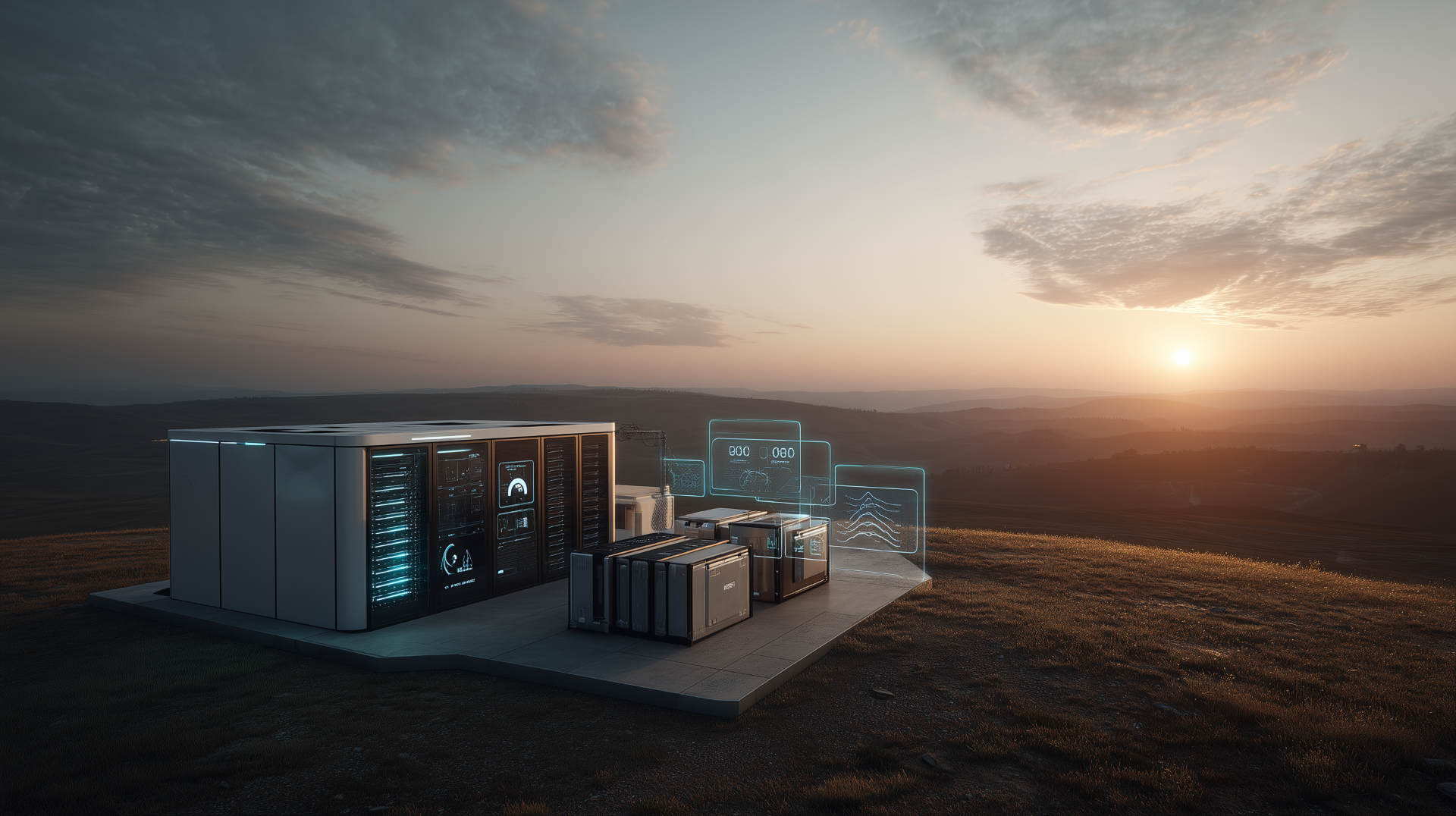
EDF power solutions has bought the proposed Holloway battery energy storage project near Armidale, New South Wales, from developer SynCo Global. The planned facility is rated at 250 MW with 1,000 MWh of storage, equivalent to a nominal four-hour discharge at full output. EDF has acquired a project still in development: environmental assessment, an investment decision and construction are separate steps that have not yet been completed.
Holloway lies within the New England Renewable Energy Zone, where new wind and solar capacity is expected to make dispatchable storage increasingly useful. The site is close to electricity grid infrastructure, according to EDF, but the acquisition statement does not identify the equipment supplier or confirm the final connection arrangement. The proposed location and capacity are therefore established project parameters, while much of the electrical design remains to be determined during development.
A rating of 250 MW describes the maximum nominal discharge power, while 1,000 MWh is the amount of energy associated with the proposed storage system. Dividing the latter by the former gives four hours at rated power under the design assumptions. Usable output during real operation may be lower because the power conversion system and battery cells incur losses, some state of charge must remain within operating limits, and grid constraints can affect permitted dispatch.
A grid-connected battery can charge when electricity is relatively abundant and discharge during periods of higher demand or tighter supply. This does not create new generation capacity, and the energy delivered will be less than the energy originally used to charge the cells because losses occur in the battery, power conversion equipment and associated electrical systems. Storage can nevertheless change when renewable electricity is available to the system and may offer other network services if its control systems and connection agreements support them.
EDF is preparing for the project’s Environmental Impact Statement to be placed on public exhibition in the coming months. It targets a final investment decision in late 2027 and operation in 2029, subject to satisfactory progress through development. Those dates remain proposals rather than permissions or contracts. An acquisition can fund further engineering and planning work without binding the new owner to a construction timetable or confirming that the proposed capacity will be delivered.
The New South Wales planning portal lists Holloway under application SSD-94769463 at the ‘Prepare EIS’ stage. Its current description covers a 250 MW/1,000 MWh battery and associated infrastructure in the Armidale Regional area. An environmental impact statement will form part of the assessment process, followed by public exhibition, responses and a decision. The portal does not show development consent as granted, so construction cannot yet be reported as approved by the state planning authority.
At this scale, the eventual engineering scope would typically extend beyond battery containers to bidirectional power converters, transformers, high-voltage switchgear, protection systems, control and communications, fire safety provisions and the transmission or distribution connection. Those are standard functional requirements for large electrical storage installations, rather than a confirmed list of Holloway’s selected equipment. Procurement documentation will be needed to establish which technical architectures and suppliers the project actually adopts.
Connection studies will also need to establish how the facility interacts with the surrounding grid. Charging adds demand when the battery imports electricity; discharging creates generation at the point of connection. Protection coordination, voltage behaviour, system strength and the response of power converters to disturbances can influence the permissible operating range. These questions are particularly relevant in renewable energy zones, where large numbers of inverter-connected resources may share nearby transmission infrastructure.
Dispatch strategy will influence how the planned battery’s energy capacity is used. A four-hour rating does not establish a daily charging cycle, a guaranteed operating lifetime or a particular revenue stream. The operator could potentially provide energy shifting and services allowed under its connection and market arrangements, but the commercial model will depend on technical limits and contracts not announced by EDF. Details of battery chemistry, converter technology and operational warranties will be needed for a more precise assessment.
Holloway remains at an early development stage despite its substantial proposed capacity. EDF can now direct work on approvals, project economics and equipment specifications, but its acquisition has not itself committed construction expenditure or established an energisation date. A final investment decision will test whether the planning position, connection arrangements and commercial assumptions support the proposed 250 MW development.
EDF’s immediate tasks at Holloway are to progress the environmental assessment and define the technical and commercial basis for an investment decision. Grid studies, equipment procurement and construction would follow only if the necessary approvals and commitments are secured. The announced 2029 operational target will become firmer when those steps are complete; for now, the confirmed event is EDF’s acquisition of a proposed 250 MW/1 GWh storage asset.