IN Brief:
- Statkraft has completed commissioning of the first 50MW phase of Neilston Greener Grid Park near Paisley, Scotland.
- Grid-forming inverter technology enables the battery to support network voltage and frequency during changes in electricity system conditions.
- The wider site has approval for capacity of up to 750MW, but only the initial 50MW installation is confirmed operational.
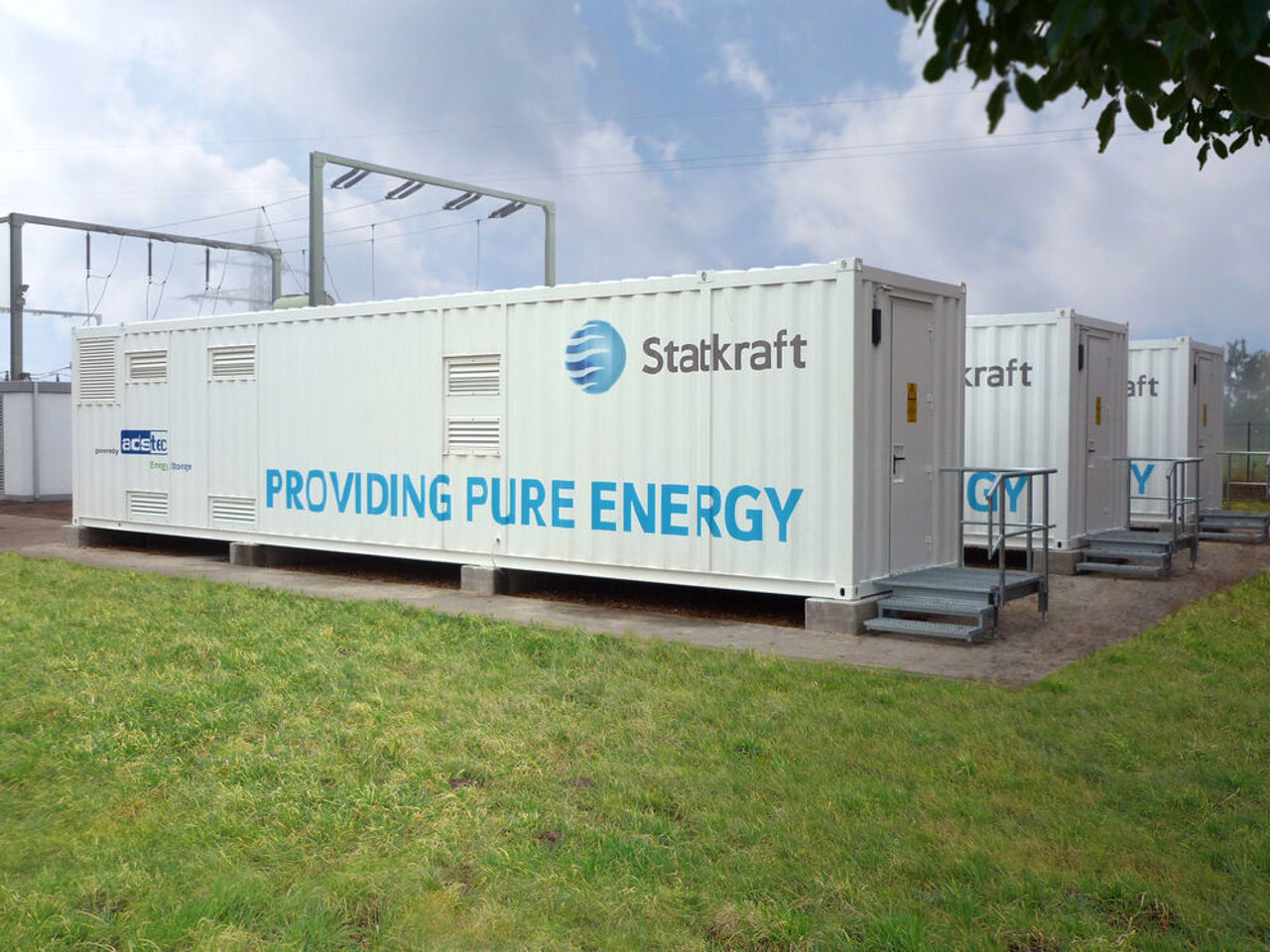
Statkraft has completed commissioning of the first phase of Neilston Greener Grid Park in Scotland, bringing a 50MW battery installation with grid-forming capabilities into commercial operation.
The development, located near Paisley in Renfrewshire, is Statkraft’s first operational grid-forming battery project and one of the first installations of its type to enter commercial service in the UK. The company confirmed the milestone in announcements dated 12 and 13 November.
Neilston combines battery energy storage with power conversion equipment capable of providing network stability services. Its grid-forming technology is designed to support electricity system operation as the proportion of generation connected through power electronic converters increases.
The first phase was consented in April 2022, with construction beginning in August 2023. The project has since progressed through equipment installation, electrical connection, and commissioning before entering commercial operation.
Statkraft has also obtained approval to expand the development to an installed battery capacity of up to 750MW. That consent applies to the wider proposed installation and should be distinguished from the 50MW first phase now in service.
The Scottish Government’s Energy Consents Unit records the larger scheme as consented, while Statkraft has not established a timetable for completing the expansion in its latest operational announcement.
The distinction between installed and consented capacity is particularly important for battery projects. A planning approval establishes permission for development within specified conditions, while an operational power rating relates to equipment that has been installed, connected, and commissioned.
Neilston’s initial 50MW rating describes its electrical power capability. Statkraft has not published the usable energy capacity of the commissioned installation in its latest announcement, preventing a reliable calculation of its maximum continuous discharge duration.
Its grid-forming capability provides an additional operating function beyond the storage and release of electricity. Conventional grid-following inverters generally synchronise their output with an established network voltage and frequency, using the existing electricity system as their operating reference.
Grid-forming converters instead use their controls to establish an electrical voltage waveform and maintain a defined relationship between output voltage, frequency, and power. Their response can support system stability during disturbances or rapid changes in generating output and demand.
The technology is becoming increasingly important as conventional synchronous generating machines contribute a smaller proportion of electricity production. Those machines contain rotating mass that stores kinetic energy, allowing their mechanical speed to change temporarily when electrical generation and demand become unbalanced.
This inertial response helps moderate changes in electricity system frequency. Synchronous generators also contribute to network strength and fault behaviour through their electrical characteristics, although their response depends on the condition and operation of the connected equipment.
Power electronic converters behave differently. Their response to changes in network conditions is determined by their control systems, current limits, available energy, and associated protection arrangements.
Grid-forming battery converters can be configured to deliver a rapid active power response, providing an electronically controlled contribution to frequency stability. Their voltage control behaviour can also support operation of the wider network, subject to the equipment’s specified capabilities.
The battery supplies the energy required for changes in active power output. The amount of energy available, its state of charge, converter current limits, and operating controls determine how long different services can be sustained.
Grid-forming inverters do not necessarily reproduce every characteristic of a synchronous machine. Their fault current contribution, short-term overload capability, and response to severe network disturbances depend on converter design and control settings, making technical qualification an important part of their deployment.
Integrating these capabilities requires coordination between the battery units, power conversion systems, transformers, protection equipment, and the grid connection. The control system must maintain stable operation across changing voltage, frequency, and power conditions without exceeding equipment limits.
That combination allows battery storage to participate in a wider range of electricity system services. Energy can be stored and released according to operating requirements, while grid-forming controls provide a separate means of supporting the electrical conditions needed for stable network operation.
The services delivered commercially depend on the contracts and technical requirements agreed with the relevant system operator. Statkraft has confirmed the operational status of Neilston’s grid-forming installation but has not published its full commissioning test results or a detailed schedule of contracted stability services.
Neilston forms part of a broader programme of grid stability developments being delivered by the company. Statkraft has a further grid-forming battery scheme under construction at Coylton in East Ayrshire and synchronous compensator projects at Swansea and Necton.
Synchronous compensators use rotating electrical machines to provide network support without operating as conventional electricity generating stations. They offer a different technical approach to maintaining system strength and voltage stability, complementing the capabilities being developed through grid-forming battery installations.
Across the UK and Ireland, Statkraft’s battery and synchronous compensator portfolio exceeds 2GW when operational and developing schemes are considered together. That aggregate figure represents the wider project portfolio rather than generating or storage capacity already commissioned.
The company has invested more than £2bn in UK renewable energy infrastructure since entering the market in 2006. Its activities span hydropower, wind, solar, battery storage, grid stability infrastructure, and electricity market operations.
The completed Neilston installation adds to the equipment available to support the operation of Great Britain’s changing electricity system. Increasing volumes of renewable generation will require suitable network capacity and stability services, with different technologies contributing according to their operating characteristics.
Statkraft has also distributed more than £50,000 through community benefit arrangements associated with Neilston. Its approach provides support during the construction phase as well as after projects become operational.
Commissioning of the 50MW first phase establishes Neilston as an operational grid-forming battery facility. Any future expansion towards the approved 750MW capacity will require further project delivery decisions, equipment installation, and commissioning before additional capacity can be counted as operational.