IN Brief:
- Baker Hughes and Türkiye's national oil company TPAO have agreed to assess enhanced geothermal system opportunities across the country.
- Geological evaluation using TPAO and MTA data will precede potential well design, pilot drilling, and commercial development.
- Türkiye has approximately 1.8GW of installed conventional geothermal generating capacity, while the agreement does not yet establish individual EGS projects.
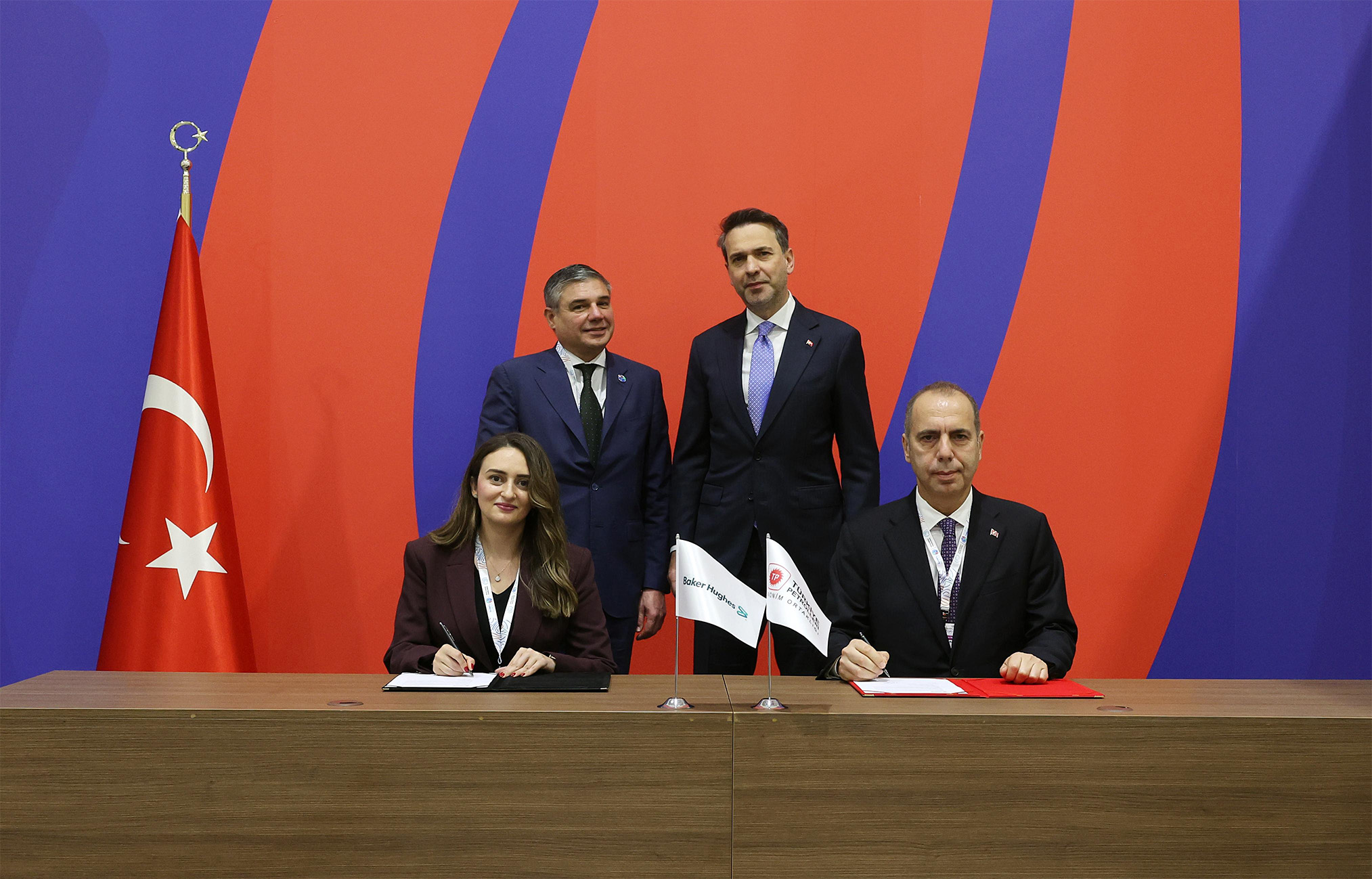
Baker Hughes and Türkiye’s national oil company, Türkiye Petrolleri Anonim Ortaklığı (TPAO), have agreed to investigate enhanced geothermal systems (EGS), establishing a technical programme intended to extend electricity production into geothermal resources that cannot readily be developed using conventional methods.
The agreement was signed on 11 November during COP31 in Antalya and announced the following day. It establishes a phased approach beginning with a nationwide assessment of geological resources, followed by potential well design, pilot drilling, and commercial development if suitable opportunities are identified.
Initial investigations will use geological and subsurface information held by TPAO and the General Directorate of Mineral Research and Exploration (MTA). Baker Hughes will contribute expertise in subsurface evaluation, drilling, well completions, electricity generation technology, and digital systems.
Türkiye already operates approximately 1.8GW of geothermal generating capacity, making it Europe’s largest geothermal electricity producer and the fourth largest worldwide, according to Baker Hughes. Existing installations predominantly exploit conventional geothermal resources, where sufficient underground heat, fluid, and permeability occur naturally.
Enhanced geothermal systems are designed to overcome limitations associated with those natural conditions. Geological formations may contain temperatures suitable for electricity generation while lacking the interconnected fractures or circulating fluids needed to recover heat at commercially useful rates.
EGS technology creates or improves circulation pathways within suitable hot rock. Fluid is injected into the target formation under controlled conditions, allowing existing fractures to reopen or additional pathways to develop. Water can then circulate through the heated rock and return to the surface through production wells.
The recovered thermal energy is transferred to generating equipment. Depending on the temperature and characteristics of the produced fluid, the plant may use steam directly or transfer heat through an exchanger to a secondary working fluid that drives a turbine.
After heat extraction, geothermal fluid can be returned to the reservoir through injection wells. Maintaining that circulation is fundamental to plant performance because electrical output depends on both the quantity of heat recovered and the efficiency with which it is converted into electricity.
The proposed Turkish programme begins with resource characterisation rather than construction. Geological information must establish whether candidate formations have suitable temperatures, accessible depths, and rock properties capable of supporting the development of an engineered geothermal reservoir.
Subsurface stress conditions and existing fracture networks will influence the technical assessment. They affect how injected fluid moves through the formation, how circulation pathways might develop, and whether production and injection wells can maintain the required hydraulic connection.
Reservoir permeability is particularly important. Even where underground temperatures are high, an insufficient flow rate can restrict the amount of thermal energy reaching the surface. Developing a larger connected rock volume can improve heat recovery, although its performance depends on the resulting flow paths and their long-term behaviour.
The next assessment stage will examine potential well locations and designs. Drilling engineers must consider depth, borehole stability, rock characteristics, expected temperatures, casing specifications, and the equipment required to complete and operate wells under the anticipated reservoir conditions.
High-temperature operation introduces additional requirements for materials and well integrity. Casing, cementing, and completion components must withstand the thermal and mechanical conditions encountered during drilling, reservoir stimulation, and subsequent circulation.
Reservoir stimulation also requires monitoring and control. Changes in subsurface pressure and stress can produce induced seismic activity, making geological characterisation, operational monitoring, and appropriate mitigation procedures important considerations before a pilot project is authorised.
Fluid circulation must subsequently be assessed for its ability to transfer heat at the required rate without excessive pumping demand. The temperature of produced fluid, pressure losses through the reservoir, and energy consumed by circulation equipment all influence the electricity available for export.
These factors connect subsurface engineering directly with generating plant design. A resource with sufficient heat but inadequate circulation can require additional investment in wells or reservoir development, while the selected surface power conversion system must match the temperature and flow characteristics of the recovered fluid.
The commercial assessment will also depend on drilling expenditure. Next-generation geothermal projects are capital intensive, with the International Energy Agency identifying drilling and well costs as major components of overall project investment.
TPAO’s experience in geological exploration and well development provides an established technical foundation for the programme. Baker Hughes supplies capabilities across the drilling, completion, and power generation stages, enabling the partners to examine the resource and its potential electrical output within a coordinated engineering process.
Some technologies developed for oil and gas operations can support geothermal exploration and construction. Subsurface imaging, directional drilling, well integrity systems, and reservoir modelling have applications in both sectors, although geothermal projects introduce different thermal and operating requirements.
Commercial EGS installations could provide electricity independently of daily wind and solar conditions, subject to reservoir performance, generating equipment availability, and maintenance requirements. The ability to sustain output over long operating periods will depend on how effectively the engineered reservoir continues transferring heat.
Connection to the electricity network would introduce additional design responsibilities. Generating equipment must operate within the receiving grid’s voltage, frequency, protection, and power quality requirements, with plant controls coordinated against the available connection capacity.
The Baker Hughes agreement does not identify individual project sites, generating capacities, investment commitments, or a timetable for pilot drilling. Those decisions will follow the resource assessment and evaluation of potential well designs.
The initial programme will therefore concentrate on establishing which geological formations warrant more detailed investigation. Successful pilot work would provide operating data on drilling performance, reservoir circulation, heat recovery, and the cost of generating electricity before any commercial development decisions are taken.