
IN Brief:
- Nexans has completed factory acceptance testing of the 220kV subsea cable manufactured in Halden, Norway.
- The £900m-plus Orkney Link includes approximately 53km of subsea cable, 14km of underground cable, and two substations.
- Offshore installation is planned for 2027, with full energisation anticipated in 2028.
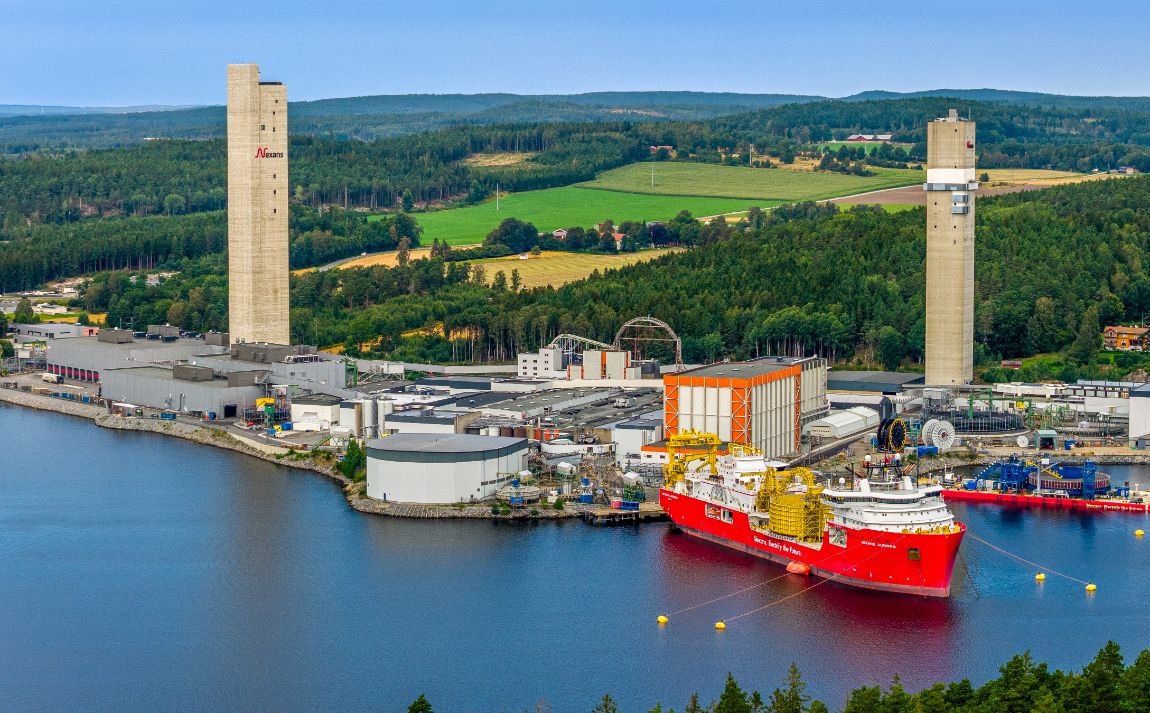
Nexans has completed factory acceptance testing of the 220kV subsea cable for the Orkney Link project, advancing construction of a new high-voltage alternating current (HVAC) transmission connection between the Orkney Islands and mainland Scotland.
The milestone follows more than a year of manufacturing at Nexans’ facility in Halden, Norway. The cable will form the offshore section of a transmission development being delivered by SSEN Transmission, with approximately 53km of subsea cable and capacity to accommodate up to 220MW of renewable electricity.
Orkney Link will establish the islands’ first direct connection to Great Britain’s electricity transmission network. Its infrastructure includes a new substation at Finstown, approximately 14km of underground cable across Orkney to Warebeth, and a subsea route to a new substation at Dounreay in Caithness.
Successful factory acceptance testing confirms that the manufactured cable has satisfied the relevant pre-delivery requirements. Nexans has not published the individual test measurements or procedures, but the completed programme represents an important quality assurance milestone before the equipment is transported and installed offshore.
High-voltage subsea cables must preserve the electrical integrity of their insulation, conductors, screening systems, and protective components throughout manufacturing and installation. Defects that can be identified and addressed before deployment become considerably more difficult to investigate once cable sections have been laid beneath the seabed.
Factory acceptance testing therefore provides a defined opportunity to establish whether the manufactured product meets its contractual and technical requirements. It does not replace the subsequent testing required after transport, cable laying, jointing, termination, and connection to the electricity network.
The Orkney development uses alternating current rather than the high-voltage direct current technology employed on several longer British subsea transmission routes. Its electrical design must account for the characteristics of a 220kV cable system extending over a substantial offshore distance.
Alternating current cables generate capacitive charging current because of the electrical relationship between their conductors, insulation, and surrounding metallic screens. Charging current is present whenever the cable is energised, even when comparatively little active power is being transmitted.
As the length and operating voltage of an HVAC cable increase, the charging current can become an important design consideration. It contributes to conductor loading and reactive power requirements, influencing the capacity available for active electricity transfer under different operating conditions.
Voltage management and reactive power requirements must consequently be addressed in the wider network design. The final arrangements depend on cable parameters, transmission system characteristics, and the operating conditions expected at the connected substations. The latest Nexans update does not specify the individual compensation or voltage control equipment selected for Orkney Link.
The project’s 220MW capacity also describes a transmission capability rather than continuous renewable electricity production. Actual power flows will depend on connected generating capacity, electricity availability, system demand, and the operating limits established for the link.
Orkney has substantial wind and marine energy resources, but the existing electrical network restricts the amount of additional generating capacity that can be connected and exported. The new transmission route is intended to provide higher-capacity access to the mainland system, allowing further renewable developments to progress subject to their individual connection arrangements.
SSEN Transmission awarded the principal construction contracts in September 2024. Nexans was appointed to manufacture and install the cable system, while the Siemens Energy and BAM joint venture is delivering the substations and associated grid infrastructure. RJ McLeod was selected for underground cable ducting and related civil works.
The overall development represents an estimated investment exceeding £900m. The scale reflects the combined requirements of offshore cable manufacture and installation, underground works, high-voltage substations, and the infrastructure required to integrate the new connection with the existing network.
Construction is progressing on several fronts. In September 2026, SSEN Transmission and Nexans began installing the underground land cable across Orkney, with the route extending approximately 14km between Finstown and Warebeth, near Stromness.
The land cable programme involves 27 cable drums positioned along the route. Specialist winching equipment is being used to pull cables through ducts already installed, with the work proceeding in phases from the eastern section towards the western landfall.
These activities must be coordinated with the completion of cable joints, terminations, and the electrical infrastructure at the substations. Each construction package has its own installation sequence, but the individual components must ultimately form a continuous and appropriately protected transmission connection.
The new substations at Finstown and Dounreay provide the electrical interfaces between the cable system and the respective networks. Their construction involves civil structures, high-voltage equipment, protection systems, and control arrangements that must be completed before the link can enter service.
At the mainland end, the Dounreay infrastructure will connect Orkney’s new export route to the wider British transmission network. The substations are being delivered separately from the cable manufacturing programme, making coordination of the electrical interfaces and commissioning activities a significant part of the remaining work.
Offshore installation is scheduled for 2027. Nexans must transport the manufactured cable to the installation campaign and complete laying along the approved subsea route, with the necessary protection arrangements determined by the seabed conditions and engineering design.
The installation programme will have to accommodate the marine operating conditions and equipment requirements associated with deploying a high-voltage cable. Once laid, the offshore section must be connected to the land cables and substations before the completed system undergoes its final electrical checks.
SSEN Transmission anticipates full energisation in 2028. Factory testing confirms that the offshore cable has completed an important manufacturing stage, while cable laying, jointing, substation integration, and commissioning remain necessary before the new 220MW transmission route can enter operation.