IN Brief:
- ENGIE, Aeolus, and Orascom Construction have reached financial close on the 900MW Gulf of Suez 3 wind farm in Egypt.
- Goldwind will supply 86 turbines, while Orascom Construction will deliver the civil works, electrical balance of plant, and high-voltage substation.
- Commissioning of the first 300MW is scheduled for January 2028, with full commercial operation targeted for September 2028.
ENGIE, Aeolus, and Orascom Construction have reached financial close on the 900MW Gulf of Suez 3 wind farm in Egypt, securing the funding arrangements required to advance construction of one of Africa’s largest onshore wind developments.
The project is being delivered by Shokeir Wind Energy, a company owned by ENGIE (35%), Aeolus (40%), and Orascom Construction (25%). Financial close was achieved on 12 November and confirmed publicly the following day, following the start of construction activities in June 2026.
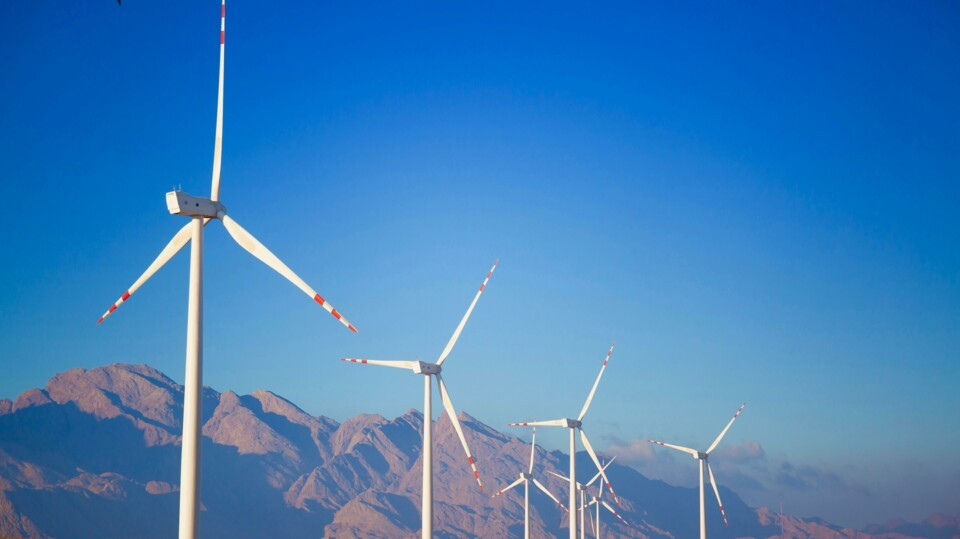
Located near Ras Shokeir in the Gulf of El Zayt area, approximately 300km southeast of Cairo, the wind farm will incorporate 86 turbines supplied by Goldwind. Each machine has a nominal generating capacity of 10.5MW, with the completed development planned to provide approximately 900MW of grid-connected capacity.
Construction will progress under a 25-year build-own-operate arrangement, supported by an electricity purchase agreement with the Egyptian Electricity Transmission Company (EETC). Egypt’s Ministry of Finance has guaranteed the transmission company’s obligations under the agreement.
The commercial structure provides the project company with a long-term arrangement for selling its electricity, supporting the non-recourse financing used to fund construction. The land is being made available through a 25-year usufruct agreement with Egypt’s New and Renewable Energy Authority.
Non-recourse project financing has been arranged through the Japan Bank for International Cooperation, Proparco, FMO, Société Générale, Crédit Agricole Corporate and Investment Bank, and KfW IPEX-Bank.
Commercial lending benefits from insurance provided by Nippon Export and Investment Insurance (NEXI), while HSBC Bank Egypt is acting as working capital facility bank and onshore security agent. Separate equity bridge loans support the investments made by the three shareholders.
The financing arrangements allocate different responsibilities between the project sponsors, lenders, and public institutions supporting the development. Repayment of non-recourse project debt is principally linked to the project’s assets and future cash flows, rather than providing lenders with general recourse to the sponsors’ wider businesses.
Although financial close establishes a substantial commercial milestone, the consortium has not disclosed the complete project construction cost or the individual amounts committed under every financing facility. The published lender arrangements therefore cannot be used to establish an independently verified total investment figure.
ENGIE is leading development, with Orascom Construction responsible for the entire balance-of-plant package. Its scope includes civil engineering, electrical infrastructure, and construction of the on-site high-voltage substation, alongside the supply of certain locally sourced components.
Goldwind will supply, install, and commission the turbines. The separation between turbine delivery and balance-of-plant construction requires close coordination because turbine foundations, access infrastructure, electrical collection systems, and the high-voltage connection must be completed in a sequence that supports installation and commissioning.
Each turbine will convert wind energy into electrical power, which must be transferred through the site’s electrical collection network before reaching the main substation. The collection system must accommodate the outputs of the individual turbines while operating within the specified voltage, current, and protection requirements.
Transformers are used to increase voltage at appropriate stages of the electrical system, allowing power to be transported at lower current for a given transfer. Lower current reduces resistive losses in cables and other conductors, although the final system configuration must also account for equipment ratings and network operating conditions.
The high-voltage substation will provide the principal interface between the wind farm and the Egyptian transmission network. Its electrical equipment must support safe switching, fault protection, voltage management, measurement, and operational coordination with the receiving network.
Specific collection voltage levels, transformer ratings, cable lengths, and the export connection configuration have not been disclosed in the latest project information. Those details will determine the final electrical arrangements and commissioning requirements, and should not be inferred from the 900MW generation rating alone.
The turbine installation programme presents its own construction requirements. Heavy components must be transported to individual foundation locations, with crane access, ground conditions, lifting operations, and weather restrictions influencing the order in which turbines can be assembled.
Electrical installation must progress alongside this work. Completing a turbine mechanically does not establish that it is ready to export electricity, since the connected collection circuits, protection systems, substation equipment, and wider grid connection must also be available and tested.
Shokeir Wind Energy intends to introduce the project in three phases. Commissioning of the first 300MW is scheduled to begin in January 2028, followed by the progressive introduction of the remaining capacity, with full commercial operation planned for September 2028.
Phased commissioning enables completed sections of the installation to undergo electrical testing and operational checks before the entire wind farm is finished. The individual turbines and their associated electrical infrastructure must satisfy the relevant technical requirements before sustained generation can begin.
The approach also requires the transmission connection to be ready to receive electricity from successive construction phases. The availability of the on-site substation and its connection to the wider network will consequently influence the commissioning sequence alongside turbine installation progress.
Once fully operational, the wind farm is expected to generate approximately 4TWh of electricity annually, according to ENGIE. This represents projected production rather than measured output, with actual generation dependent on wind conditions, equipment availability, electrical losses, and any operating restrictions.
The project partners estimate that the electricity produced could supply the equivalent of more than 1.4 million Egyptian households and avoid approximately two million tonnes of carbon dioxide emissions annually. These are developer projections based on the expected generation and emissions displacement, rather than independently verified operating results.
Gulf of Suez 3 is the third Egyptian wind project developed by the same consortium. Its existing projects comprise the 262.5MW Ras Ghareb wind farm and the 650MW Red Sea Wind Energy development, giving the partners a combined operational portfolio of 912.5MW before the new installation enters service.
Completion of the 900MW development would increase their combined Egyptian wind capacity to approximately 1.8GW. It would also make Gulf of Suez 3 ENGIE’s largest onshore wind farm worldwide, exceeding the capacity of the company’s existing Assurua development in Brazil.
The earlier Egyptian projects established a working relationship between the shareholders and provided experience in developing generating facilities under long-term electricity purchase arrangements. The new scheme extends that programme at a larger scale, requiring another substantial delivery of generating equipment and transmission infrastructure.
Egypt’s Gulf of Suez has attracted several large wind developments because of its established wind resource and available development areas. As additional renewable capacity is commissioned, the electrical infrastructure must accommodate the resulting power flows while maintaining the operational requirements of the national transmission system.
Financial close now allows the construction programme to expand beyond the work started in June. Orascom Construction’s electrical and civil packages will progress alongside Goldwind’s equipment supply, with completion of the substation and collection infrastructure determining when successive generating sections can enter service.
The next major delivery milestone is the first 300MW commissioning phase in January 2028. Full commercial operation remains scheduled for September that year, subject to completion of turbine installation, electrical integration, grid connection, and final commissioning.