IN Brief:
- Eight North East England companies have been selected for £1.87m of development funding through NEOWIND.
- Supported projects include Acuity Robotics' autonomous inspection system and TRL 9's Cyclonox blade recovery technology.
- The first cohort runs until July 2028; the wider three-year programme is expected to contribute £4.5m to the regional economy.
Offshore Renewable Energy Catapult has selected eight North East England companies to share £1.87m of development funding through its NEOWIND programme, supporting new technologies intended to address engineering, inspection, and materials management challenges across the offshore renewable energy industry.
The companies form the first cohort of the North East Offshore Wind Innovation and Demonstration programme, funded by the North East Mayor through the North East Mayoral Strategic Authority and delivered by ORE Catapult. Their supported development activities will continue until July 2028.
The successful applicants are Succorfish, TRL 9 Ltd, Kinewell, SeaThor, H2CHP Ltd, Spirit Advisory, Acuity Robotics, and Sensing 360. Their operations are based across Northumberland, North Tyneside, and Newcastle upon Tyne.
NEOWIND forms part of a wider regional technology development initiative scheduled to run from April 2026 until March 2029. The programme is expected to contribute £4.5m to the regional economy over three years, combining research and development funding with specialist technical and commercial assistance.
ORE Catapult has identified two of the successful projects in detail. Acuity Robotics is developing more autonomous equipment for inspecting offshore wind turbine towers and support structures, while TRL 9 is advancing a process intended to recover materials and energy from retired turbine blades.
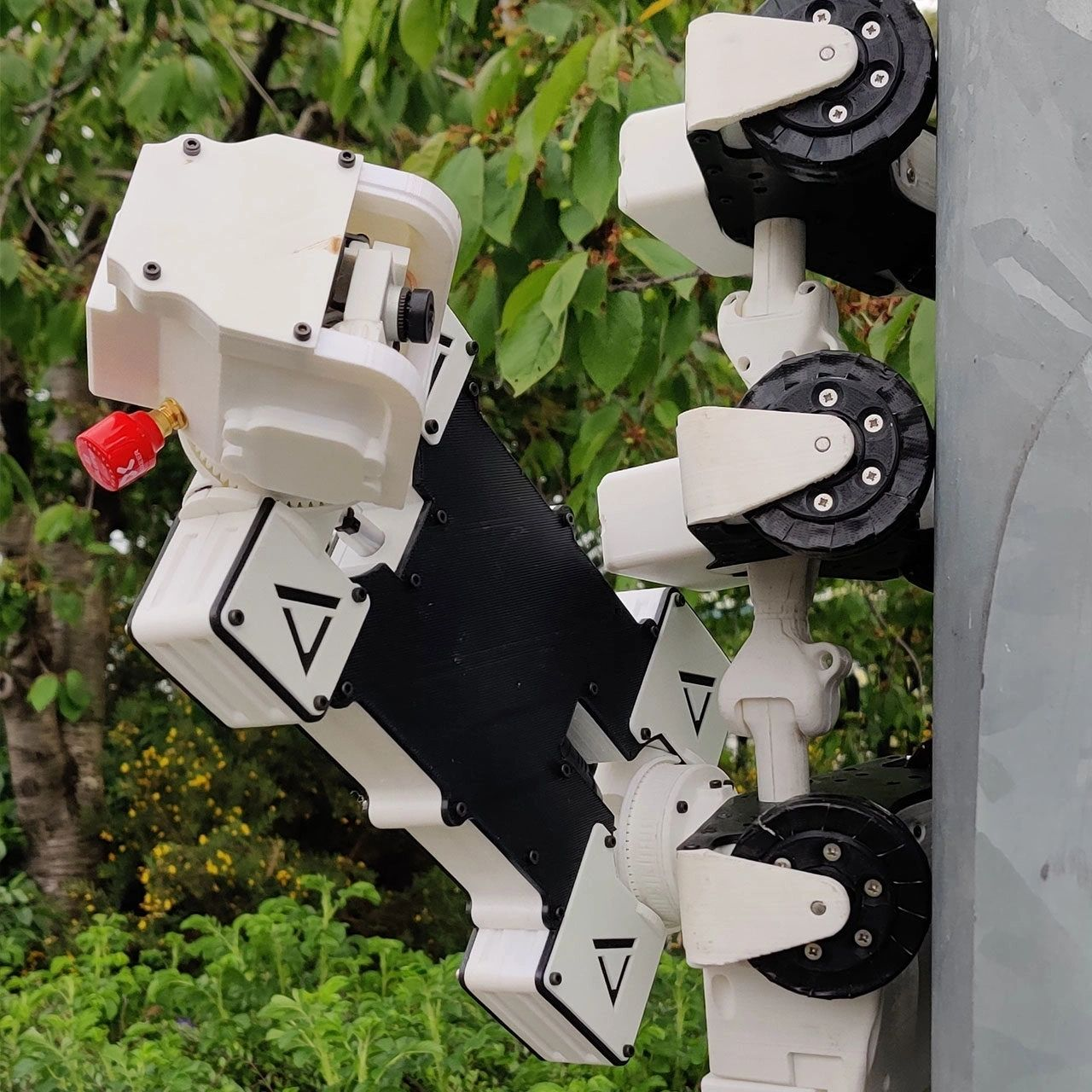
Acuity Robotics, based in Northumberland, will use the programme to develop its existing robotic inspection technology and undertake further testing in Blyth. Its Squirrel platform is designed to climb structures and support inspection activities that would otherwise require specialist access arrangements.
Structural inspection is an established requirement across offshore wind installations. Turbine towers, support structures, and associated components operate under repeated mechanical loading while being exposed to marine conditions that can accelerate deterioration of protective systems and certain materials.
Inspection programmes therefore need to identify changes in structural condition and establish whether further investigation, maintenance, or repair is required. Access to the relevant areas can be difficult, particularly where work involves large vertical structures, offshore locations, and equipment installed above the waterline.
Conventional inspection methods may involve rope access technicians, suspended platforms, or other specialist arrangements. Their deployment depends on suitable weather, safe access, personnel availability, and the operating requirements of the wind farm.
Climbing robotic equipment can provide another method of positioning inspection instruments against a structure. Such systems must maintain reliable movement and attachment while carrying suitable sensors, communications equipment, and a power supply within the constraints of their intended operating environment.
Greater autonomy can potentially reduce the extent of direct manual control required during inspection activities. However, the system’s usefulness will depend on whether it can navigate the target structure, collect sufficiently reliable information, and operate consistently under the conditions for which it is intended.
The latest NEOWIND announcement does not identify the final sensor configuration, technical performance, or offshore operating limits of Acuity Robotics’ proposed system. The planned development and testing activities will be required to establish those capabilities before wider commercial deployment can be assessed.
TRL 9, based in Newcastle upon Tyne, is pursuing a separate engineering challenge associated with the retirement of wind turbine blades. Its Cyclonox process is being developed to treat end-of-life blade materials and evaluate the recovery of useful products and energy.
Wind turbine blades are generally manufactured using reinforced composite materials selected for their strength, weight, and resistance to repeated loading. Fibres embedded within polymer resin systems provide important mechanical properties during operation but complicate the separation and recovery of materials at the end of service.
Unlike many metallic components, composite blades cannot simply be melted and reformed into equivalent materials using conventional recycling processes. Different recovery approaches must account for the resin system, reinforcing fibres, coatings, adhesives, and other constituents present in the blade structure.
TRL 9 intends to use the NEOWIND support to develop Cyclonox and assess its ability to recover useful outputs from these materials. The company has not disclosed independently verified recovery rates, detailed process conditions, or commercial operating costs in the programme announcement.
Those factors will influence whether the technology can progress beyond development testing. A recovery process must be evaluated against the types and quantities of material it can treat, the quality of its outputs, its energy requirements, and the practical arrangements for handling retired blades.
The composition of wind turbine blades also varies between manufacturers and generations of equipment. Differences in composite construction and material selection could influence the suitability of particular treatment methods, making consistent processing performance an important consideration.
The remaining six companies broaden the cohort beyond structural inspection and blade recovery. ORE Catapult has confirmed their selection but has not published equivalent technical specifications or individual funding allocations for each project.
Each participant will receive support intended to advance its technology through development or demonstration. The £1.87m figure is the combined allocation to the eight companies, rather than a uniform grant amount for every participant.
ORE Catapult operates specialist engineering and testing facilities at its National Renewable Energy Centre in Blyth. These include the Technology Development Centre, which opened in 2025 to support smaller technology developers and companies progressing equipment towards industrial readiness.
The centre houses a 1MW drivetrain test rig for rotating machinery and power conversion systems, a 100kW rig for smaller assemblies, a miniature electrical grid testing system, and a tribology laboratory concerned with component performance and durability.
These facilities provide access to controlled testing environments, although ORE Catapult has not confirmed which individual test assets will be used by each NEOWIND participant. The specific development programme for a climbing inspection robot will differ substantially from that required for a composite material recovery process.
NEOWIND also operates an Innovation Knowledge Transfer scheme offering eligible companies up to 20 days of funded engineering, analysis, or specialist technical support. The initiative is open to qualifying businesses operating within the North East Mayoral Strategic Authority area.
The wider programme builds on previous regional offshore wind supply chain development activities, including TIGGOR. Equinor and Morven Offshore Wind Farm are sponsoring NEOWIND, providing an industry connection alongside the public funding and technical development arrangements.
Selection for the programme establishes development support rather than a commercial deployment contract. Each technology will still need to demonstrate performance against its intended requirements, with further qualification, manufacturing, or customer trials potentially necessary before commercial application.
The eight companies will now progress their respective development programmes towards July 2028. Testing results and demonstration outcomes will determine whether the funded technologies can advance into wider offshore renewable energy operations and supply chains.