IN Brief:
- Hanne Risbjerg Sørensen becomes chief executive of Celtic Renewables, with co-founder Mark Simmers moving to a strategy role.
- The Grangemouth demonstration biorefinery uses ABE fermentation to produce acetone, butanol and ethanol from residual feedstocks.
- Investment and an eventual construction decision are still required for the proposed larger biorefinery.
Celtic Renewables has appointed Hanne Risbjerg Sørensen as chief executive as the Grangemouth industrial biotechnology business prepares its next stage of development. The company operates a demonstration biorefinery converting food and drink production residues into bio-based chemicals and is seeking investment for a proposed larger industrial facility.
Risbjerg Sørensen takes over from co-founder Mark Simmers, who moves into the position of founder and strategy director. She has more than 25 years of experience spanning industrial biotechnology and renewable energy, including leadership of Ørsted’s Renescience business and earlier roles at Novozymes. Her background includes bringing new industrial technology through commissioning and into operation, a central challenge for the planned expansion.
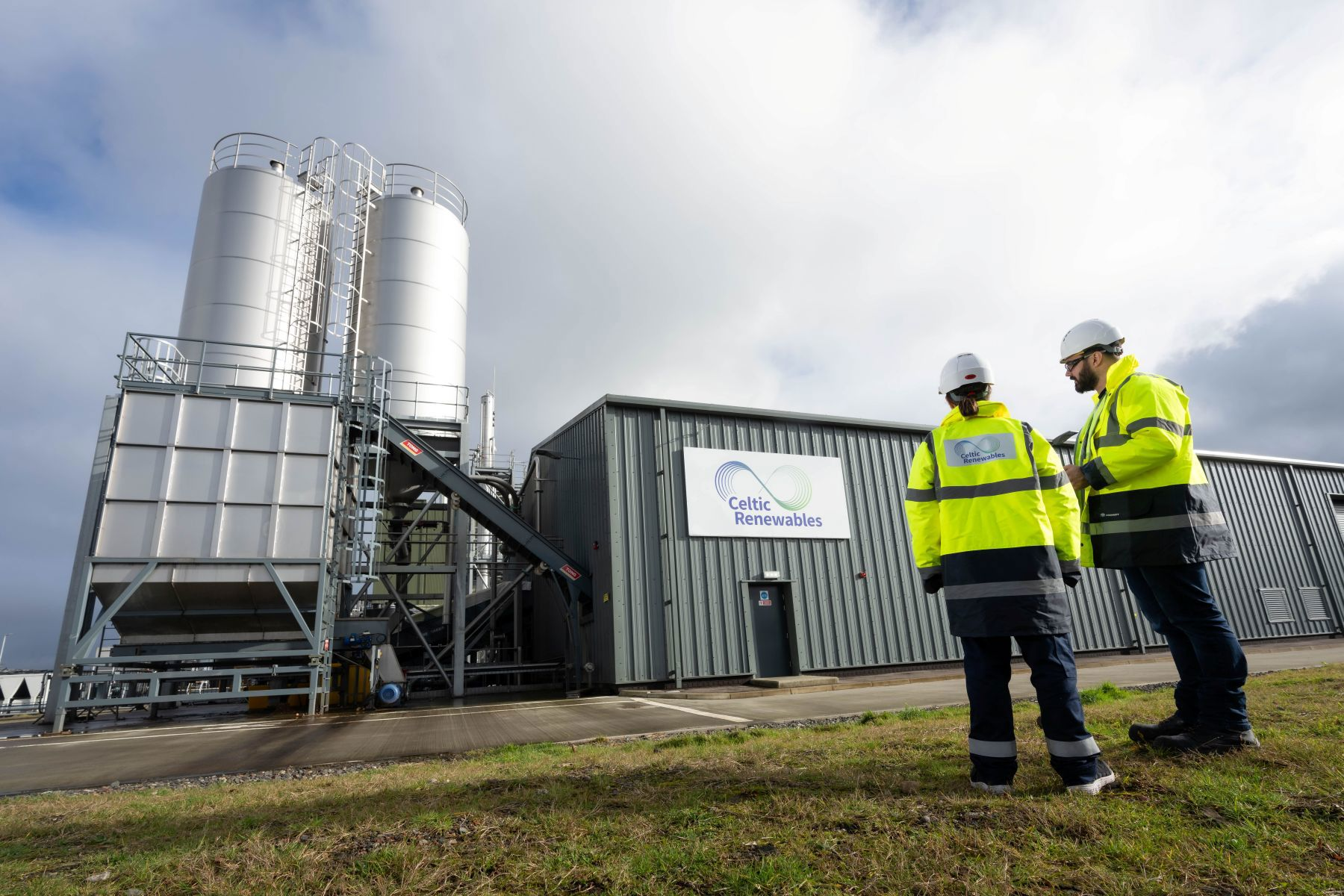
The company’s Grangemouth demonstration plant uses fermentation to process residual materials, including feedstocks from whisky production and rejected potatoes. The process produces acetone, butanol and ethanol — chemicals used in various industrial markets. It is based on acetone-butanol-ethanol fermentation, known as ABE fermentation, and makes chemical products rather than generating electricity for the grid.
Consistent output at a larger biorefinery will depend on the condition and composition of incoming feedstocks, fermentation yields and downstream product recovery. Microorganisms convert suitable organic material into a mixture of products, which must then be separated and purified for commercial use. Feedstock variability, process temperature, contamination control and equipment downtime all influence throughput. The company will need to control those parameters across a larger operating plant while meeting customers’ product specifications.
In November 2025 Celtic Renewables appointed Allen Associates, part of the Forsyths Group, to undertake front-end engineering design for a proposed commercial biorefinery in Grangemouth. The planned facility was described as having ten times the throughput capacity of the existing demonstrator. The design study was intended to improve cost estimates, develop the overall project schedule and establish a basis for detailed engineering and construction. The appointment of a design consultant did not itself authorise construction.
A month later the company announced £6.23 million of Scottish Government funding for its expansion plans, which at the time envisaged a £120 million plant and 149 additional jobs by 2030. Those are figures from December 2025 rather than investment raised through the current management appointment. Celtic Renewables continues to identify securing the finance for industrial scale-up as a priority, and has not confirmed a completed funding package or final investment decision for the proposed larger plant.
Plant utilities will form part of the scale-up engineering. Fermentation vessels need controlled process conditions, while separation and product recovery can consume substantial energy through heating, cooling and distillation. Equipment choices, heat recovery, automation and maintenance access will influence energy demand and unit production costs. The latest appointment provides no updated full-scale energy consumption, yield or capacity-utilisation figures, leaving those parameters for subsequent project engineering and financing work.
Grangemouth offers an industrial location with experience of chemical production, process plant maintenance and supporting utilities. The proposed biorefinery would use that manufacturing context to produce bio-based alternatives to selected petrochemical products. Its commercial development depends on securing raw material supply and demand for the recovered chemicals; neither a new grid connection nor an electricity generation project is part of the appointment announcement.
Brett Simpson, chair of Celtic Renewables, recognised Simmers’ contribution to the company’s development and Grangemouth demonstrator. Simpson said: “Hanne combines deep technical understanding with commercial and operational leadership, including first-hand experience of commissioning and operating first-of-a-kind industrial technology.” The board expects her appointment to support stronger operations and preparation for expansion beyond the demonstration stage.
Risbjerg Sørensen said: “My experience at Ørsted, particularly with Renescience, has shown me both the possibilities and the challenges of moving innovative technology towards industrial application.” She identified operational performance, commercial opportunities and work with investors and partners as priorities. A decision to invest in the full-scale installation remains a separate step from appointing its chief executive.
Further development will bring together plant design, feedstock commitments, customer requirements and financing. These questions are connected: the volume and quality of available residues influence output and process stability, while buyers’ specifications determine the separation systems and operating costs needed to produce saleable chemicals. Investment decisions also require confidence in equipment availability, achievable yields and the programme for constructing and commissioning the facility.
Celtic Renewables has an operating demonstration platform and an announced programme of preparatory engineering for a larger Grangemouth biorefinery. Risbjerg Sørensen will lead its commercial and operational development, with Simmers remaining involved in strategy. The company has not given a construction start date or announced a final investment decision alongside her appointment.