IN Brief:
- Endurance Motive disclosed a battery supply and integration contract valued at €1,016,974.14 before tax.
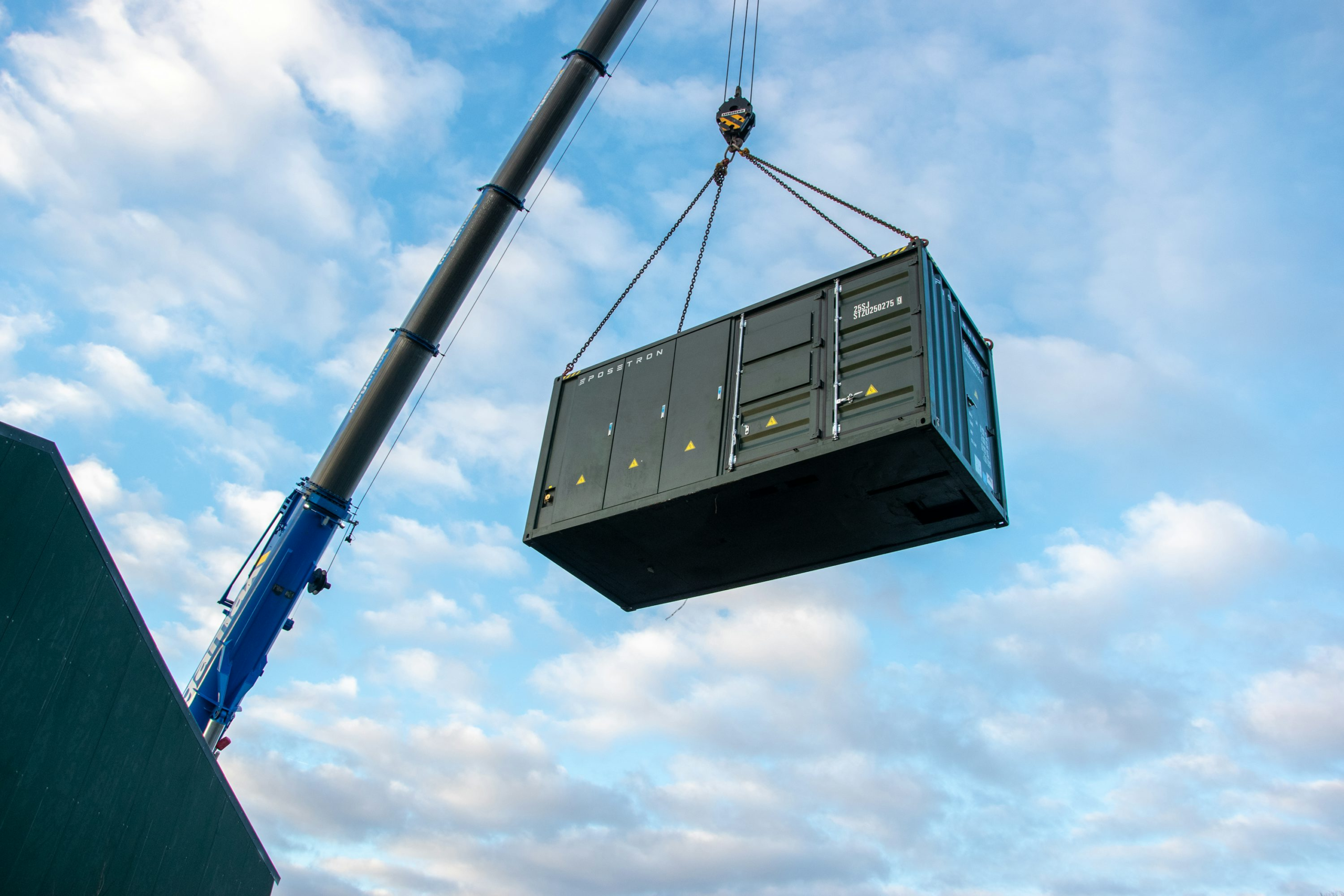
- The company describes the installation as approximately 10.3MWh, comprising two Endurance ST5015 containers.
- Delivery is planned for January 2027, and a ten-year product warranty depends on an associated maintenance agreement signed in October.
Endurance Motive has disclosed a contract worth €1,016,974.14 before tax to supply, integrate and commission battery equipment for a photovoltaic hybridisation project. The Spanish manufacturer describes the order as approximately 10.3MWh of energy storage and has identified two Endurance ST5015 containers for delivery in January 2027. The installation is not yet commissioned, and its site and ownership have not been publicly identified.
Although the supply contract was signed on 11 September 2026, Endurance Motive reported the commitment to the market in October after entering into the associated maintenance agreement on 7 October. Its customer is the engineering, procurement and construction contractor acting for the photovoltaic project owner. The company has not identified either party publicly, so the October development is the disclosure of an existing agreement and its accompanying service obligations.
Without the project owner’s name, location or photovoltaic generating capacity, the precise network interface for the new battery installation remains unknown. The intended operating regime is also unconfirmed: storage can be used to shift solar output to later hours, manage export peaks or provide eligible market services, while the contracted operating function remains undisclosed for this site.
Two Endurance ST5015 battery containers form the supply package, although the capacity figures in the available reports do not reconcile precisely. Containers described elsewhere as 5,015kWh each would total 10.03MWh, while the contract disclosure describes the project as approximately 10.3MWh. The latter is retained as the disclosed order capacity; no additional modules, revised rating or other engineering explanation has been assumed to account for the difference.
Because storage capacity is measured in megawatt hours while discharge power is measured in megawatts, the reported energy figure alone cannot establish how long this battery could operate at maximum output. The system’s power rating has not been provided, and its usable energy will also depend on operating limits and conversion losses. Specifying a reliable discharge duration will require the missing power and usable energy ratings.
Within a containerised battery installation, storage assemblies operate alongside monitoring, thermal control and electrical safety equipment, with external connections needed to integrate the system into the photovoltaic plant. The final design must also coordinate power conversion, switching, protection and site communications. Endurance Motive has not identified the inverter models, grid connection voltage or whether the customer will use AC or DC coupling, leaving those interfaces to be confirmed.
When photovoltaic generation exceeds immediate demand or commercial delivery requirements, a compatible battery can store some of that energy for later discharge; charging from the network may also be possible where the connection permits it. Stored electricity remains subject to losses and the system’s available energy capacity, so shifting delivery redistributes the available solar generation between time periods. The site’s actual dispatch strategy remains unspecified, alongside its permitted import and export limits.
After delivery, Endurance Motive’s commissioning responsibilities will involve checking that the batteries communicate correctly with plant controls and that electrical protection operates within the approved system limits. Site testing must also establish the required interfaces with the rest of the photovoltaic installation. The company has included commissioning in its contract, but has announced no completed acceptance tests or confirmed date when the integrated storage system will enter commercial operation.
The supply deal is accompanied by a maintenance contract signed on 7 October, and the associated product warranty is described as lasting ten years while that service agreement remains in force. This condition ties continued warranty coverage to an operational obligation after installation. Detailed service intervals, equipment replacement provisions and any separately guaranteed energy retention figure have not been made public, so they cannot be inferred from the warranty term.
As the batteries begin cycling, monitoring of cell condition, temperature, electrical connections and auxiliary equipment will inform maintenance under the eventual service programme. The type and frequency of inspection will depend on the system and its operating duty. Without more detailed contractual terms, warranty coverage cannot be equated with unchanged energy capacity or a fixed discharge profile throughout the ten-year period.
Endurance Motive has previously supplied batteries for photovoltaic hybridisation projects in Spain, although the latest contract concerns a separate customer and an unidentified site. Its €1.02 million value covers the reported storage equipment and associated services, which should remain distinct from the cost of developing the entire photovoltaic project. Other civil works, grid connection equipment and generating infrastructure may be covered by arrangements outside this order.
Delivery of the two containers is scheduled for January 2027, after which the project contractor and Endurance Motive must complete the electrical interfaces and commissioning work before the storage system can operate. Until the power conversion design, connection specification and plant owner are identified, the announced energy capacity cannot be translated into a confirmed discharge profile. The disclosed contract value remains a supplier commitment rather than a total project investment figure.