IN Brief:
- Nordic Ren-Gas has taken final investment decision on its Tampere project, valued at more than €300m, with construction scheduled to finish in 2029.
- At full output the site is designed to produce about 190 GWh of e-methane annually using around 40,000 tonnes of captured biogenic carbon dioxide.
- The facility will use renewable electricity for hydrogen production and return up to 200 GWh of recovered process heat annually to Tampere's district heating system.
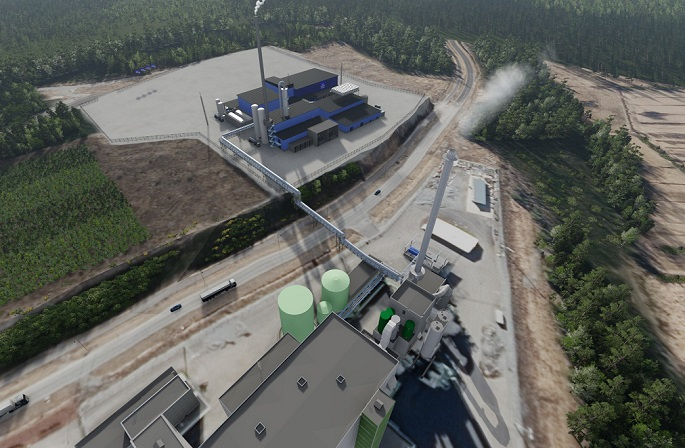
Nordic Ren-Gas has taken final investment decision on a renewable e-methane production facility in Tampere, Finland, committing to a project valued at more than €300m. Construction is scheduled to begin immediately following the financing decision, with completion planned for 2029. A €60m European Investment Bank loan is part of the debt and equity package. The plant will use renewable electricity to manufacture hydrogen, combine it with captured carbon dioxide and recover process heat for the local district heating system.
Renewable electricity will power electrolysers that split water into hydrogen and oxygen. The hydrogen will then react with captured carbon dioxide in a methanation process to produce synthetic methane suitable for existing gas applications. Each stage requires dedicated electricity supplies, power conversion, process controls and gas-handling systems. The developer has not disclosed the installed electrolyser rating in its final investment decision announcement, so the project’s anticipated power demand cannot be expressed as a confirmed megawatt figure.
At full output, the Tampere facility is designed to produce around 190 GWh of e-methane each year using approximately 40,000 tonnes of biogenic carbon dioxide captured annually from a nearby waste-to-energy plant. The synthetic gas is intended for heavy road transport in Germany and will reach customers through the European gas network. The EIB compares its planned annual energy content with roughly 19 million litres of diesel. These figures describe expected production after commissioning rather than output already being delivered.
As much as 200 GWh of process heat each year is also expected to be recovered for Tampere’s district heating network. Electrolysis and methanation both involve thermal management, and usable heat recovered from those systems can replace heat that would otherwise have to be supplied from another source. Delivering that benefit depends on suitable temperature levels, heat-transfer equipment and a connection to the city’s network. Annual recovery will also depend on plant throughput and district heating demand, so the 200 GWh figure is a design maximum rather than an operating result.
Running electrolysis, carbon dioxide supply and methanation as a single industrial process requires coordination of equipment with different pressure, temperature and purity requirements. Hydrogen handling needs reliable compression, leak detection, electrical isolation and suitable safety arrangements. Carbon dioxide from the waste-to-energy plant must be treated to meet the requirements of the downstream reaction, while finished gas must satisfy relevant supply specifications. Those interfaces are part of the engineering programme now moving towards construction, although the announced investment does not identify each technology supplier or its detailed equipment configuration.
Electricity procurement will be a major influence on production cost and the plant’s operating schedule. Electrolysis consumes significant electrical energy, and the timing and price of renewable power will affect how the developer can meet fuel certification requirements. Ren-Gas describes its portfolio as being developed for renewable fuels of non-biological origin compliance, which entails verification of the electricity used. Neither the final investment decision nor the EIB financing announcement gives a full hourly operating schedule or confirms participation in electricity balancing markets.
Financing comes from the EIB, Société Générale, Standard Chartered, Nordea and Finnvera on the debt side, and Allianz, Tesi, Japan Hydrogen Fund and Schroders Greencoat as equity investors. The EIB’s €60m loan represents approximately one-fifth of the total project investment and is the largest single debt contribution, according to the bank. The lender describes Tampere as the EU’s first e-methane facility financed on a project-finance basis, with lending assessed against the plant’s anticipated revenues and commercial arrangements.
Final investment decision follows technical, commercial and financial development work and an earlier Finnish energy subsidy awarded in December 2022. The funding agreements enable construction and equipment procurement to advance, while commissioning remains scheduled several years later. Civil works, high-power electrical connections, electrolysis and methanation equipment, heat recovery systems and testing will have to be coordinated before production begins. The company’s 2029 target is a planned completion date rather than evidence of an operating installation.
The Tampere plant will be a substantial industrial consumer of renewable electricity, converting its output into transport fuel while also supplying recovered heat to the city. Its performance will depend on reliable power input, the availability and purity of captured carbon dioxide, and the safe operation of hydrogen and gas systems. The financial close establishes the route into construction, but measurable fuel output and heat recovery can only follow commissioning. Nordic Ren-Gas expects that process to be completed in 2029, when the project is scheduled to enter its next operating phase.