IN Brief:
- The Energy Security and Net Zero Committee wants a nuclear roadmap published within six months of the delayed Strategic Spatial Energy Plan.
- MPs recommend raising Great British Energy-Nuclear's target to three completed final investment decisions by the end of this Parliament in 2029.
- Recommendations cover enforceable UK supply-chain commitments, reactor approval, financing risks for consumers and faster identification of a geological waste disposal site.
The House of Commons Energy Security and Net Zero Committee has called for a new UK nuclear power roadmap and faster project investment decisions, arguing that the absence of a settled long-term deployment strategy is creating uncertainty for engineers, manufacturers and investors. Its report, published on 20 November, recommends that the government produce an evidence-based plan within six months of the Strategic Spatial Energy Plan and raise Great British Energy-Nuclear’s target from two to three completed final investment decisions by the end of this Parliament in 2029.
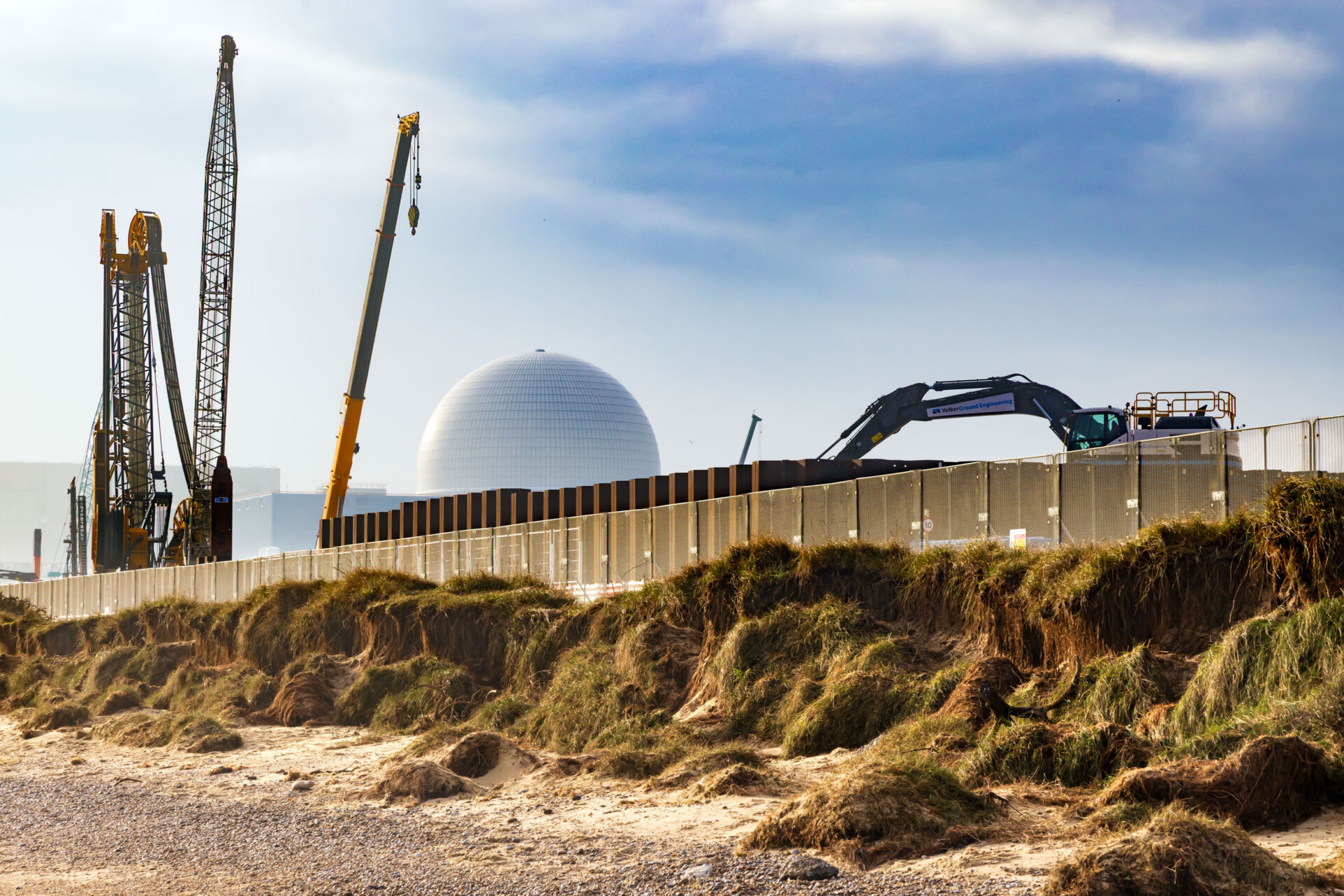
The January 2024 civil nuclear roadmap envisaged 24GW of nuclear generating capacity by 2050, but the government has not reaffirmed that figure or published a fully developed replacement target. The committee compares it with just over 9GW represented by Sizewell B, Hinkley Point C, Sizewell C and three proposed Rolls-Royce small modular reactor units. These assets are at different stages: one is operating, another is being built, and others require further development or commissioning. Their combined nameplate capacity cannot be presented as nuclear power presently available to the grid, nor does the comparison establish a construction timetable for reaching 24GW.
Development of the Strategic Spatial Energy Plan, which is intended to guide long-term energy infrastructure choices, has slipped into early 2027. The committee wants that planning work prioritised and a revised nuclear roadmap to follow no later than six months after its publication. Such a document would need to set out the anticipated contribution of gigawatt-scale plants, small modular reactors and advanced modular reactors, together with a realistic delivery sequence. A broad capacity aspiration provides little certainty for suppliers if no corresponding decisions establish reactor technology, sites, project funding and procurement timetables.
Great British Energy-Nuclear currently has a goal of achieving two final investment decisions by the end of this Parliament. The committee recommends increasing that target to three, with the period described as running to 2029. A final investment decision establishes that a project is ready to commit capital and proceed under its commercial and governance arrangements; it is not the same as obtaining every site permit, beginning construction or energising a generating unit. Reactor design work, nuclear-grade manufacturing, construction inspection and commissioning can continue for years after financing is agreed, especially for technologies being deployed for the first time.
Supply-chain conditions would also become more explicit if the committee’s recommendations were adopted. Great British Energy-Nuclear has an ambition for more than 70% of the value of its small modular reactor fleet to derive from UK-built content, but MPs question whether existing commitments can be independently measured or enforced. Large nuclear projects depend on qualified forgings, pumps, valves, control systems, electrical equipment and pressure-boundary components whose manufacture and inspection take considerable time. Firms cannot necessarily qualify a new production line after an award and still meet the first delivery date, making credible ordering schedules as important as headline domestic-content percentages.
MPs also want annual reporting and consequences for missing localisation commitments, including clearly specified thresholds for financial penalties. The recommendation follows concerns that the current approach does not make it sufficiently clear how domestic content is counted or enforced. Counting the location of a company’s registration is different from identifying where high-value components are manufactured or where engineering work takes place. A more precise definition could affect the allocation of fabrication, assembly and specialist services work, although the committee has not established a replacement procurement formula or mandated an immediate change to existing contracts.
Generic Design Assessment is intended to scrutinise a reactor design separately from permissions to build and operate it at a particular site. MPs support making the assessment more predictable and proportionate while retaining independent safety scrutiny, including cooperation between regulators in different countries. A design assessment does not substitute for site-specific environmental permits, emergency arrangements, construction assurance or later operating authorisation. The committee also questions population-density criteria inherited from large-reactor siting practice, arguing that they may be poorly suited to certain small and advanced modular reactors proposed near industrial heat and electricity demand.
Under the Regulated Asset Base financing approach used for Sizewell C, consumers can bear some project costs and construction risks before a nuclear station generates electricity. The committee wants the exposure and potential consumer costs explained more clearly as future projects consider financing options. Waste management creates a separate long-term commitment: MPs recommend identifying a preferred Geological Disposal Facility site before the end of this Parliament, although the facility itself is not expected to be delivered until the 2050s. Interim storage, eventual disposal and decommissioning obligations must be addressed irrespective of which reactor technologies government chooses to support.
The committee also asks the government to assess whether a civil nuclear test reactor is needed for technology development and fuel qualification; it does not authorise construction of one. The government must respond to the report, including its proposals for UK-content reporting, reactor regulation and the enlarged investment-decision target. Progress will be measurable against the publication of the Strategic Spatial Energy Plan, the subsequent nuclear roadmap and individual project decisions. Until those steps take place, the recommended 2029 target remains a parliamentary proposal rather than a funded programme for three additional operational reactors.