IN Brief:
- The Rümpel photovoltaic installation is expected to generate approximately 57 GWh annually.
- A 45 MW battery will provide two hours of nominal storage duration.
- Electricity will be marketed without state feed-in remuneration, with commissioning targeted for summer 2027.
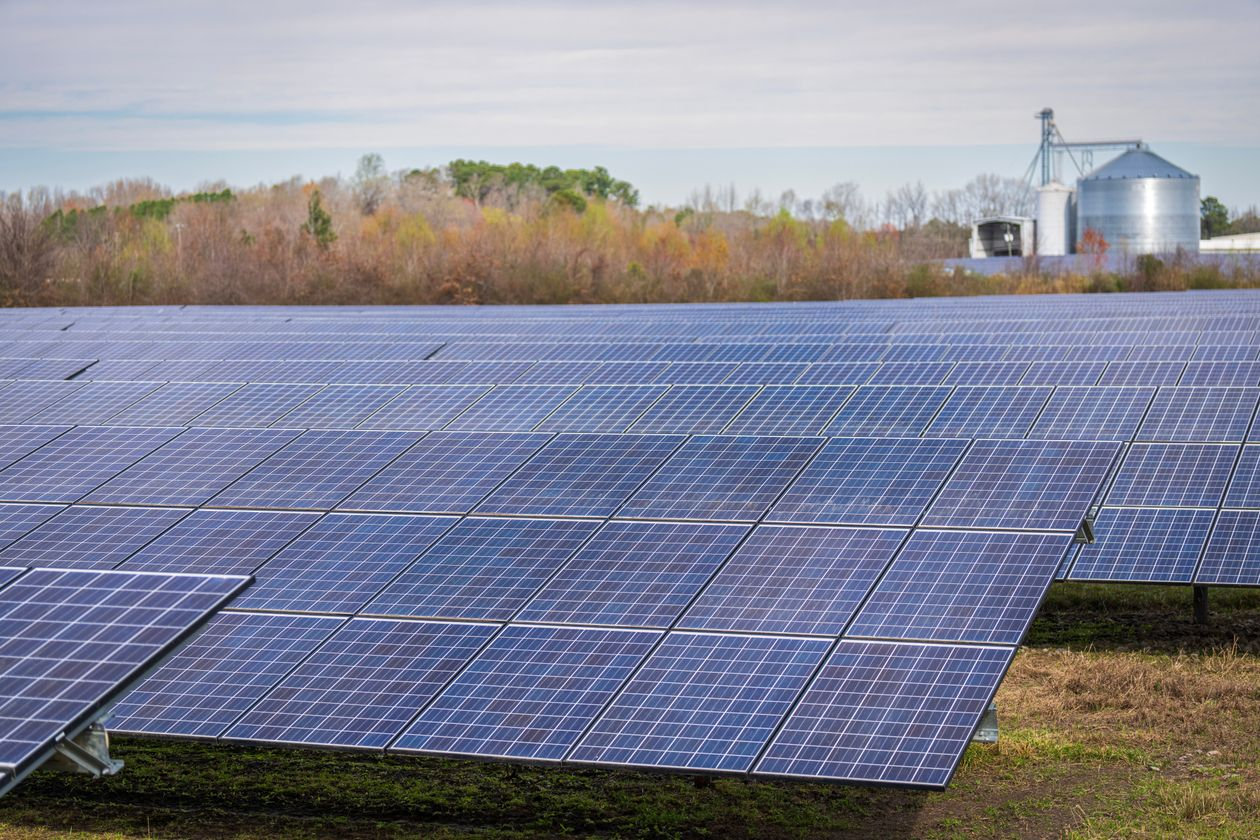
GP JOULE and Solarparc have begun construction of a hybrid power plant in Rümpel, northern Germany, combining 57 MWp of photovoltaic generating capacity with a 45 MW/90 MWh battery energy storage installation.
The developers expect the photovoltaic plant in Schleswig-Holstein to generate approximately 57 GWh of electricity annually, with commissioning of the hybrid development targeted for summer 2027.
Electricity will be marketed without state feed-in remuneration. Instead, the companies intend to use electricity supply and purchase agreements alongside participation in electricity markets, creating commercial opportunities for both renewable generation and storage operation.
The battery’s 90 MWh energy capacity will enable it to sustain its rated 45 MW output for a nominal period of two hours. Integrating that capacity with the photovoltaic installation will allow some electricity production to be retained for export when market conditions favour dispatch.
The decision to develop the technologies together reflects changes in the commercial operating environment for photovoltaic generation in Germany. Increasing volumes of solar electricity can depress wholesale prices during periods of strong irradiance, reducing the value of production precisely when photovoltaic installations are capable of generating their highest output.
Those periods can also coincide with constraints on the electricity network, depending on local demand, available transmission capacity, and the concentration of generating assets connected within a particular region.
At Rümpel, the battery’s stated capacity of 90 MWh is equivalent to approximately 58% of the photovoltaic installation’s forecast average daily production of 156 MWh. Actual generation will vary considerably with seasonal and weather conditions, influencing the proportion of daily output that can be stored.
The storage installation can therefore shift a portion of the project’s production between different periods rather than reproduce the entire generating profile after sunset. Its power rating determines how quickly electricity can be absorbed or released, while its energy capacity limits the duration over which that response can be sustained.
The commercial value of shifting electricity between periods depends on the available price differential after conversion losses, operating costs, and battery degradation are accounted for. Retaining electricity for later delivery also introduces an opportunity cost if market prices subsequently fall below the value anticipated when the charging decision was made.
Forecasting and scheduling will consequently influence the financial performance of the combined development. Operators must balance anticipated photovoltaic output against electricity prices, available battery capacity, and any contractual commitments covering future electricity delivery.
The electrical architecture of the installation will establish the physical boundaries within which those decisions can be made. Photovoltaic and storage equipment can be integrated using separate power converters connected through common alternating current infrastructure or through arrangements incorporating a shared direct current connection.
These configurations differ in their conversion stages, equipment requirements, and operational flexibility. An alternating current arrangement can allow the photovoltaic and battery converters to operate independently, while direct current coupling can reduce some conversion requirements when electricity is transferred directly from the photovoltaic installation into storage.
The developers have not confirmed the selected electrical coupling architecture or the final grid connection rating for Rümpel. Its 57 MWp photovoltaic capacity and 45 MW battery rating should therefore not be interpreted as a combined simultaneous export capability of 102 MW.
Where generation and storage use a common connection, supervisory control systems must coordinate their operation to maintain power flows within the agreed electrical limits. Simultaneous battery discharge and strong photovoltaic production could otherwise exceed the permitted export capacity.
Storage charging can also influence the operation of the generating installation during periods of restricted electricity export. Subject to the electrical configuration, the battery may absorb electricity that would otherwise need to be curtailed, retaining it until network or commercial conditions permit subsequent discharge.
The ability to operate in this way will depend on the applicable connection agreement, battery state of charge, and the capacity available at the time the export restriction arises.
Commercial electricity supply agreements introduce additional scheduling requirements. Contracts may establish delivery obligations during defined periods, while the remaining generating or storage capacity can potentially be marketed through other electricity trading arrangements.
Battery storage can help manage differences between contracted electricity delivery profiles and available photovoltaic generation, although its finite energy capacity limits the extent to which it can compensate for prolonged periods of weaker solar production.
Germany’s growing market for hybrid developments will increasingly require developers to consider these commercial and electrical arrangements together. Optimising the size of a battery independently of the generating installation and its network connection could produce an asset whose available trading opportunities do not justify its equipment costs.
With construction now under way at Rümpel, GP JOULE and Solarparc must progress the development through equipment installation, electrical integration, and commissioning before the combined generating and storage capacity can enter commercial operation in summer 2027.