IN Brief:
- Dumbrava is a standalone 50MW/100MWh battery system under construction in Romania’s Neamț County.
- The €19 million financing combines seven-year CEC Bank debt with sponsor and investor equity.
- Parapet’s delivery scope includes 20 battery units, five PCS units, and a new 20/110kV substation.
MetaWealth has closed a €19 million financing package for the 50MW/100MWh Dumbrava battery project in Neamț County, giving its first financed Romanian storage asset committed capital while construction is already under way.
The funding combines approximately €10 million of seven-year senior debt from CEC Bank with €9 million of sponsor and investor equity. MetaWealth is targeting commercial operation in April 2027 and says the project already has approved grid access, with major equipment packages prepared for delivery.
Of the equity contribution, €5.5 million is being provided by the Topolinski family and €3.5 million by institutional and private investors through MetaWealth Luxembourg and authorised distribution partners. BRD Asset Management accounts for €500,000 of that external investment.
Dumbrava is configured as a standalone two-hour battery and is being delivered with Parapet as contractor. The electrical scope includes 20 battery units, five power conversion system units, and a new 20/110kV substation incorporating the high-voltage equipment required to connect the plant to the network.
The financing therefore follows a project that has moved beyond a development pipeline entry. Land, connection work, engineering, equipment planning, contracting, and construction have progressed far enough for debt and equity providers to commit capital against a stated operating date.
Battery financing increasingly depends on that level of maturity. Nameplate capacity by itself offers lenders little protection if a project lacks a secure grid connection, executable construction contract, defined equipment package, or credible route to energisation.
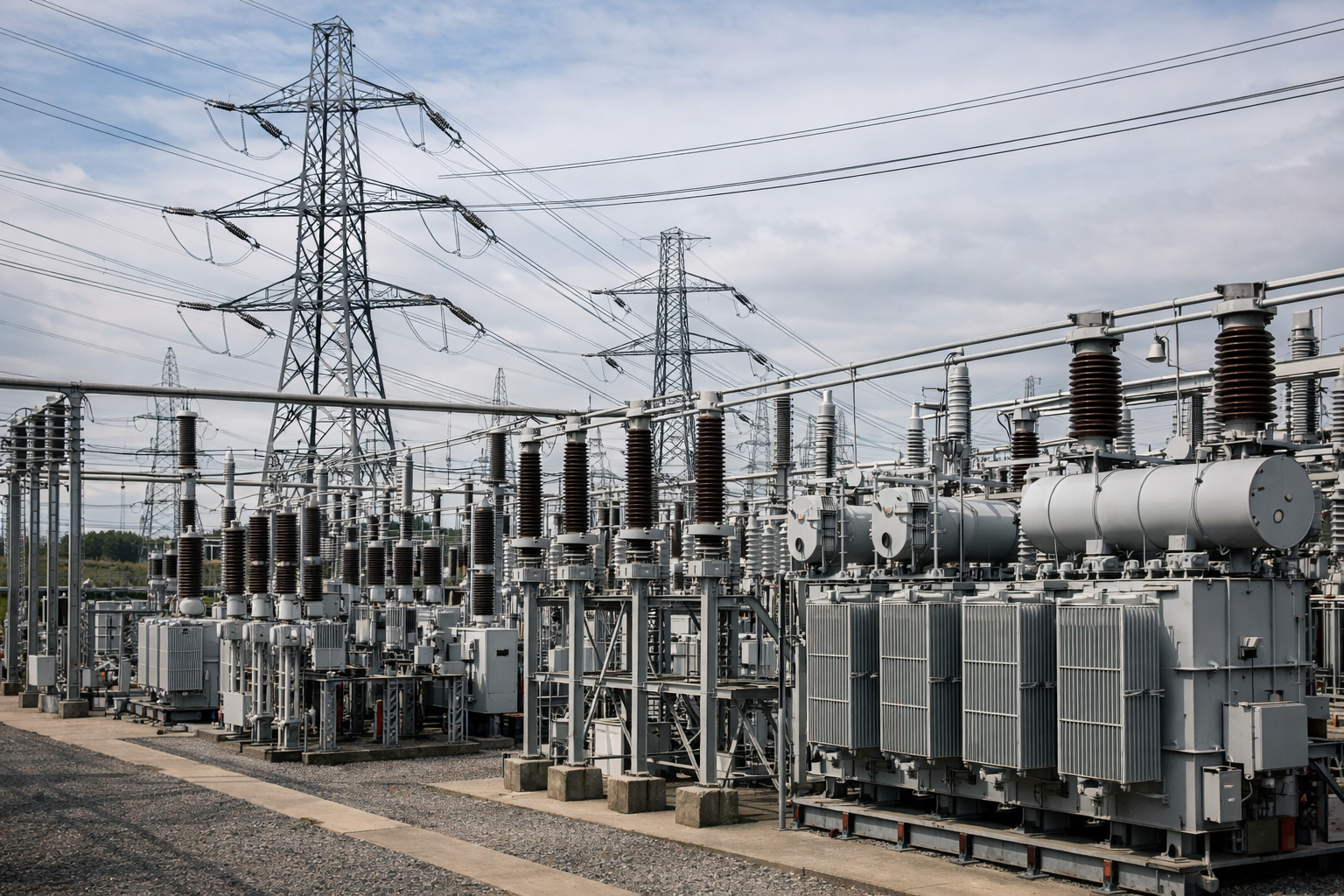
The 20/110kV substation is among the most consequential parts of the programme because it turns the battery installation into a high-voltage network asset. Transformers, switchgear, protection, metering, communications, and auxiliary supplies have to operate alongside the battery-management and power-conversion systems before the full 50MW can be dispatched.
The five PCS units provide the electrical interface between the battery’s DC equipment and the AC network. Their controls determine how quickly the asset responds, how power is shared across battery blocks, and how the plant behaves during voltage or frequency disturbances.
Protection settings and communications then have to be coordinated with the network operator. A storage plant can reverse rapidly between import and export, so relays and control systems have to distinguish routine dispatch from abnormal conditions without unnecessarily disconnecting the battery or allowing faults to remain energised.
The 100MWh energy capacity gives Dumbrava a nominal duration of two hours at its 50MW rated power. Actual usable duration will vary with state-of-charge limits, auxiliary demand, conversion efficiency, temperature, degradation allowances, and any reserve retained for contracted services.
Two hours nevertheless gives the project scope to shift meaningful energy between periods rather than relying entirely on very short response markets. Dispatch can potentially combine balancing, wholesale optimisation, reserve products, and other flexibility services, subject to Romania’s market rules and the project’s eventual commercial arrangements.
Romanian storage capacity is already beginning to move from development into physical delivery. A 55MW/220MWh battery at Gheorgheni recently entered construction, while the 100MWh Glodeni project has moved into operation.
Dumbrava sits between those two milestones: construction has started and financing is committed, but energisation and performance testing remain ahead. The April 2027 operating target leaves the project team to coordinate equipment delivery, civil works, substation construction, cabling, controls, commissioning, and grid acceptance over the coming months.
MetaWealth says the connection route is short enough that the project does not require wider network reinforcement. That removes one potential source of programme delay, although connection approval still has to be converted into an energised interface capable of importing and exporting at the planned rating.
The project is arriving as Romania adds more variable renewable generation. MetaWealth’s financing announcement puts solar additions during 2025 at around 2.2GW and installed solar capacity above 8.5GW by August 2026, increasing the amount of generation whose output varies with daylight and weather.
Storage can absorb some production during periods of high renewable output and discharge later, but the economics depend on the spread between charging and discharge values after round-trip losses, cycling costs, degradation, and market fees are considered. A growing solar fleet does not automatically make every battery profitable.
Romanian policy is also supporting additional storage deployment. The European Commission approved a €150 million state-aid scheme in March 2026 intended to support at least 2,174MWh of new standalone battery capacity, although Dumbrava’s announced financing structure is separate from that programme.
MetaWealth is treating Dumbrava as the first financed project in a substantially larger portfolio. Its Romanian pipeline is described as approximately 850MWh of identified and development-stage battery capacity, with an estimated investment requirement of around €160 million.
The portfolio includes a separate 48MW/100MWh project at Sânpaul in Mureș County and around 650MWh of additional development capacity. Those figures indicate potential scale, but they do not carry the same weight as financed capacity with equipment, contractors, and construction already committed.
Dumbrava will provide the first practical test of whether MetaWealth can repeat the model. Reaching financial close removes one of the principal development barriers; reaching April 2027 commercial operation will require the electrical, construction, and grid interfaces to arrive on the same programme rather than simply the battery containers themselves.
If that schedule holds, the result will be a 50MW/100MWh operating asset rather than another entry in Romania’s expanding storage pipeline — a distinction that becomes more important as announced battery capacity continues to run ahead of commissioned plant.