IN Brief:
- Borkum Riffgrund 3 adds 913MW of offshore wind capacity to Germany’s North Sea generation fleet.
- The 83-turbine project connects at 66kV to TenneT’s DolWin epsilon offshore converter infrastructure.
- Corporate power purchase agreements cover 786MW of capacity across industrial, retail, and technology customers.
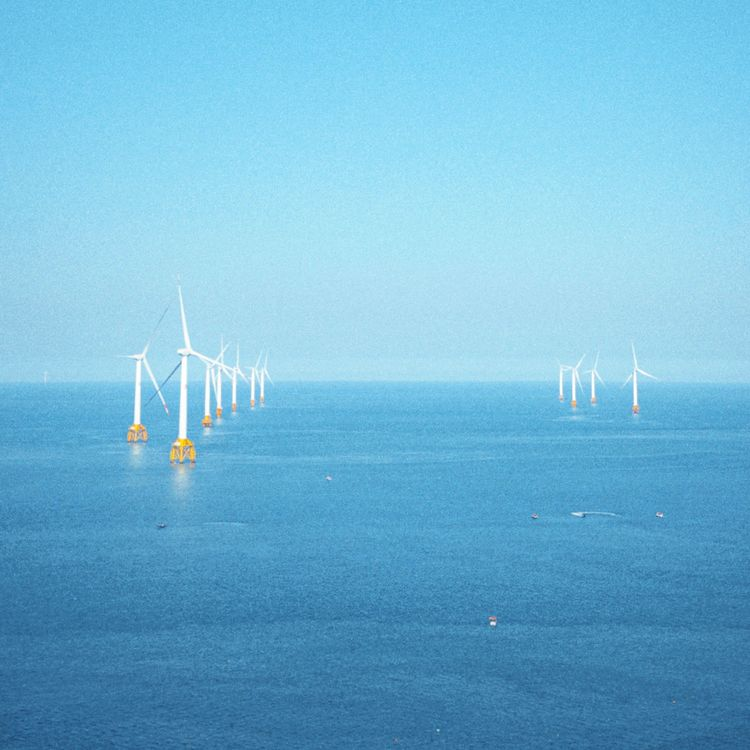
Ørsted and Nuveen Infrastructure have brought the 913MW Borkum Riffgrund 3 offshore wind farm into commercial operation in the German North Sea, completing the commissioning programme for an 83-turbine project around 72km from the German coast.
The wind farm uses turbines rated at 11MW each across an area of approximately 75km². Its completion takes Ørsted’s installed offshore wind capacity in Germany to around 2.5GW across six operating projects, while the developer continues construction of a wider European offshore portfolio.
Borkum Riffgrund 3 produced first power in December 2025 before moving through staged commissioning and operational testing. Commercial operation confirms that the turbines, inter-array cables, grid interface, protection systems, communications, and control equipment have progressed from individual commissioning into routine generation as a complete power plant.
The project is also notable for its electrical architecture. It is Ørsted’s first German offshore wind farm without a dedicated project-specific offshore substation, with the turbines connected at 66kV directly to TenneT’s DolWin epsilon offshore converter platform.
Removing a separate AC offshore substation changes part of the generation-side infrastructure, but it does not remove the wider transmission requirement. Power still has to move through high-voltage offshore conversion equipment, subsea export infrastructure, and the German onshore network before it reaches consumers, placing project delivery within a much larger grid programme.
Borkum Riffgrund 3 is jointly owned by Ørsted and Nuveen Infrastructure and has been developed around a substantial portfolio of long-term corporate power purchase agreements. Contracts covering 786MW have been signed with Amazon for 350MW, BASF for 186MW, Covestro for 100MW, Energie-Handels-Gesellschaft on behalf of REWE Group for 100MW, and Google for 50MW.
The agreements run for periods ranging from 10 to 25 years and cover most of the wind farm’s installed capacity. They give large electricity users a direct contractual relationship with renewable generation while providing the project with a substantial block of contracted demand over operating periods extending well beyond initial commissioning.
That revenue structure is particularly relevant because Borkum Riffgrund 3 emerged from Germany’s earlier zero-subsidy offshore auction model. Without a conventional fixed support tariff carrying the bulk of project revenue, bilateral corporate contracts and market income assume a larger role in the commercial structure.
The PPAs do not remove wholesale-market, balancing, operating, or transmission exposure, but they reduce dependence on selling the entire output into short-term electricity markets. The approach also links offshore wind development more closely with industrial and digital electricity demand, rather than treating generation and consumption as entirely separate investment decisions.
Construction drew on a broad European supply chain. Ørsted says turbines and foundations were sourced from Germany and Denmark, cables from Germany and France, and installation vessels from the Netherlands and Belgium, while around 100 German companies participated in the development.
Operations and maintenance will be supported from Norden-Norddeich and Emden in Lower Saxony. Once an offshore wind farm enters commercial service, the emphasis shifts from construction logistics to turbine availability, cable integrity, converter performance, vessel access, condition monitoring, and the ability to complete maintenance inside weather windows without sacrificing excessive generation.
The project enters operation while Germany is pursuing a much larger offshore build-out. Federal law sets targets of at least 30GW of offshore wind by 2030, 40GW by 2035, and 70GW by 2045, compared with roughly 9.7GW operating at the end of 2025.
Meeting those targets requires more than ordering additional turbines. Offshore converter platforms, export cables, ports, installation vessels, fabrication capacity, onshore reinforcement, and skilled engineering labour all have to expand on compatible schedules, while network operators contend with the consequences of moving larger volumes of variable generation from the North Sea towards inland demand centres.
A 913MW project represents a sizeable single addition, but Germany still has to install roughly twice its end-2025 offshore fleet again to reach the 30GW statutory threshold. The pace of grid delivery is therefore increasingly as important as turbine manufacture and offshore installation.
Network availability will also influence how much of Borkum Riffgrund 3’s output can be converted into useful delivered electricity. Offshore turbines may be technically available during strong wind conditions, but transmission outages, curtailment, congestion, or converter restrictions can still limit the power reaching consumers.
The corporate offtake portfolio adds another operational requirement because contracted customers ultimately depend on electricity volumes being accounted for within a functioning market and grid system. Physical electrons are not routed directly from individual turbines to individual factories or data centres, but contractual settlement depends on generation, metering, scheduling, and market arrangements remaining aligned.
Commercial operation closes the construction phase for Borkum Riffgrund 3 while opening a much longer asset-management programme. Its 83 turbines now form part of Germany’s operating generation fleet; the next measure is not installation progress, but how reliably the project and its associated transmission infrastructure convert 913MW of installed offshore capacity into electricity over the coming decades.