IN Brief:
- Plug-in solar kits of up to 800W can now be sold and used in Great Britain under the new framework.
- The IET recommends assessment by a competent electrician because domestic wiring and RCD arrangements vary between properties.
- Only 25% of surveyed adults knew which type of RCD they had, while 37% did not know what an RCD was.
Institution of Engineering and Technology is urging households to obtain a competent electrical assessment before connecting plug-in solar PV, as kits of up to 800W enter the Great British market under the new framework.
The concern centres on the installation behind the socket rather than the ability of the modules to generate electricity. Domestic final circuits have historically been designed principally around power flowing from the consumer unit towards connected loads, while plug-in generation introduces another source at a point further along that circuit.
Residual Current Device protection is one area highlighted by the IET. Different RCD types have different operating characteristics, so the presence of an RCD in a consumer unit does not establish on its own that the existing protection arrangement is appropriate for a particular plug-in PV system.
Government guidance limits a plug-in solar kit to 800W and has presented the technology as a lower-barrier route into small-scale generation. The relatively modest power rating reduces the size of the generating system, but it does not make every socket, circuit, protective device, and earthing arrangement across the housing stock electrically identical.
Product simplicity does not standardise the circuit
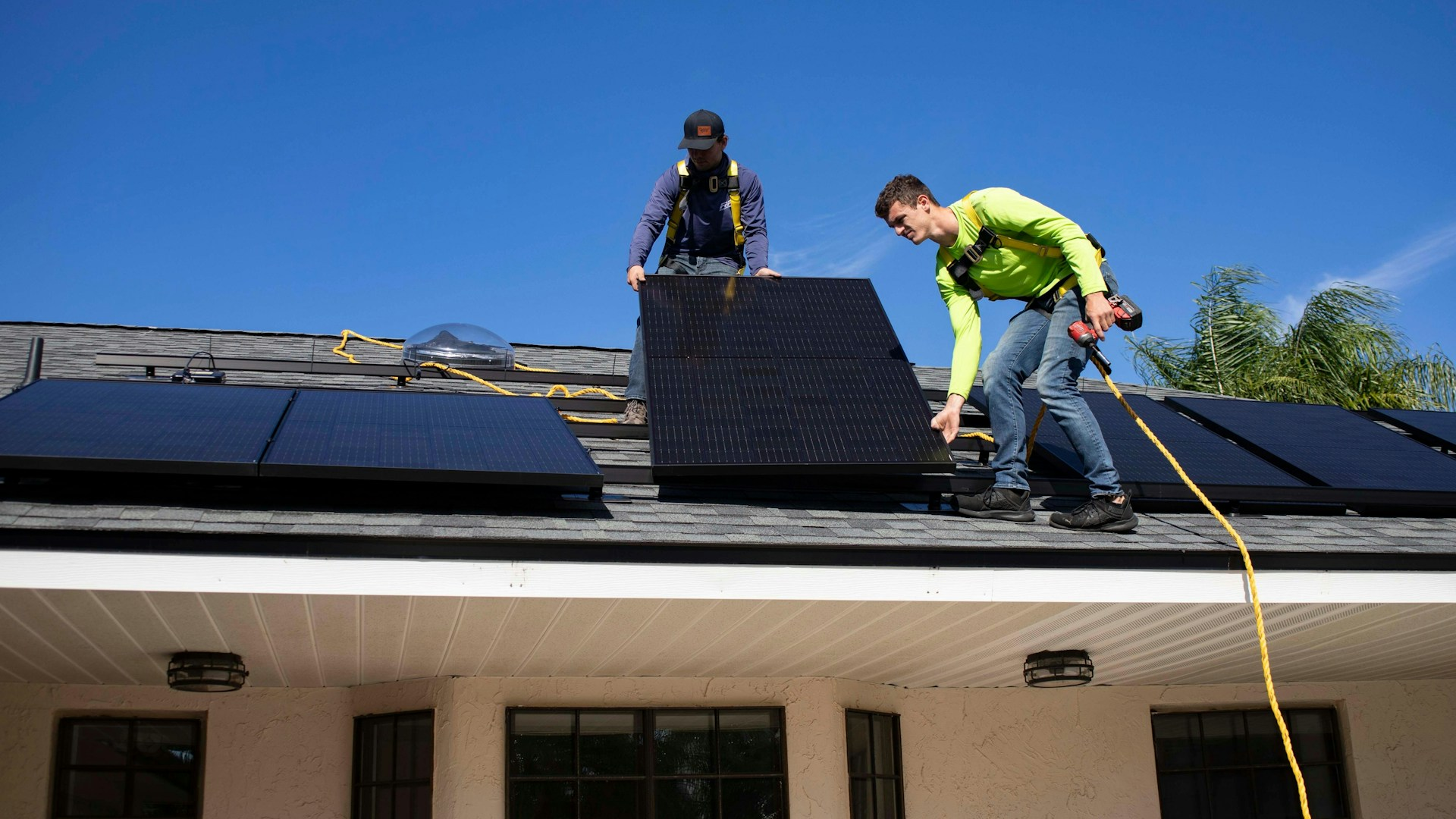
The appeal of plug-in PV is straightforward: a household can install a much smaller generating system without the scale of fixed wiring normally associated with a conventional rooftop array. That makes the equipment easier to buy and deploy, particularly at properties where a larger installation may be impractical.
Existing electrical installations, however, vary considerably in age and condition. Circuit loading, conductor size, protective devices, earthing arrangements, alterations made over several decades, and the configuration of the consumer unit can all affect how an installation behaves once a local source begins feeding power into it.
The IET’s recommendation for assessment before connection puts the emphasis back on those fundamentals. A competent electrician has to consider the condition and configuration of the circuit rather than treating the physical presence of a socket as evidence that generation can be connected safely.
That distinction is likely to become more important if plug-in products move beyond early adopters. Small individual systems create limited generation, but volume deployment could expose a much wider range of legacy wiring and protective arrangements than the professionally installed rooftop market normally encounters.
The IET’s survey suggests that household understanding of protection equipment is limited. Although 39% of adults said they would feel confident checking whether their electrical installation was suitable, only 25% knew which type of RCD was fitted, 37% did not know what an RCD was, and 11% knew both the type installed and how to test it.
Those figures do not establish that most homes are unsuitable for plug-in solar. They do indicate why relying on household identification of protective devices is an uncertain basis for determining whether a particular circuit is appropriate.
Distributed generation is becoming routine electrical work
The introduction of plug-in systems coincides with wider growth in small-scale generation and storage. Government figures cited around the launch put MCS-certified solar installations at almost 150,000 during the first half of 2026, 17% above the previous record start to a year.
Certified battery installations approached 36,000 during the same period, almost twice the comparable figure a year earlier. Solar PV, storage, EV charging, heat pumps, and smart controls are consequently becoming regular components of building electrical systems rather than specialist technologies encountered occasionally by contractors.
Each technology changes the load or power-flow assumptions behind an installation. EV charging can introduce sustained high demand, batteries can operate as both load and source, and solar can export through circuits originally designed around one-way consumption.
Plug-in PV extends that change to a product positioned much closer to normal consumer electrical equipment. The connection method may be simpler than a conventional fixed installation, but the circuit remains part of the property’s engineered electrical system once energy can flow from the module towards other loads or the network.
Registration and network procedures will therefore have to develop alongside the product market. Distribution operators need visibility of embedded generation, while product standards and installation guidance have to account for the wide variation in the existing housing stock.
For electrical contractors, the immediate work is conventional rather than exotic. Inspection, testing, identification of protective-device types, circuit assessment, and remedial work where required will determine whether small plug-in systems can be integrated without creating avoidable faults or protection problems.
The 800W limit keeps individual installations small, but it does not remove the duty to assess the equipment already in the property. If the market grows at the scale expected by policymakers, the success of plug-in solar will depend as much on mundane circuit condition and protection coordination as on the performance of the panels themselves.