
IN Brief:
- Sirius will provide 200MW/800MWh of four-hour battery storage at Winschoten in Groningen.
- Vattenfall has secured dispatch rights through a long-term fixed-price tolling agreement with Return.
- A TenneT time-dependent transport agreement links operation to periods when transmission capacity is available.
Return has reached financial close on the 200MW/800MWh Sirius battery project at Winschoten in Groningen, supported by a long-term fixed-price tolling agreement under which Vattenfall will control commercial dispatch of the storage capacity.
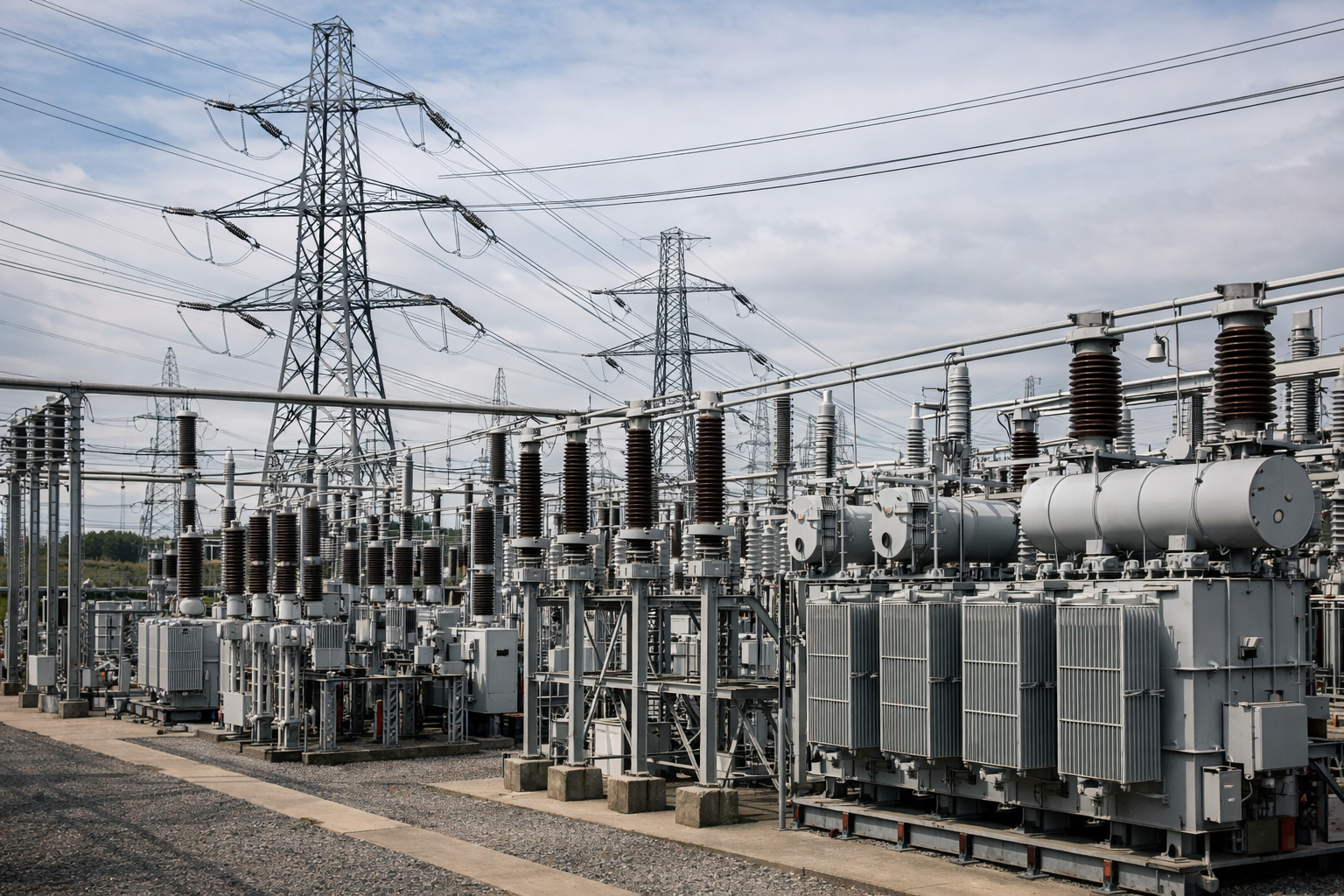
The four-hour battery represents an investment of approximately €180 million and is scheduled to enter commercial operation during the fourth quarter of 2027. It will connect to TenneT’s high-voltage network through the Meeden substation using a time-dependent transmission agreement designed around periods of available grid capacity.
Vattenfall will determine when Sirius charges and discharges within the contractual and network limits, paying Return a fixed fee for access to the battery. The utility can then deploy the asset across its generation and customer portfolio, including wholesale trading and balancing activity, while Return retains responsibility for the physical storage infrastructure.
The structure separates the long-term ownership economics of the battery from day-to-day optimisation. Return receives contracted revenue for making the asset available, while Vattenfall assumes more of the exposure to electricity-market spreads and the value that can be extracted from charging and discharging decisions.
Large European batteries have historically relied heavily on merchant revenues from frequency-response services and short-term trading. As more capacity enters those markets, developers are increasingly using tolling contracts and other long-duration arrangements to create revenue streams capable of supporting project finance.
Sirius has been financed through Return’s wider battery portfolio framework, which carries commitments of up to €400 million. ING, NatWest, Deutsche Bank, ABN AMRO, and Rabobank are participating in the lending group, while Huawei, Hanab, and Omexom are involved across battery technology, construction, and installation.
Securing debt against a battery of this scale places greater emphasis on predictable availability, connection rights, equipment performance, degradation assumptions, and the durability of the commercial contract. The project still carries construction and operational risk, but its financing does not depend solely on an assumption that future electricity-price volatility will generate sufficient merchant returns.
The connection arrangement adds another layer to the commercial model. Sirius will operate under TenneT’s Time-Dependent Transmission Rights framework, which allows users to access transmission capacity for at least 85% of the time while permitting the network operator to restrict transport during periods of congestion.
TenneT has estimated that time-dependent rights could make as much as 9GW of otherwise unused off-peak capacity available across its network. The arrangement does not create additional physical transmission capacity; it allocates existing headroom more selectively, allowing flexible users to connect where a conventional unrestricted connection may not be available.
Battery storage is well suited to that approach because its grid demand can be shifted. A factory or data centre may require electricity continuously, whereas a storage system can often postpone charging when the network is constrained and operate during hours when sufficient import or export capacity exists.
The flexibility is not unlimited. Sirius may have 200MW of power-conversion capacity and 800MWh of stored energy, but dispatch will still depend on its state of charge, equipment availability, market commitments, degradation strategy, and any restrictions imposed through the connection agreement.
Its four-hour duration broadens the range of possible operating strategies compared with a one-hour system. At nominal full output, 800MWh can support 200MW for four hours, giving Vattenfall the ability to shift substantial energy volumes across longer intraday periods rather than relying mainly on rapid-response ancillary services.
Actual usable energy will be lower than the simple nameplate calculation once conversion losses, auxiliary consumption, reserve margins, and battery-management limits are included. Operators also have to balance short-term revenue opportunities against degradation, because aggressive cycling can increase income today while consuming part of the asset’s useful lifetime.
The project builds on an existing relationship between Return and Vattenfall. In 2025, the companies agreed a long-term arrangement covering 50MW of Return’s 100MW/200MWh Antares battery at Waddinxveen; Sirius gives Vattenfall access to a substantially larger system and a longer energy duration.
Vattenfall has separately set a goal of contracting at least 1.5GW of battery capacity across its markets. Tolling agreements offer a way to assemble that flexibility without owning every battery directly, while developers gain access to an established electricity-market operator capable of dispatching storage across multiple revenue streams.
The Dutch system provides a demanding setting for the model. Renewable generation, industrial electrification, housing, and large electricity users are competing for transmission capacity, while network reinforcement takes years to design, permit, procure, and build.
Storage can support balancing and absorb surplus generation, but a battery connected without regard to local constraints can also worsen congestion by charging or exporting at the wrong time. Time-dependent access makes the connection condition explicit and forces optimisation to account for the physical network rather than treating grid capacity as permanently available.
Sirius therefore combines three elements that are becoming more prominent in European storage: contracted revenue, conventional infrastructure finance, and flexible grid access. Each depends on the others — a tolling contract has limited value if the battery cannot connect reliably, while a grid connection alone does not guarantee an investable revenue stream.
Construction now has to convert those contractual arrangements into an operational 200MW/800MWh plant by late 2027. If delivery remains on programme, Sirius will provide a sizeable test of whether time-dependent network rights and long-term tolling can turn congested-grid storage projects into repeatable infrastructure investments.