
IN Brief:
- Stendal will provide 100MW of power and 441MWh of standalone battery storage in Saxony-Anhalt.
- WT Energiesysteme is constructing a dedicated 110kV substation for the project’s grid connection.
- SUNOTEC plans to commission the approximately 4.4-hour system during the first quarter of 2027.
SUNOTEC has started construction of a 100MW/441MWh standalone battery energy storage system in Stendal, Saxony-Anhalt, with a dedicated 110kV substation forming part of the delivery programme ahead of planned commissioning in the first quarter of 2027.
The project reached ready-to-build status during the second quarter of 2026 and is being delivered by SUNOTEC as a turnkey scheme covering engineering, installation, and long-term operations and maintenance. Development progressed through SECURSUN, the joint venture between SUNOTEC and securenergy.
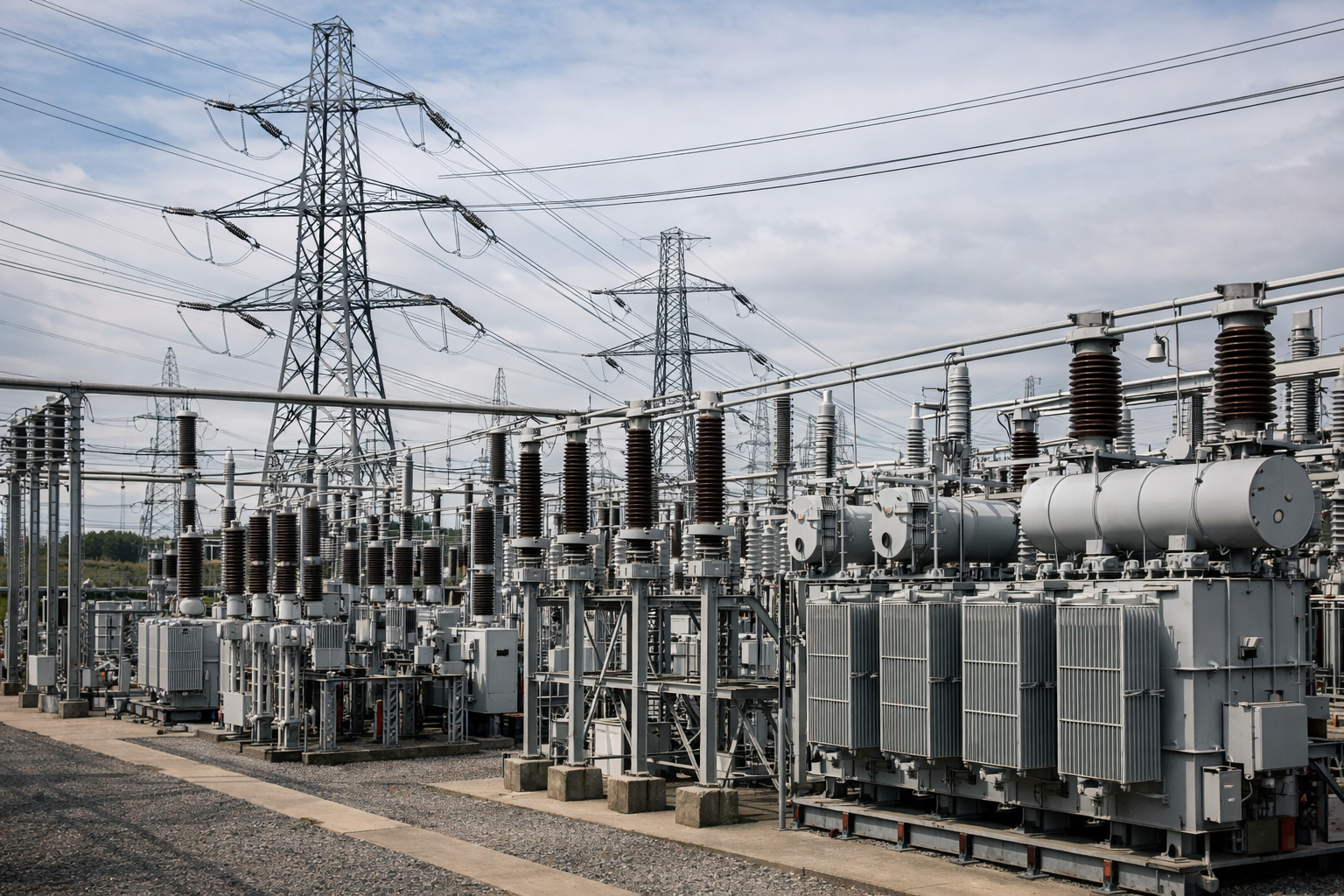
WT Energiesysteme is constructing the new 110kV substation required to connect the battery to the grid. That high-voltage package places switchgear, transformation, protection, metering, communications, control, and grid compliance alongside the battery containers and power-conversion equipment as critical elements of the project schedule.
SUNOTEC marked the start of the construction phase at the future battery site on 27 August, following completion of the development work needed to reach ready-to-build status. Commissioning during the first quarter of 2027 leaves a relatively compressed programme for civil works, electrical installation, connection construction, integration, energisation, and plant testing.
At rated power, the 441MWh battery has a nominal duration of 4.41 hours. The configuration places Stendal in the multi-hour storage market rather than the shorter-duration systems initially deployed across Europe primarily for rapid frequency-response services.
Usable duration will depend on operating limits, conversion losses, auxiliary demand, state-of-charge management, and degradation allowances. Even with those constraints, a battery carrying more than four hours of nominal energy at maximum output can shift substantially larger electricity volumes between different parts of the day than a one-hour installation of the same power rating.
The distinction is becoming more important as solar and wind generation expand. Short bursts of flexibility remain useful for frequency control and balancing, but increasingly renewable-heavy systems also need assets capable of absorbing surplus generation for several hours and releasing it when output falls or demand rises.
Germany ended 2025 with around 68.1GW of onshore wind capacity and 9.7GW offshore, alongside a much larger solar fleet. Additional renewable generation is continuing to connect while network operators simultaneously expand transmission and distribution infrastructure, creating periods when generation, demand, and available grid capacity do not align neatly.
A battery does not remove a transmission constraint, but it can alter when electricity crosses its connection point. Stendal can charge when supply and network conditions permit and return electricity later, with the actual operating strategy determined by market prices, balancing requirements, grid conditions, connection rules, and the commercial arrangements attached to the asset.
The 110kV substation is central to that capability. Battery cells may store the energy, but a grid-scale BESS cannot operate commercially until transformers, switchgear, protection relays, metering, communications, and plant controls have been integrated and accepted at the network interface.
Protection and control are particularly important because the battery’s inverters can change from importing to exporting power rapidly. The connection has to respond correctly to voltage disturbances, faults, network instructions, and equipment trips without creating unacceptable conditions on the surrounding system.
Commissioning therefore extends well beyond demonstrating that individual containers can charge and discharge. The complete plant has to prove coordinated operation across the battery-management system, power-conversion equipment, energy-management controls, substation equipment, protection scheme, communications links, and network interface.
Those interfaces frequently determine the final stages of a BESS programme. Containers can be delivered and installed relatively quickly compared with major conventional generating plant, but transformer availability, high-voltage switchgear, grid studies, relay settings, telecommunications, and energisation approvals can still become critical-path items.
SUNOTEC enters the German project with a sizeable European delivery record, reporting 6.1GWh of installed battery capacity and more than 680 photovoltaic installations representing over 15GW. The Stendal programme extends that system-integration activity into a market attracting a rapidly expanding pipeline of large storage projects.
Pipeline size alone is becoming a poor measure of progress. German storage development lists include projects at widely different stages, ranging from early connection applications to financed schemes with equipment ordered and construction crews on site.
Stendal has moved into the latter category. Its ready-to-build status has been converted into physical implementation, a substation contractor is in place, and the project carries a defined commissioning target rather than an unspecified future operating date.
The 4.4-hour configuration also places greater emphasis on energy-market operation once the battery is live. A system of this duration can respond to price spreads extending across morning, daytime, and evening periods, but profitability will still depend on cycling strategy, efficiency, degradation, availability, and whatever contractual revenue structure ultimately supports the asset.
SUNOTEC has not disclosed the project’s detailed offtake or optimisation arrangements in the construction announcement. The engineering programme is clearer: deliver the storage plant and 110kV connection, integrate the control and protection systems, complete energisation, and bring 100MW/441MWh into commercial service during the opening quarter of 2027.
That timetable now provides a straightforward measure of execution. By the end of the first quarter, Stendal should either be an operating multi-hour storage asset connected at 110kV or another project whose civil, electrical, or grid interfaces proved slower than the battery-container installation suggested.