
IN Brief:
- Volta and Franklin will provide approximately 300MWh of combined storage connected to Elia’s 150kV transmission network.
- SPIE’s balance-of-plant scope covers transformers, high-voltage infrastructure, SCADA integration, testing, and commissioning.
- Each site will contain 30 battery containers, with commercial operation targeted during 2027.
SPIE Belgium has secured a balance-of-plant contract from HybriX Energy covering the electrical infrastructure for two battery storage projects with a combined capacity of approximately 300MWh.
The Volta project at Geel-Heze and Franklin project at Massenhoven will each provide close to 150MWh of storage and connect directly to Elia’s 150kV transmission network. Both installations are designed to deliver up to 35MW for four hours, giving the two-site portfolio a combined power rating of about 70MW.
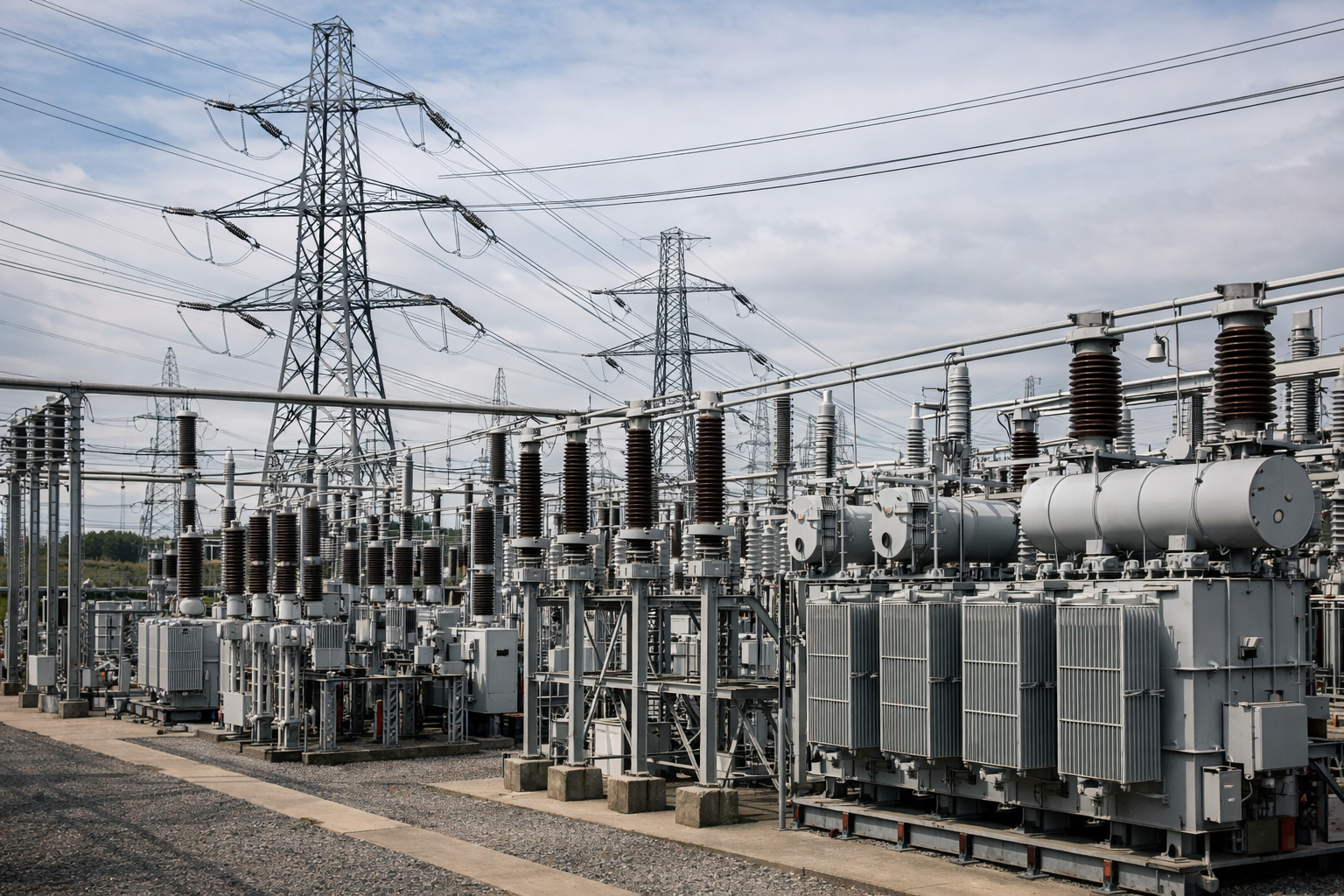
SPIE’s responsibility starts beyond the battery containers themselves. Its scope includes detailed engineering, high-voltage transformers, medium- and high-voltage electrical infrastructure, control-system integration, testing, and commissioning, with SPIE Nederland supplying the SCADA system used to supervise and control the plants.
Each site will contain 30 battery containers, while critical high-voltage equipment has already been ordered as construction progresses. Commercial commissioning is scheduled during 2027, and SPIE and HybriX have also agreed a maintenance contract capable of running for up to 20 years.
The split between battery supply and electrical balance of plant creates a series of interfaces that have to function as a single generating and consuming asset at the transmission connection point. Battery-management systems, power conversion equipment, transformers, switchgear, protection, auxiliary supplies, communications, metering, and SCADA all have separate technical roles, but none can be commissioned in isolation from the wider plant.
Transformer specification is one of the more consequential elements because the equipment has to accommodate repeated transitions between import and export operation. A grid-scale battery can change power direction quickly, while voltage, fault performance, harmonic behaviour, and protection settings still have to remain within the requirements imposed by the transmission system operator.
SCADA integration adds another control layer. Operators need visibility of plant status, state of charge, alarms, connection conditions, and individual equipment availability, while dispatch commands have to move reliably between commercial optimisation systems and the physical battery plant.
The commissioning programme therefore extends beyond energising individual containers. Protection schemes must be tested against the agreed network settings, communications demonstrated, transformers and switchgear energised, metering validated, and the aggregated battery response proven before the projects can enter routine commercial operation.
Belgium is already seeing substantially larger storage schemes progress through development and construction. The Green Turtle project, for example, is being developed at 700MW/2,800MWh with a direct 380kV connection, showing how quickly storage projects are moving into transmission-scale infrastructure.
Volta and Franklin are smaller, but their 150kV connection level places them well above commercial or behind-the-meter installations. At that voltage, system behaviour, fault contribution, protection coordination, voltage control, communications, and operational instructions become central parts of the asset rather than peripheral engineering details.
The four-hour configuration also gives the projects a broader operating envelope than short-duration batteries built primarily around frequency-response markets. At nominal output, each site can sustain 35MW for four hours, allowing energy to be shifted across longer intraday periods as well as supporting balancing requirements.
Actual operating duration will vary with conversion losses, auxiliary consumption, state-of-charge limits, degradation strategy, and any energy retained to satisfy contracted services. The commercial optimiser therefore has to treat the nominal 150MWh figure as part of an operating envelope rather than as energy that can always be dispatched without restriction.
Connection capacity imposes another limit. Battery projects are flexible loads when charging and generators when discharging, meaning a poorly coordinated operating schedule can add to network congestion instead of relieving it. Dispatch must account for both electricity-market opportunities and the electrical conditions applying at the 150kV connection.
The long maintenance term agreed between SPIE and HybriX reflects the consequences of that system complexity. Battery cells will degrade and eventually require augmentation or replacement, but high-voltage switchgear, transformers, relays, communications equipment, cooling systems, and auxiliary infrastructure carry their own inspection and maintenance cycles.
Availability depends on the whole plant. A healthy battery container cannot export if the transformer is unavailable, while a functioning grid connection has limited commercial value if power conversion equipment or control communications prevent dispatch.
The Belgian projects will also test coordination across national SPIE teams, equipment suppliers, HybriX, and Elia. Delivering hardware is only part of the programme; design responsibilities and commissioning boundaries have to remain sufficiently clear that faults can be isolated and corrected without leaving gaps between contractors.
Volta and Franklin have now moved beyond connection applications and development-stage capacity figures into electrical construction. Their 300MWh combined capacity may be modest beside Belgium’s largest proposed batteries, but connecting two four-hour assets at 150kV will require the same disciplines familiar from conventional power infrastructure: engineered interfaces, tested protection, dependable controls, and a grid connection capable of carrying the plant’s rated power in both directions.