IN Brief:
- Siemens Gamesa confirmed a 24-hour stoppage at its Cuxhaven offshore turbine manufacturing facility.
- More than 23,400 employees across 19 northern German workplaces participated in Monday's industrial action.
- The Cuxhaven facility manufactured a record 294 offshore wind turbine nacelles during the 2025 financial year.
Siemens Gamesa has experienced disruption at its offshore wind turbine manufacturing facility in Cuxhaven, Germany, after employees participated in a 24-hour strike as part of an escalating dispute over pay and employment conditions.
The stoppage began at 20:00 CET on Sunday, 22 November, and continued through Monday. It formed part of coordinated industrial action organised by trade union IG Metall across northern Germany’s metal and electrical industries.
More than 23,400 employees across 19 workplaces participated in Monday’s stoppages, according to IG Metall, with automotive manufacturers, shipbuilders, and industrial equipment suppliers also affected.
The Cuxhaven facility employs approximately 1,370 people and occupies a central position within Siemens Gamesa’s offshore wind manufacturing network. The company confirmed the duration of the industrial action, although its effect on turbine production volumes and delivery schedules has not been quantified.
IG Metall is seeking a 5% wage increase under a proposed one-year agreement, alongside measures intended to safeguard employment and manufacturing locations. Employers’ association Gesamtmetall has proposed a one-off payment and a 1.3% wage increase from July 2028.
The latest stoppage follows shorter periods of industrial action at Cuxhaven earlier in November, including demonstrations involving employees from Siemens Gamesa and other local manufacturers.
Disruption at the factory comes during a period of significant investment in European offshore wind turbine manufacturing. Cuxhaven produced a record 294 nacelles during Siemens Gamesa’s 2025 financial year, following changes to its production facilities to accommodate increasingly large turbine platforms.
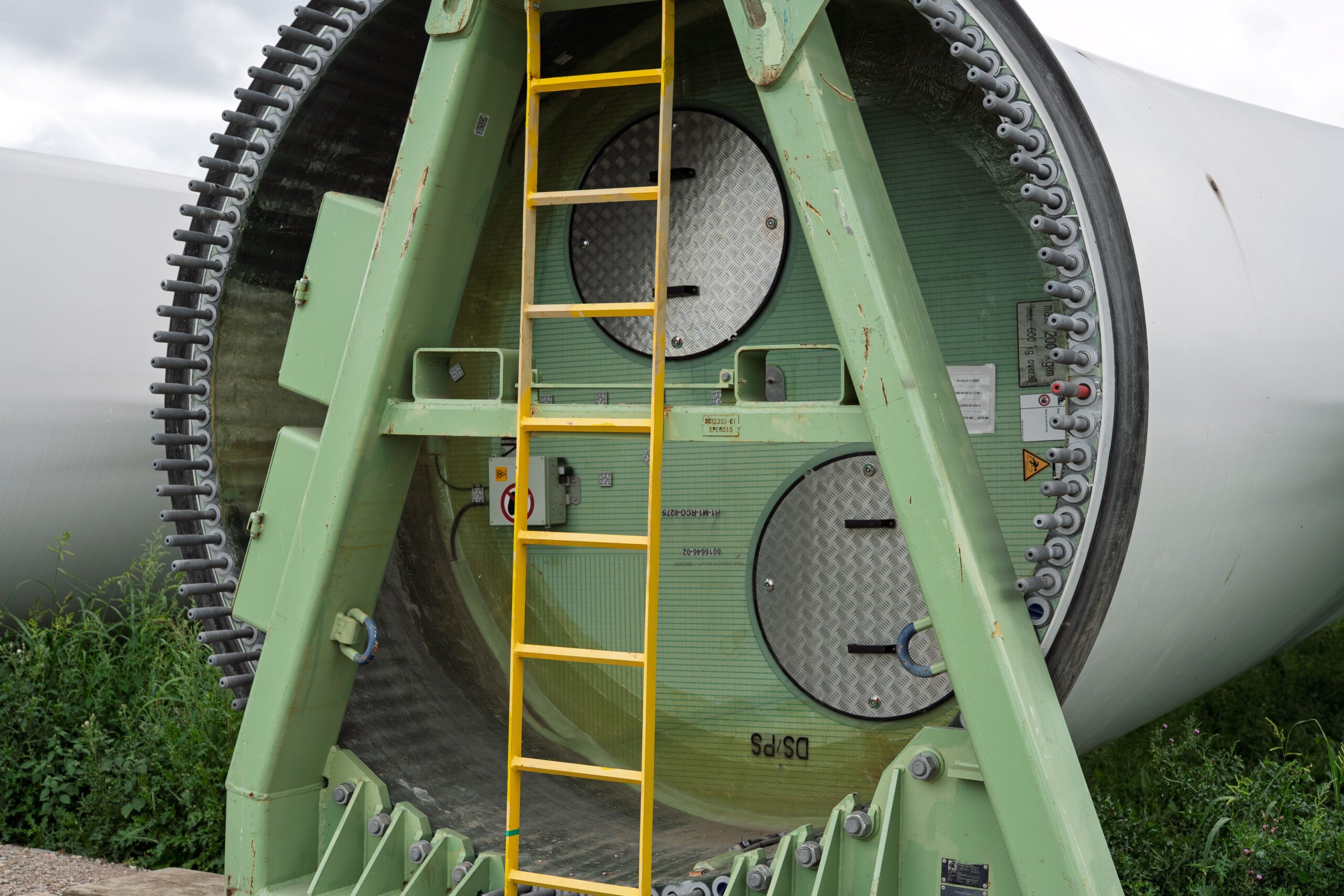
The factory undertakes the manufacture and assembly of principal nacelle components, including generators, hubs, and rear structural sections. Its port location allows completed assemblies to be transferred directly onto vessels using roll-on/roll-off transport arrangements, reducing the need for exceptional road transport movements.
As offshore turbine ratings increase, manufacturing processes must accommodate larger generators, heavier supporting structures, and more demanding equipment handling requirements. Assembly facilities need specialist lifting systems, production tooling, and testing capabilities appropriate to the dimensions and electrical characteristics of each turbine platform.
Cuxhaven forms part of Siemens Gamesa’s Next Generation EU Manufacturing Offshore Wind (NEMO) project, which encompasses manufacturing facilities in Germany, Denmark, and France.
The programme supports production of the SG 14-236 offshore turbine platform, with nacelles manufactured in Cuxhaven and approximately 115-metre blades produced at facilities in Aalborg and Le Havre.
The European Commission’s Climate, Infrastructure and Environment Executive Agency confirmed that all three facilities had reached readiness to manufacture components for the programme by 30 April 2026.
Establishing dedicated manufacturing capabilities at different sites enables production processes to be adapted to the particular requirements of individual turbine components. It also creates dependencies between factories whose output must be coordinated before complete turbine assemblies can be delivered to offshore projects.
Installation contractors require nacelles, blades, towers, and associated equipment to arrive in sequences compatible with port storage capacity, vessel mobilisation, and offshore installation schedules. Components manufactured ahead of their required delivery dates must be accommodated within suitable storage and handling areas.
The effect of a temporary manufacturing interruption depends partly on the availability of completed equipment within those arrangements. Existing inventories and production flexibility can help absorb shorter stoppages, while repeated disruption may require changes to manufacturing schedules or additional shifts.
No specific offshore wind development has been confirmed as experiencing delays attributable to the latest industrial action at Cuxhaven.
Siemens Gamesa’s European project pipeline includes the recently confirmed selection of its technology for the Dutch Zeevonk development. The proposed first phase is planned around 69 offshore turbines rated at 15 MW, illustrating the manufacturing requirements associated with contemporary offshore generating projects.
Larger individual turbine ratings can reduce the number of foundations and generating units required for a given wind farm capacity, but increase the size and complexity of the individual assemblies that factories, ports, and installation vessels must accommodate.
Manufacturers have consequently invested in production infrastructure capable of handling those assemblies at commercial scale. The resulting facilities require personnel with specialist experience in mechanical assembly, electrical integration, quality assurance, and equipment testing.
IG Metall announced further industrial action across northern Germany for Tuesday, 24 November, targeting nearly 40,000 employees across 22 workplaces, with a particular emphasis on aerospace manufacturing.
The union’s latest programme does not establish a further stoppage at Cuxhaven. The resumption and continuity of offshore turbine manufacturing will depend on developments in the wider collective bargaining dispute and Siemens Gamesa’s subsequent production arrangements.