IN Brief:
- Seaway7 has completed laying all 95 inter-array cables at East Anglia Three, covering more than 240km of installed cable.
- The 66kV collection system uses three-core submarine cables supplied by Hellenic Cables.
- Termination, testing and trenching remain in progress before the relevant electrical circuits can be accepted for service.
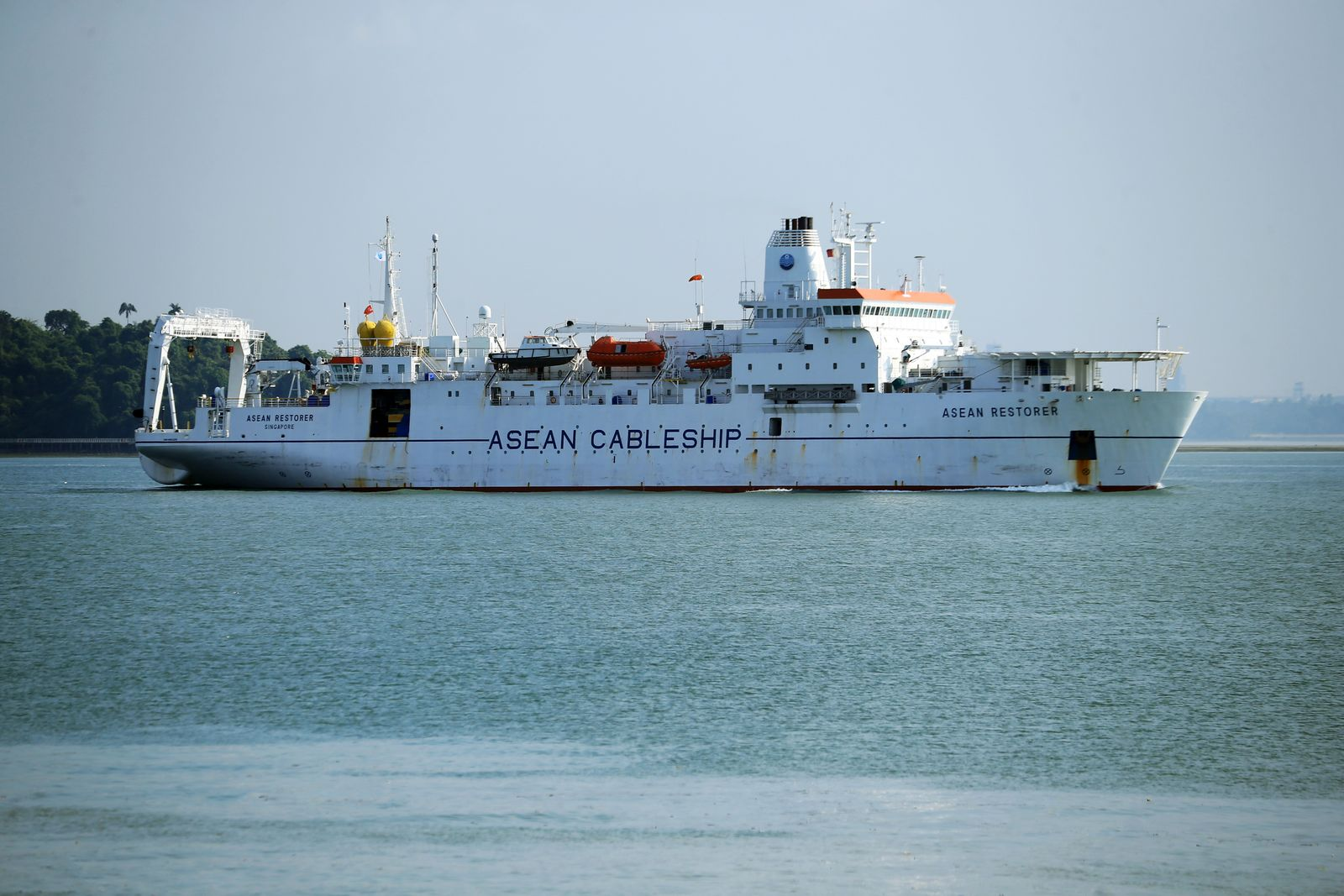
Seaway7 has completed the inter-array cable laying campaign at East Anglia Three, the 1.4GW offshore wind farm under construction off the Suffolk coast. Its teams installed 95 submarine cable sections covering more than 240km, including cable loading, offshore laying and pulling the ends into turbine foundations. Termination, electrical testing and trenching continue under the contractor’s remaining work programme.
The completed installation forms part of Seaway7’s wider contract for the project, owned by ScottishPower Renewables and Masdar. That contract also covers the offshore foundations, with all 95 monopiles and transition pieces installed earlier in 2026. Cable laying could proceed as the required foundations and connection interfaces became available, allowing the electrical collection network to be assembled alongside turbine installation.
East Anglia Three is located approximately 69km from Suffolk and is designed to accommodate 95 Siemens Gamesa turbines rated at around 14.7MW each. Their combined generating capacity is approximately 1.4GW. Installation of the turbines began in April, while Seaway7’s completion of cable laying advances the offshore electrical works needed to connect the generating equipment.
The inter-array cables collect electricity from groups of wind turbines and transfer it towards the offshore electrical infrastructure. Each turbine produces electrical output that varies with wind conditions and equipment availability. Cable sections therefore carry changing currents, with the expected loading depending on the number and output of the turbines connected through the relevant part of the collection network.
East Anglia Three’s collection system uses 66kV submarine cables, which were supplied by Hellenic Cables. The manufacturer’s original supply contract covered approximately 275km of three-core cable and associated accessories, while Seaway7’s completed installation campaign is reported as more than 240km laid and pulled into the foundations. The supply contract and completed laying figures describe different scopes and should not be treated as equivalent measures.
Increasing collection voltage reduces the current required to transfer a given amount of electrical power. Cable heating is influenced by conductor resistance and the current passing through it, making voltage selection relevant to electrical losses and thermal performance. The conductor size, insulation system and installation conditions must be designed to accommodate the loads expected during wind farm operation.
Three-core submarine cables contain separate conductors for the alternating-current phases, together with insulation, screening and mechanical protection appropriate to the installation. The cable construction must withstand handling during transport and laying, while maintaining the electrical properties required for high-voltage operation. The seabed conditions and expected external hazards also influence the installation and protection requirements.
Seaway7 used specialist cable laying equipment to transfer cables from the installation vessel into their surveyed offshore routes. Each cable must be paid out under controlled mechanical tension and maintained within its permitted bending radius. Excessive tension or bending can damage protective layers or electrical insulation, requiring careful management of vessel position and cable handling as laying progresses.
The cable ends are then drawn into the relevant turbine foundations through prepared entry arrangements. Pull-in work must be coordinated with personnel and equipment at the foundation, particularly where the cable changes direction or passes through confined structures. Once positioned, the cable is secured and prepared for the installation of its electrical termination equipment.
Completion of laying establishes the physical routes between connection points, while electrical termination creates the conductive interfaces needed for power transfer. Terminations must connect the cable conductors to the appropriate switchgear and equipment while preserving insulation performance and environmental protection. Their installation requires controlled procedures because defects can affect circuit reliability under electrical and thermal loading.
Seaway7 continues that termination work alongside testing of the installed cables. Electrical acceptance tests establish whether individual circuits meet the specified requirements before energisation. Continuity, insulation condition and other parameters are checked under the applicable procedures, with the results recorded against the relevant cable sections and connection points.
Where testing identifies a problem, the affected cable or termination must be investigated before the circuit can be accepted. The number of individual sections makes accurate completion records important, because cable placement, termination and acceptance must be established for each relevant route. Successful installation of the entire physical cable length does not establish that every circuit is electrically ready for operation.
Trenching and burial activities also remain under way. Submarine cables require protection against external damage, including potential contact with anchors and fishing equipment where relevant to the route. The specified protection depends on seabed conditions, the depth and location of the cable, and the risk assessment governing its installation.
Burial equipment may be used to place cables beneath the seabed, while alternative protective arrangements can be required where the ground conditions make burial impractical. Surveys establish whether the completed installation meets its route and protection requirements. The remaining trenching work therefore forms part of the cable acceptance process alongside electrical testing and termination.
The cable programme must be coordinated with continuing installation of the wind turbines. Foundation completion provided the structures and cable entry points, while turbine installation introduces the generating equipment and associated electrical interfaces. The work packages share construction dependencies even where their offshore activities are undertaken by separate teams.
Electrical commissioning will subsequently require the inter-array circuits to be integrated with the offshore collection infrastructure and the project’s wider transmission arrangements. Protection settings, switching procedures and communications must support safe operation as equipment is energised and individual turbines become available for generation.
The electricity collected from the turbines must pass through the wind farm’s offshore and onshore electrical systems before reaching the wider transmission network. The export system is distinct from the inter-array collection network, with equipment designed for the larger combined power flows and longer transmission distance. Both systems must satisfy their acceptance requirements before the associated generating capacity can be used commercially.
East Anglia Three represents an investment of approximately £4bn and is expected to produce electricity equivalent to the annual requirements of around 1.3 million British homes once fully operational. That estimate concerns annual energy production, while the 1.4GW installed capacity represents the project’s nominal maximum electrical output.
The development programme has targeted completion during 2026, subject to the remaining offshore construction and commissioning activities. Seaway7’s next tasks are to complete the electrical terminations, cable testing and protection works required under its contract. Acceptance of those systems will allow the completed collection circuits to support the remaining turbine and wind farm commissioning programme.