IN Brief:
- Jinko ESS has delivered 20.06MW/66.33MWh of battery storage across agrivoltaic projects at Grünberg, Grünhainichen, and Marbach.
- The DC-coupled systems allow photovoltaic electricity to charge the batteries before later export through power conversion equipment.
- Individual installations have been sized around local generation, connection limits, and operating requirements, with electrical interface testing completed before delivery.
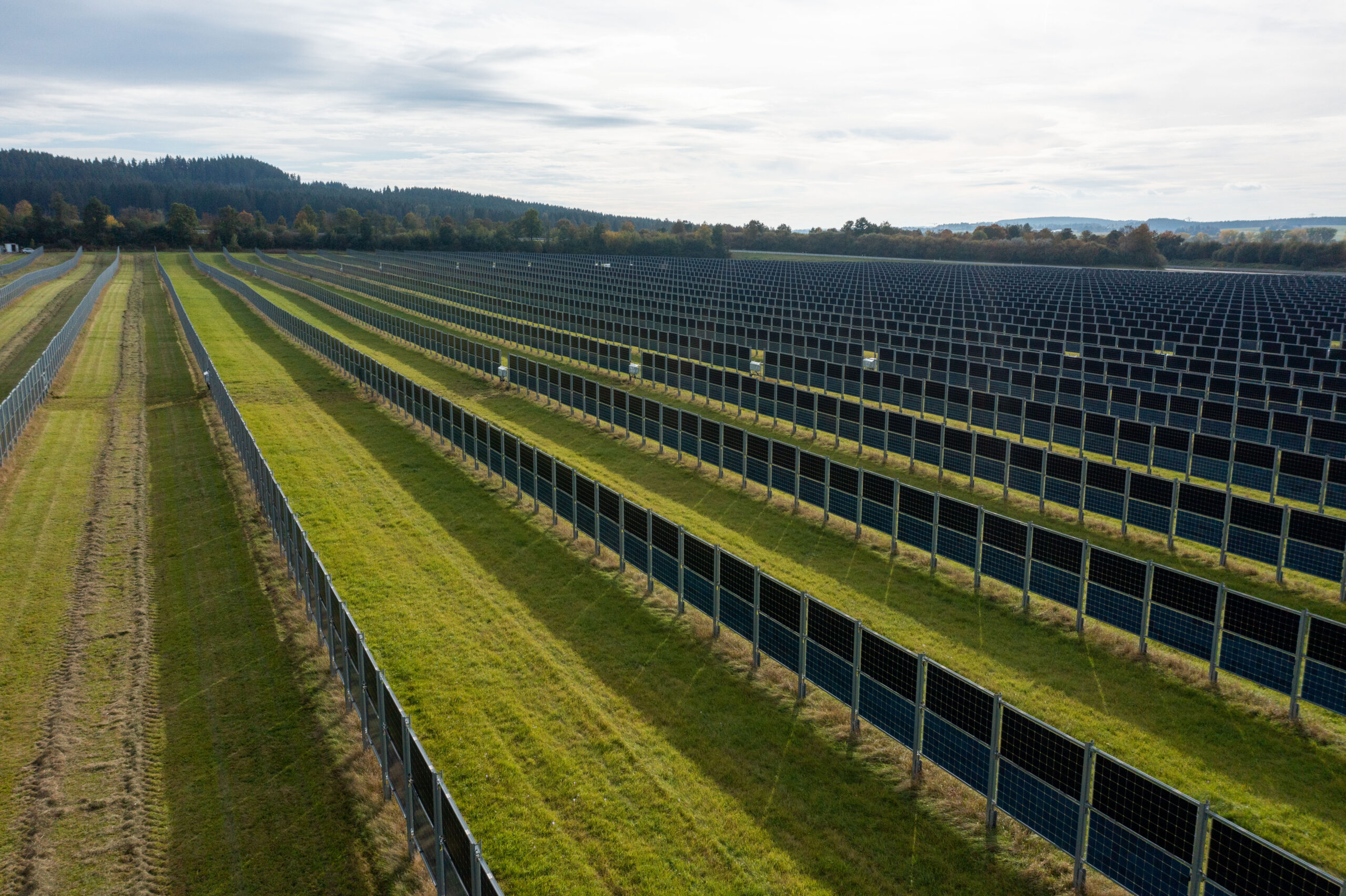
Jinko ESS has delivered battery energy storage systems totalling 20.06MW/66.33MWh for three agrivoltaic projects in Germany. The installations at Grünberg, Grünhainichen, and Marbach combine photovoltaic electricity generation with agricultural land use, incorporating DC-coupled storage to retain solar output during periods of lower electricity prices and make it available for later export.
The equipment has been configured separately for each location, with storage capacities ranging from approximately 12.5MWh to 40MWh. Jinko ESS has used a standardised container platform while adapting the electrical configuration to the generation capacity, grid connection and operational requirements of each development. The company has completed the reported deliveries and undertaken electrical interface validation, with individual commercial commissioning dates remaining to be established.
At Grünberg, the installation comprises an 11MW photovoltaic plant with more than 17,600 solar modules, alongside 40MWh of battery storage. The site has a reported grid-connected output of 9MW, establishing a lower network export rating than the photovoltaic plant’s stated generating capacity. Storage can absorb some of the electricity produced when solar output exceeds the power available for immediate export.
The difference between generation capacity and connection capacity affects how the plant must be operated. Photovoltaic output changes with solar irradiance, while the network connection imposes a limit on the electricity that can be transferred. Charging the battery provides another destination for generated electricity during periods when the available solar power would otherwise exceed the permitted export level.
Once the battery approaches its upper charge limit, the operator must manage any continuing surplus generation within the site’s electrical restrictions. Storage can reduce the need to curtail photovoltaic production, but its finite energy capacity prevents it from absorbing unlimited surplus electricity. The amount retained depends on available charge capacity, the maximum battery charging power and the time for which elevated generation continues.
Jinko ESS has adopted a DC-coupled architecture across the three installations, connecting photovoltaic generation and storage on the direct-current side of the power conversion system. Solar modules generate direct-current electricity, allowing energy to be transferred towards the batteries before subsequent conversion for export to the alternating-current network.
DC coupling can avoid some conversion stages associated with certain alternative electrical arrangements. The resulting energy performance depends on the efficiency of the charging pathway, battery equipment, converters and auxiliary systems. Appropriate voltage control and protection are required because the photovoltaic arrays and battery equipment operate under different electrical characteristics even when connected through a coordinated DC architecture.
Plant-level controls must regulate the transfer of energy between the solar arrays, batteries and network connection. When solar production rises, the control system can allocate available output between immediate export and battery charging within the limits of the installed equipment. Later discharge requires sufficient stored energy and available export capacity, with the power conversion system regulating the electricity delivered to the grid.
Germany’s wholesale electricity market can experience low or negative prices during periods of substantial renewable generation. Those conditions may reduce the value of electricity exported immediately from a photovoltaic plant. The storage systems are intended to shift part of that production towards periods when electricity demand and market prices provide a more favourable commercial opportunity.
Jinko ESS identifies evening periods, including approximately 18:00 to 19:00, as examples of potential discharge windows. The available value will depend on actual electricity prices, the battery’s state of charge and its operating commitments. Dispatch also incurs energy losses, making the difference between charging and discharge prices an important factor in determining commercial returns.
The combined storage portfolio has a nominal output rating of 20.06MW and energy capacity of 66.33MWh. These figures correspond to approximately 3.3 hours of discharge at the combined rated power before operating restrictions and losses are considered. Individual installations have different power and energy configurations, so their own discharge durations must be assessed separately rather than assumed to match the portfolio average.
Storage equipment also needs thermal management capable of supporting repeated daily cycling. Charging and discharging generate heat within battery cells, while ambient temperature affects how quickly that heat can be removed. The management system monitors electrical and thermal conditions and restricts operation where necessary to maintain the permitted equipment limits.
Jinko ESS has incorporated monitoring of temperature, voltage, current, gas detection and system operating status. These measurements provide information needed for equipment supervision, fault identification and battery protection. The monitoring arrangements must operate alongside the power conversion and plant control systems so that abnormal conditions can trigger appropriate responses without relying exclusively on commercial dispatch instructions.
The three projects are close to residential areas, making acoustic performance part of the equipment selection. Jinko ESS reports an operating noise requirement below 75dB at a distance of one metre. That is a project-level measurement condition rather than a stated noise level at nearby homes, where the result will depend on distance, equipment arrangement and the surrounding environment.
Cooling equipment and power conversion systems can contribute to noise during operation. Their placement and operating characteristics therefore affect the overall acoustic design. The installations must also provide access for maintenance and preserve the thermal conditions required by the batteries, making equipment layout an important consideration alongside the agricultural use of the surrounding land.
At each site, the electrical systems have been developed with a power conversion system supplier nominated by the customer. Jinko ESS and that supplier completed joint validation of the electrical interfaces, control logic and communications before equipment delivery. The work addressed how the different systems exchange operating information and respond to coordinated charging and discharge instructions.
Those interfaces determine whether a controller can correctly communicate available battery capacity, permitted power and operating restrictions to the conversion equipment. Commands must be translated into actions that remain within the batteries’ voltage, current and temperature limits. Incompatible control settings or communication arrangements can prevent equipment from operating as a coordinated system, even when individual components satisfy their own specifications.
Pre-delivery validation reduces the amount of integration work that remains to be resolved at the site, although installation and commissioning still require verification of the completed equipment. Electrical testing must establish correct protection operation, control responses and compliance with the grid connection arrangements. The equipment must also demonstrate its ability to charge and discharge under the conditions specified for commercial operation.
The agrivoltaic configuration introduces additional site requirements because electricity infrastructure shares land with agricultural activity. Battery containers, cable routes and access arrangements must be positioned to support maintenance without unnecessarily obstructing the intended land use. The final layout depends on the agricultural operations undertaken at each location and the electrical clearances required around the equipment.
Jinko ESS’s deliveries establish a combined 66.33MWh of planned storage capacity across the three German sites. Following completion of installation and commissioning, the batteries are intended to shift photovoltaic production between periods while remaining within individual connection and equipment limits. Their operating schedules will determine how much solar electricity can be retained and subsequently delivered to the grid.