IN Brief:
- UK Power Networks invested £1.55m in substation equipment serving nearly 3,000 customers around Hacheston.
- Seven circuit breakers were replaced, alongside switchgear and remote-control capability.
- The operator expects faster fault response and improved reliability as local electricity demand changes.
UK Power Networks has completed £1.55 million of electrical equipment upgrades at its Hacheston substation in Suffolk, replacing seven circuit breakers and introducing modern switchgear and remote-control technology. The rural installation supplies nearly 3,000 customers. The investment renews equipment used for switching and isolating circuits, while remote operation is intended to shorten the time needed for authorised control engineers to respond to faults and restore unaffected sections of the network.
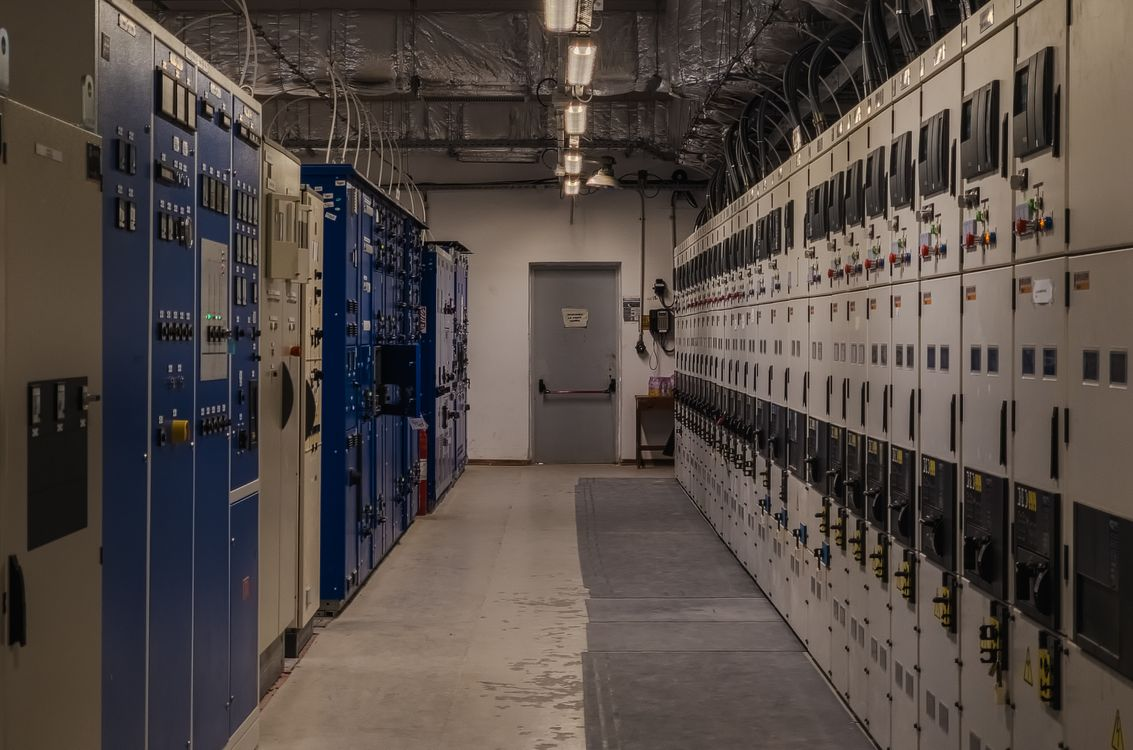
At the substation, switching equipment connects and separates sections of the local distribution system, working alongside protective devices that identify abnormal electrical conditions. Circuit breakers are designed to interrupt current within their specified duty, including fault current when the protection system calls for a trip. Seven breakers have now been replaced at Hacheston, giving the operator renewed devices for circuit isolation and the switching sequences required in routine work and emergency response. Their performance depends on the matching protection and control arrangements installed around them.
In normal service, circuit breakers remain closed to carry electricity through the network. If protection equipment detects a fault that meets its operating criteria, the relevant breaker can open to separate the faulted part of the system. The objective is to protect electrical assets and reduce the section of the network affected by the disturbance. Coordination between protective devices is important: the equipment nearest a fault should generally operate before upstream equipment wherever the network design and fault conditions allow.
Remote-control capability changes the way switching can be executed after a network fault. Where an authorised control system can operate an appropriate switch remotely, control engineers may be able to isolate sections and carry out permitted restoration steps without waiting for an operator to travel to each site. The result depends on the topology of the local network, available alternative supply paths and the nature of the fault. Remote operation cannot overcome a physically damaged cable or create an alternative feed where one does not exist.
The replacement equipment must be compatible with the fault duties and switching arrangements of the existing substation. Its operating envelope includes continuous current capability, fault interruption duty and the coordination of protection with connected circuits. Testing and commissioning are necessary whenever those relationships change, because a correctly functioning breaker must operate at the intended point in the network’s protection sequence. UK Power Networks has confirmed the equipment replacement and remote-control work, with the £1.55 million investment addressing the Hacheston site serving the surrounding community.
Rural distribution networks present particular restoration challenges. Customer connections may be spread across comparatively long feeder routes, with access to some assets taking longer than at densely spaced urban installations. Weather, vegetation and third-party damage can also affect overhead and underground infrastructure. In that operating environment, modern switching capability helps control teams identify which network section must remain isolated and which unaffected sections can be restored, subject to the safety procedures and electrical configuration available at the time.
The project serves an area where electricity requirements may change as households and businesses adopt more electrical equipment and processes. New electric heating, vehicle charging and commercial loads can alter the demand profile experienced by distribution assets. Renewed switching equipment supports management of that system, particularly when engineers need to isolate equipment or reorganise the available supply paths. Transformer, conductor and connection ratings separately determine how much power can be transferred through the network, making condition and capacity distinct considerations in investment planning.
A breaker provides the physical interruption function, while remote operation allows a control centre to issue an authorised switching command and receive indications of equipment status. The combined arrangement can shorten fault response when a section can safely be isolated and an alternative feed is available. Its effectiveness still depends on accurately identifying the affected section, checking the network configuration and applying the required safety procedures. Remote equipment therefore supports, rather than replaces, the protection systems and engineering decisions governing restoration.
Thomas Eng, project manager at UK Power Networks, said the completed works would strengthen local electrical infrastructure and help support future demand. The company expects the seven replacement breakers, renewed switchgear and remote-control functions to improve reliability for the almost 3,000 customers supplied from Hacheston. The operational benefit will become apparent through how the site performs during routine switching, maintenance and faults, particularly when control engineers need to restore service rapidly.
With the £1.55 million investment completed, Hacheston now has renewed circuit-breaking capability and remotely operated control arrangements. These improvements are particularly useful in a rural network where access to individual assets can take time. Local restoration remains governed by protection settings, the condition of the connected circuits and the ability to transfer demand safely, but the operator can manage more of the switching sequence from its control systems.