IN Brief:
- Scottish ministers granted planning consent for SSEN Transmission's proposed Carnaig and Hurlie 400 kV substations on 18 November 2026.
- Carnaig forms part of the Spittal–Loch Buidhe–Beauly reinforcement, while Hurlie is associated with the Kintore–Tealing connection.
- Both decisions overturn local authority refusals, although associated overhead lines and other project infrastructure retain separate approval and delivery requirements.
Scottish ministers have granted planning consent for two proposed 400 kV substations being developed by SSEN Transmission, overturning local authority refusals affecting major electricity network reinforcement projects in the Highlands and Aberdeenshire.
The decisions, confirmed on 18 November, concern Carnaig near Loch Buidhe in Sutherland and Hurlie in Fetteresso Forest, Aberdeenshire. Both substations form part of wider projects intended to increase electricity transmission capacity across northern Scotland and accommodate additional renewable generation.
Scottish ministers determined the applications following appeals administered through the Planning and Environmental Appeals Division. Both local authorities had rejected the proposals despite recommendations for approval from their professional planning officers, leading SSEN Transmission to seek ministerial decisions.
Highland Council refused the Carnaig application on 17 December 2025, while Aberdeenshire Council rejected Hurlie on 30 January 2026. The subsequent appeals required further consideration of the planning, environmental, and technical material associated with each proposed development.
The Scottish Government’s published appeal record confirms that planning permission has been approved for Carnaig, while SSEN Transmission has confirmed the corresponding decision for Hurlie. The approvals remove significant planning obstacles but do not establish that either substation has entered construction or operation.
Carnaig forms part of the proposed Spittal–Loch Buidhe–Beauly 400 kV connection, a major reinforcement programme extending across northern Scotland. The wider development includes a new overhead line and associated substations intended to provide additional capacity for transferring electricity through the transmission network.
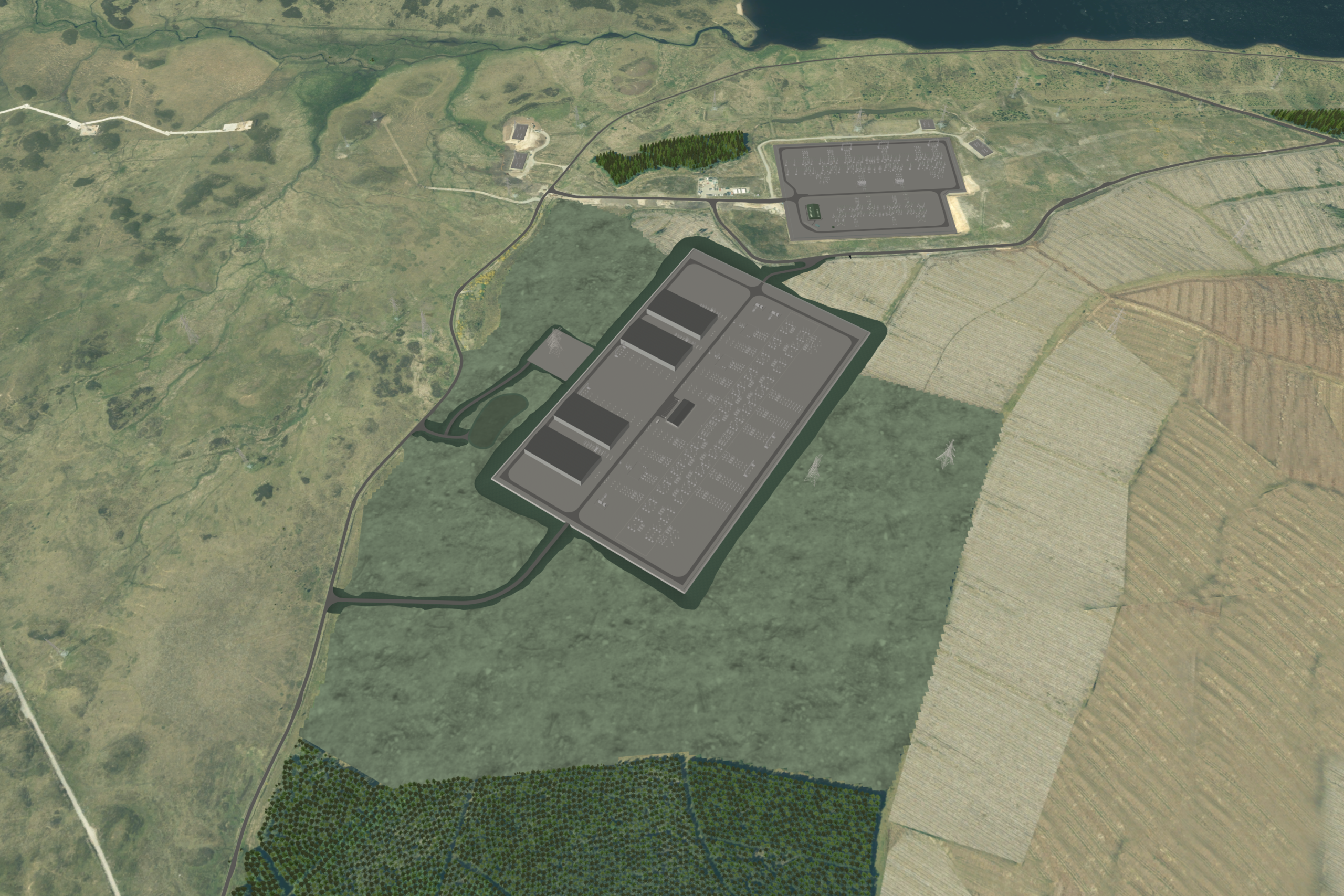
The proposed Carnaig facility will be situated near the existing Loch Buidhe 275 kV substation. Its development will create an important interface between the new 400 kV infrastructure and existing transmission assets, subject to the detailed electrical configuration and construction programme.
Substations provide the switching, transformation, protection, and control functions needed to connect different parts of the electricity network. Their configuration depends on the circuits entering and leaving the installation, the voltage levels involved, and the operating characteristics of the connected equipment.
High-voltage circuit breakers and associated protection systems allow faults to be detected and affected circuits isolated. Disconnectors provide visible or otherwise verifiable isolation arrangements for maintenance, while busbars distribute electricity between connected circuits within the substation.
Where voltage conversion is required, transformers transfer power between different voltage levels. Their design and installation must account for loading, insulation, thermal performance, and the electrical conditions expected during normal operation and faults.
The design of a new 400 kV substation also requires coordination with the overhead lines connecting to it. Conductor arrangements, insulation clearances, gantries, protection settings, and control interfaces must satisfy the operating requirements of the connected transmission system.
Carnaig’s development is therefore linked to the wider Spittal–Loch Buidhe–Beauly programme. The new substation cannot deliver the intended additional transfer capability independently of the transmission circuits and associated network equipment that form part of the reinforcement.
Hurlie serves a different part of the Scottish transmission system. Proposed within Fetteresso Forest near the existing Fetteresso substation, it will provide a connection point for the planned Kintore–Tealing 400 kV overhead line.
The Kintore–Tealing project includes new transmission infrastructure extending through Aberdeenshire and Angus. SSEN Transmission has submitted a separate consent application for the overhead line, with related work involving new and upgraded substations elsewhere along the proposed route.
The Hurlie site replaced an earlier proposed location at Fiddes following consultation and further development of the transmission scheme. The relocation changed the proposed substation location while preserving its intended function within the wider 400 kV connection.
The new substation will need to be integrated with the existing network and the proposed overhead line. Electrical interfaces must accommodate the intended power flows, equipment ratings, voltage control requirements, and protection arrangements required for operation at 400 kV.
Operating voltage is only one factor determining the capacity of a transmission circuit. Conductor thermal ratings, system stability, transformer capability, and the wider network configuration also influence how much electricity can be transferred under different conditions.
Increasing the network’s voltage and installing additional high-capacity infrastructure can provide greater transfer capability, but the completed system must be evaluated as a whole. A new substation cannot independently overcome constraints elsewhere on an interconnected transmission route.
Both projects form part of SSEN Transmission’s Pathway to 2030 programme, which includes major new overhead lines, substations, and reinforcement of existing electrical assets. The investment programme is intended to accommodate changing electricity flows as further renewable generation connects in northern Scotland.
The company has outlined a proposed £29 billion transmission investment programme, with associated estimates of employment and economic activity across Scotland. These figures relate to the wider infrastructure programme rather than the individual capital costs of Carnaig and Hurlie.
Planning consent is one stage in the delivery process. Before the proposed substations can operate, their developers must complete the remaining design, procurement, construction, and commissioning requirements, together with any conditions attached to the approvals.
Substation construction involves substantial civil engineering work before major electrical equipment can be installed. Foundations, site drainage, internal access, equipment support structures, control buildings, and cable routes must be developed to accommodate the specified electrical configuration.
Equipment delivery and installation must then be coordinated with the wider construction schedule. High-voltage transformers, switchgear, busbars, protection equipment, and other systems require inspection and testing before they can be energised.
Electrical commissioning establishes whether the completed equipment operates according to the approved design. This includes verification of protection functions, switching arrangements, control systems, insulation performance, and communications with the wider network.
The associated overhead line projects have separate statutory consent requirements. Approval of the substation locations does not automatically authorise every circuit, tower, or related installation required to complete the transmission reinforcement.
SSE’s interim results, also published on 18 November, recorded Carnaig and Hurlie among the substations awaiting ministerial decisions at the reporting cut-off. SSEN Transmission’s subsequent confirmation of the appeal outcomes establishes the updated planning position.
The distinction between project approvals and completed network capacity will remain important as the Pathway to 2030 programme progresses. Individual assets can receive planning permission at different times, while construction and energisation require the coordinated completion of connected infrastructure.
SSEN Transmission will continue working with local authorities, landowners, and communities as the two developments advance. Further construction and commissioning milestones will determine when Carnaig and Hurlie can form part of the operating 400 kV network.