IN Brief:
- The National Wealth Fund is taking minority equity positions alongside Matrix Renewables in the Eccles and Kilmarnock batteries.
- Each Scottish project is rated at 500 MW/1 GWh, equivalent to approximately two hours at nominal full output.
- Eccles targets October 2027 operation and Kilmarnock September 2028; their construction schedules differ.
The National Wealth Fund has agreed to invest alongside Matrix Renewables UK in two Scottish battery storage developments with a combined rating of 1 GW/2 GWh. The 19 November agreement gives the government-owned fund a minority equity interest in the Eccles and Kilmarnock projects, while Matrix retains majority ownership. Both sites are planned along important transmission corridors serving Scotland and England; the amount invested and the fund’s precise equity percentages have not been disclosed.
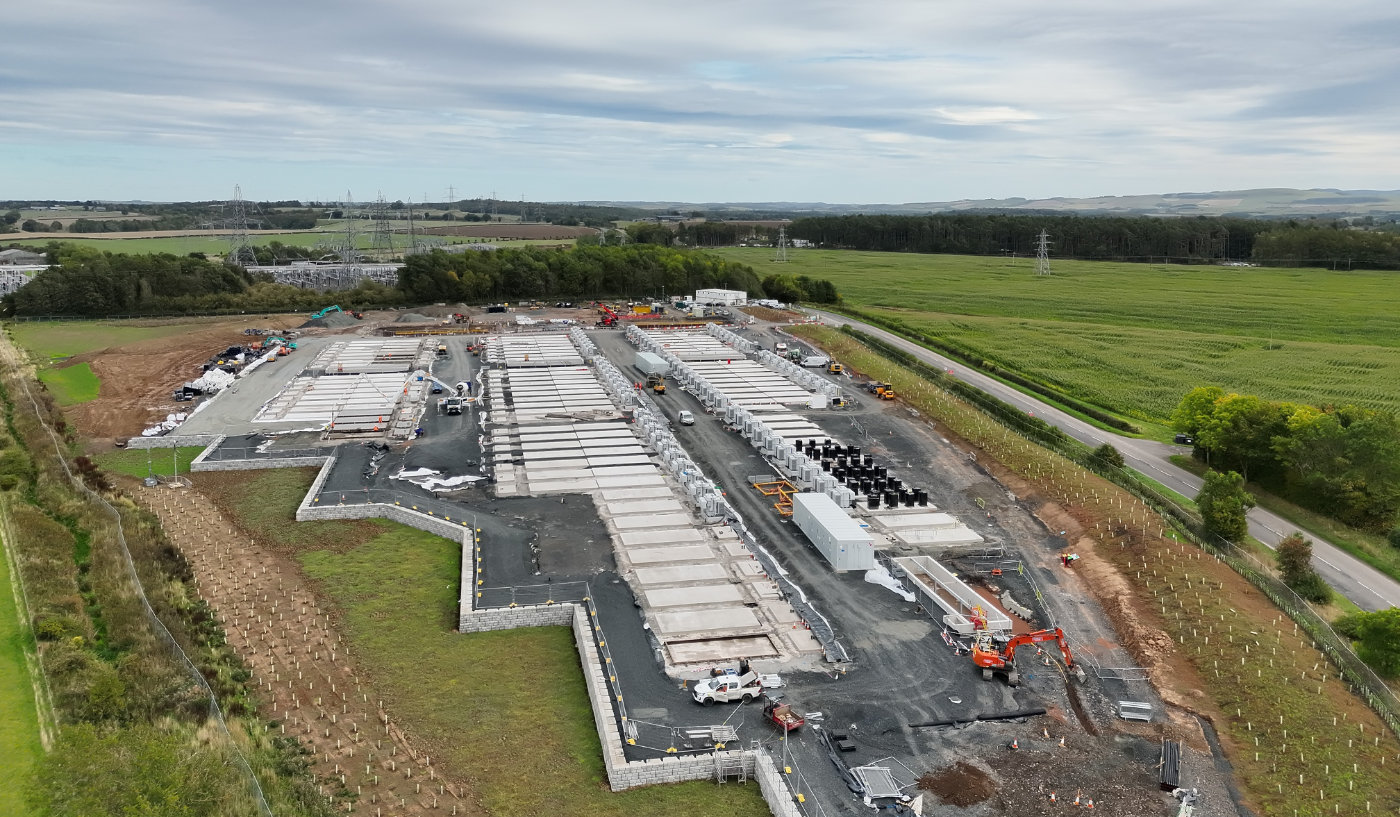
Construction is already under way at Eccles, near Leitholm in the Scottish Borders, where commercial operation is now expected in October 2027. Main construction at Kilmarnock is expected to begin in December 2026, with commissioning and commercial operation targeted for September 2028. The equity transaction supports their development and delivery; neither plant is yet supplying electricity as an operational battery system.
Each project is planned to provide 500 MW of discharge power and 1,000 MWh of energy storage. The combined 2 GWh figure indicates how much energy the batteries can hold at their stated rating, rather than their instantaneous contribution to the grid. At the full 1 GW nominal power rating, the portfolio has an approximate two-hour energy-to-power ratio. Actual dispatched electricity depends on usable state of charge, conversion losses, reserved operating capacity and the conditions imposed by grid and market participation.
Eccles entered construction in November 2025 and secured a £245 million non-recourse debt facility in April 2026, arranged by CIBC, MUFG and NatWest. Matrix had already selected Tesla for engineering, procurement and construction of the 500 MW/1 GWh installation. In March, EDF signed a long-term battery optimisation agreement to manage its route to electricity markets once the site begins operating. These established financing, construction and trading arrangements sit alongside the newly announced minority equity investment, rather than forming part of a fresh round of equipment orders.
Kilmarnock is planned to connect to ScottishPower’s 400 kV Kilmarnock transmission substation. Matrix identifies Tesla Megapack 3 batteries and two BEST Transformers high-voltage units, each rated at 294 MVA, for that installation. The specification is particular to Kilmarnock: Eccles has its own connection, delivery contracts and engineering design. Electrical studies and commissioning will have to establish the performance of the transformers, conversion equipment, protection systems and metering at the agreed import and export limits of Kilmarnock’s grid connection.
Scottish wind generation can exceed local demand at times when transfer capacity to other parts of Great Britain is constrained. A battery with available import capacity can absorb some electricity during a surplus and export it later when market signals and connection conditions permit. Storage can therefore change the timing of electricity flows and provide some balancing flexibility, although it cannot remove a physical transmission bottleneck or replace the network reinforcement needed to increase transfer capability. The usefulness of each project will depend on its connection location and the operating conditions set by the network and system operators.
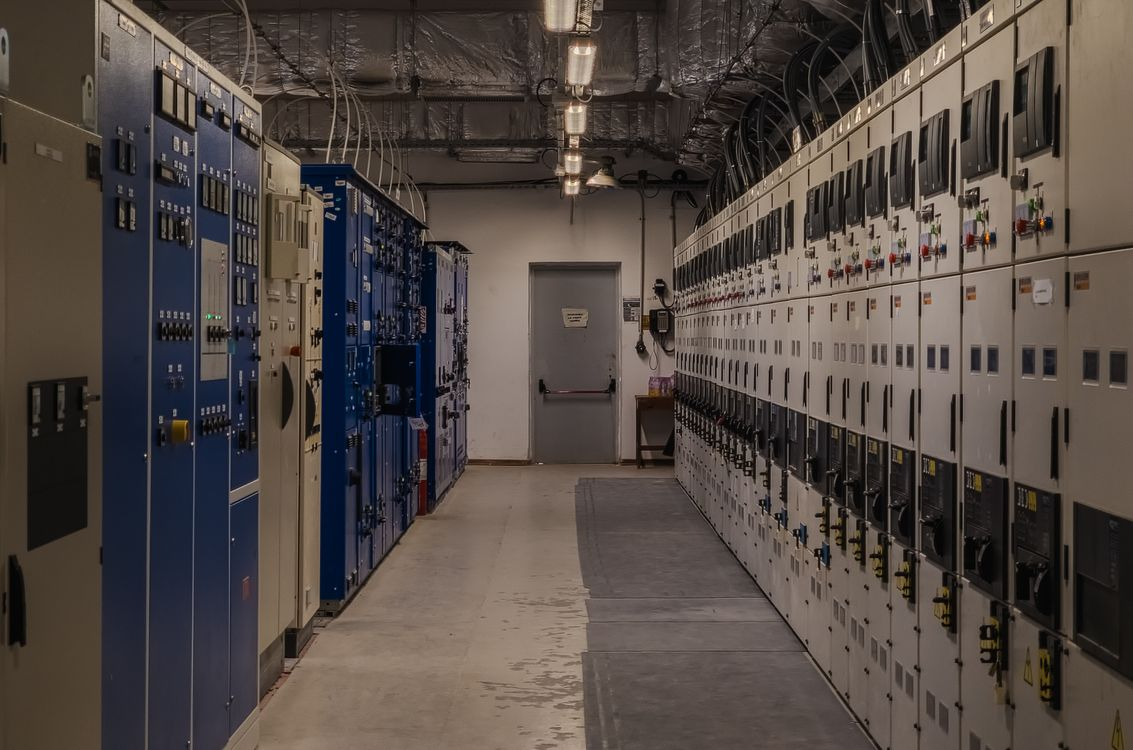
Battery power conversion equipment changes the direct current produced by battery cells into alternating current synchronised with the electricity system. Controls monitor battery temperature, charge level and electrical limits while the site management system responds to dispatch signals. A battery can move between charging and discharging much faster than many conventional thermal generating units, but the amount of energy available over a sustained interval is finite. Recharging requirements, cycle management and commercial commitments therefore govern the services that can be offered at any given time.
Both sites need extensive electrical and civil works before the declared capacity can enter service. Foundations, access roads, battery enclosures, conversion systems, cable circuits, transformers, fire protection and supervisory controls must be completed before energisation and performance testing. Kilmarnock’s planned 400 kV interface adds a high-voltage transmission connection that must be coordinated with the network operator. Site acceptance will also have to demonstrate protective equipment operation, control-system responses and compliance with the connection agreement; the financial transaction does not replace those delivery milestones.
The partners expect more than 200 jobs to be created or supported across construction and operation of the two developments. The National Wealth Fund has not disclosed its investment amount, and the announcement establishes minority participation without specifying a percentage for either site. Matrix, a renewable energy platform backed by TPG Rise, will continue to control both projects. The ownership change provides a public-sector investor alongside existing private backing while leaving the published 500 MW/1 GWh design rating of each battery unchanged.
Kilmarnock’s December 2026 construction start is the next scheduled delivery milestone, followed by equipment installation and electrical testing towards its September 2028 operating target. Eccles is further advanced, but its own October 2027 target remains subject to grid commissioning and acceptance. At both sites, actual dispatch will depend on usable battery energy and the terms of their connection agreements. The equity agreement supports a total of 1 GW/2 GWh of planned storage, with capacity entering the transmission system only after the installations achieve commercial operation.