IN Brief:
- The IJmuiden Ver Alpha and Nederwiek 1 links will transmit offshore wind power towards the Borssele grid connection.
- Prysmian supplies the 525kV cables and DEME is carrying out installation using a purpose-built pontoon.
- The Veerse Meer work is expected to continue into spring 2027, with waterway restrictions during installation.
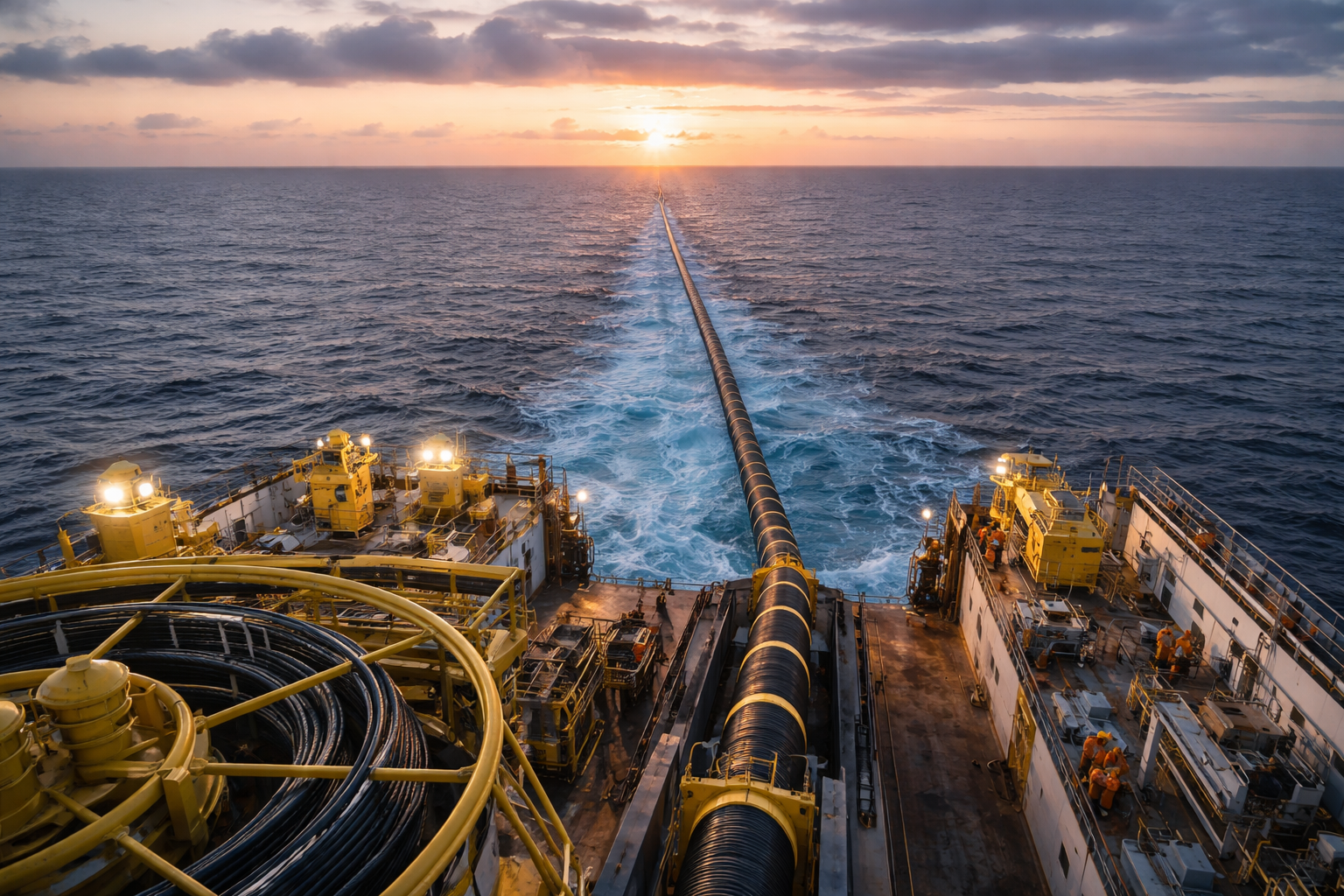
DEME has started laying 525kV high-voltage direct current (HVDC) cables through the Veerse Meer in Zeeland for two of the Netherlands’ new offshore wind grid connections. Working under cable supplier Prysmian, the contractor is using a specially developed pontoon to install the lines in the lakebed. The work serves the IJmuiden Ver Alpha and Nederwiek 1 connections being built for transmission system operator TenneT, which will carry electricity from North Sea wind farms to Borssele.
The cables land near Banjaardstrand at Kamperland, pass beneath the Veerse Gatdam and cross approximately 12km of inland water before continuing towards the Borssele industrial area. The two connections are designed to transmit up to 4GW between them. At Borssele, separate converter stations will transform the incoming 525kV direct current into 380kV alternating current for injection into the Dutch transmission system. The offshore platforms, subsea routes, land cables and converters must all be completed and tested before either connection can enter service.
Each connection requires four cables through the Veerse Meer: two high-voltage power cables, a spare high-voltage cable and an optical fibre cable for communications and monitoring. Manufactured by Prysmian in Finland, the power cables measure approximately 16cm across and weigh about 67kg per metre. A single kilometre therefore represents roughly 67 tonnes of cable before reels, handling equipment and supporting gear are taken into account. Controlling cable tension and bend radius is essential while paying such a heavy line from the installation equipment into the planned route.
DEME’s installation platform is assembled as a floating work island suited to the restricted dimensions of the waterway. The pontoon was transported in sections through the Zandkreek lock and assembled on the Veerse Meer, with anchors and lines used to maintain position as the installation advances. Municipal navigation notices warn of marked safety zones around the pontoon and its support craft. Some anchor lines are submerged, so exclusion areas can extend beyond the visible outline of the main platform.
A vertical injector beneath the pontoon directs high-pressure water into sandy sediment, temporarily fluidising the material so the cable can settle beneath the bed. As the injector advances, the sand falls back around the cable instead of being removed along a continuous dredged trench. TenneT selected this method to limit water clouding and disturbance to the lake, although the burial depth and cable position still require verification by post-installation surveys. The injector must achieve the specified cover depth along the route, with the final cable alignment and burial verified by post-installation surveys.
The method shifts much of the installation control towards the injector’s movement, the behaviour of the disturbed sand and the mechanical load on the cable. A misaligned cable can require corrective work even when the surrounding bed closes as intended. Survey teams will need to establish the cable’s final route and cover, while the project team must protect the insulation system from excessive pulling forces, tight bends and damage during handling. The spare conductor provides a further cable route within each connection’s design, but it does not replace acceptance testing of the installed circuits.
Preparatory work has included clearing obstacles from the lakebed, assembling the installation platform and delivering large cable reels to the region. In an earlier phase, TenneT installed protective ducts beneath the Veerse Gatdam using horizontal directional drilling. Those ducts allow the future cable route to cross under the coastal flood defence without an open trench through the dam. Inland cable works and converter-station construction are progressing elsewhere along the route, with separate equipment and civil engineering interfaces to manage.
Prysmian awarded DEME the engineering and installation work in 2024, covering the inland-waterway section and other cable installation activities. The current development is the start of physical laying in the Veerse Meer under that contract, rather than a fresh award. Once installed, the cables will need joining, termination and electrical testing before they can be integrated with the offshore and onshore equipment. Construction completion of the waterway section alone will not permit the transmission links to be energised.
At the offshore end, alternating current collected from wind turbines will be converted to HVDC for the long subsea transmission distance. An onshore converter reverses the process, producing alternating current compatible with the national grid. DC transmission helps limit cable charging-current constraints on long offshore routes, but it places major equipment duties on converters, cooling, protection, controls and cable insulation. Fault isolation and coordinated operation must extend across both ends of each link.
Operating at 525kV also allows a high power transfer rating without requiring the current that a lower-voltage link would carry at the same transmitted power. Resistive conductor losses rise with the square of current, although the complete system’s performance also depends on the number of cables, conductor size, converter losses and the actual power dispatched. The installation therefore combines heavy civil and marine engineering with the electrical design required for multi-gigawatt transmission.
Work on the Veerse Meer is planned to run into spring 2027. Municipalities around the waterway have advised recreational and commercial users to follow temporary navigation restrictions as the pontoon and its anchoring system move along the route. The installation period extends across months when marinas and other waterside activities may face short interruptions, with the planned spring completion intended to reduce disruption during the summer season.
After the cables are buried, survey and electrical acceptance work must establish whether the section meets its installation requirements. Further offshore cable laying and converter commissioning will follow on their own schedules. This inland cable placement establishes the next physical section linking the coastal landing point to the onshore infrastructure for IJmuiden Ver Alpha and Nederwiek 1.