IN Brief:
- The European Investment Bank is providing €500m of guarantees under its Growth4Energy initiative.
- DZ BANK could extend up to €1.2bn of additional finance for local infrastructure investments.
- The guarantee covers up to half the lender’s credit risk per eligible borrower, with projects generally costing up to €80m.
The European Investment Bank (EIB) has agreed to provide DZ BANK with €500m in guarantees to support additional lending of up to €1.2bn to German municipal utilities and network operators. The Growth4Energy arrangement covers investment in electricity distribution networks, district heating, water and wastewater infrastructure. The guarantee is a mechanism for sharing lending risk; it is not a €1.2bn grant programme or a direct commitment to fund specified grid projects.
Under the agreement, the EIB can assume up to 50% of DZ BANK’s credit risk for each eligible borrower. That reduces the bank’s exposure to qualifying loans, creating room to lend more or to offer longer financing terms where a project meets the required credit assessment. The €500m refers to the guarantee envelope, while €1.2bn is the potential additional lending enabled by risk sharing; the two amounts describe different parts of the financing arrangement.
Local municipal utilities, known as Stadtwerke, frequently maintain networks that supply electricity, heat and water to their surrounding communities. The new facility is aimed particularly at infrastructure schemes with investment costs of up to €80m. Smaller operators can face difficulty raising finance directly on capital markets, and long-term bank lending may be constrained by how much exposure a lender is prepared to retain to one borrower or sector.
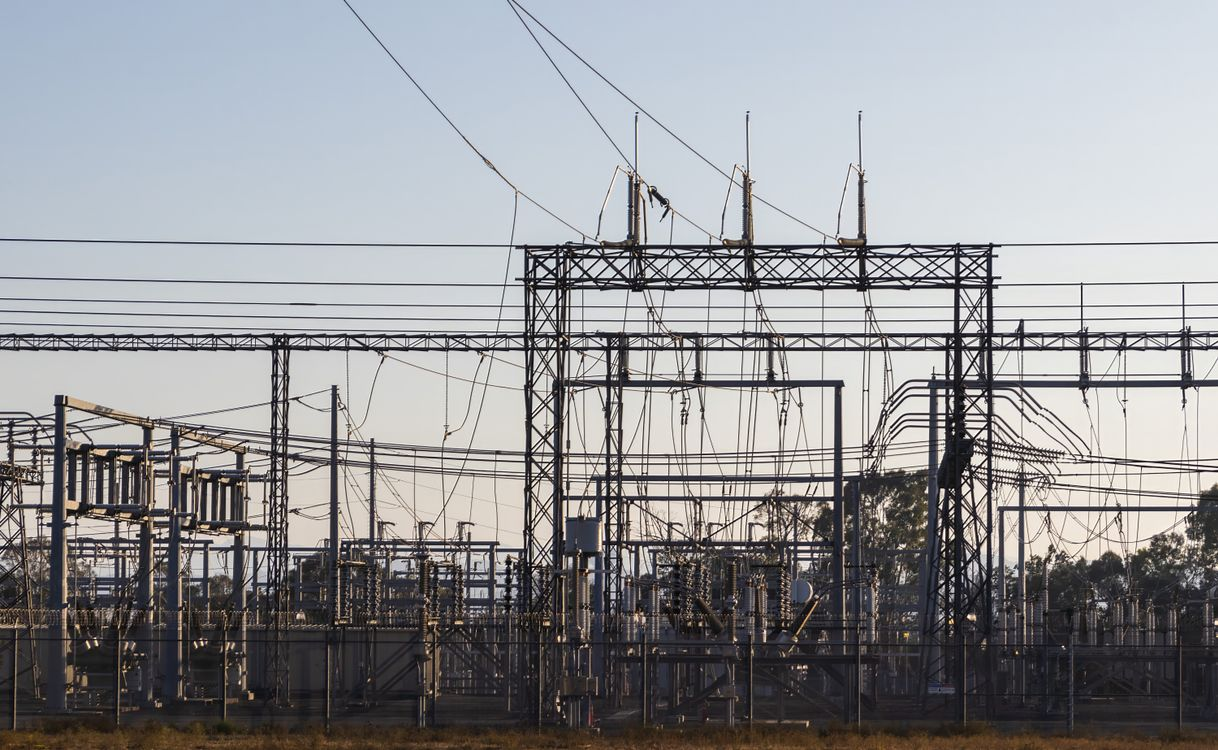
Distribution-network investment spans both replacement and expansion. Electricity operators must renew ageing transformers, cables and switchgear while connecting more distributed solar generation, battery installations, charging infrastructure and electrically driven heating. Reinforcement is needed when the existing assets cannot accommodate the expected current, voltage profile or fault levels. In other locations, changes to protection systems and network automation may allow additional connections without rebuilding every part of a circuit.
A new connection may change power flows across several network components rather than only at its point of attachment. Engineers assess feeder loadings under peak and minimum demand, fault currents, voltage changes and the effect of generation exporting back through distribution substations. Upgrades can involve new conductors, transformer capacity, switching arrangements and remote monitoring, all of which must be installed and tested while existing customers retain an acceptable supply.
Those capital requirements often arise before increased electricity use or new customer connections produce corresponding network revenues. Equipment can remain in service for decades, whereas procurement, construction and connection work demand finance earlier in the programme. Borrowing capacity and financing tenor therefore influence the pace at which utilities can deliver technically necessary work. The EIB guarantee is designed to ease a lending constraint while leaving individual project appraisal and repayment obligations in place.
DZ BANK’s position within Germany’s cooperative financial network gives it access to regional lenders and local infrastructure clients. Its management has identified the need for investment in networks, storage and generation alongside changes in the heating system. The facility nevertheless has stated eligibility boundaries: the fact that an asset is relevant to the energy transition does not automatically make its full cost suitable for guaranteed lending.
Germany’s energy and heating transformation has an estimated investment requirement of more than €700bn by 2030, according to figures from industry association BDEW and consultancy EY cited by the EIB. That estimate spans a much broader portfolio than the DZ BANK facility. The investment estimate covers much more than electricity distribution equipment, and no allocation of the new lending capacity to individual power-network projects has been disclosed.
District-heating upgrades can also increase the need for electrical infrastructure when a municipal operator moves towards large heat pumps or other electric heat sources. Heat networks may need changes to pipework, operating temperatures, pumping equipment and the integration of surplus industrial heat. Where one utility operates both heat and electricity assets, the timing of electrical reinforcement can affect when new heating equipment is able to enter service.
Water and wastewater systems are included in the eligible infrastructure scope, making the lending programme broader than a grid-only initiative. Pumping stations, treatment processes and their electrical supplies can require substantial renewal or resilience investment. Any financing provided for those uses will draw on the same available lending framework, so it would be inaccurate to describe the full €1.2bn as money earmarked for electricity distribution.
Even with partial credit-risk protection, DZ BANK will still need to assess the financial strength of borrowers and the costs and timing of the proposed works. Delays in equipment delivery, changes to permitted network revenues and higher construction costs can affect repayment capacity. The EIB guarantee reduces the share of credit exposure borne by the lender; it does not insure the physical project against every construction or operational risk.
The EIB and DZ BANK have now established the framework under which eligible local utilities can seek additional financing. Subsequent loan agreements and project delivery will determine how much of the €1.2bn potential is used, including the portion devoted specifically to electricity networks. No individual grid upgrade was confirmed as financed by the guarantee at the time of the agreement.