
IN Brief:
- The Alfeld battery has a reported power rating of 137.5MW and gross storage capacity of 282MWh.
- Kyon connected the facility to Avacon’s 110kV network earlier in the year before its latest operational milestone.
- The Scale Fund-backed installation can support balancing services and spot-market optimisation, subject to its operating limits.
Kyon Energy has inaugurated its 137.5MW/282MWh Alfeld battery installation in Lower Saxony following completion of the grid-connection and commissioning programme. The facility is financed by Denmark’s Scale Fund and operated by the project company Scale Alfeld. It is connected to the Avacon network at 110kV and is intended to provide grid-balancing services alongside electricity-market trading.
The inauguration follows a separate connection milestone reported in January, when the battery site was energised through the Avacon substation interface. That earlier event enabled system testing and trial operation but did not mean the complete installation was ready for commercial dispatch. Kyon confirmed the later opening in October, after the project’s original expectation of reaching operation in the summer. The October milestone confirms the transition from testing to an inaugurated operational asset, rather than a further network connection.
Kyon developed and technically implemented the project, while the Scale Fund financed the installation and Scale Alfeld GmbH & Co. KG operates it. Kyon is part of TotalEnergies, but the investment and ownership arrangements for this facility are distinct from a battery held directly in the energy company’s own asset portfolio. Avacon Netz provided the connection to its regional electricity system, with other delivery partners supporting the project programme.
At the announced ratings, the 282MWh gross energy capacity is equivalent to approximately 2.05 hours of discharge at 137.5MW. The calculated duration is not the same as a guaranteed net export period, because battery-management limits, conversion losses and energy reserved for grid services reduce the amount available for any single trading instruction. The MW rating determines the rate at which energy can be exchanged, while MWh describes the inventory available over time.
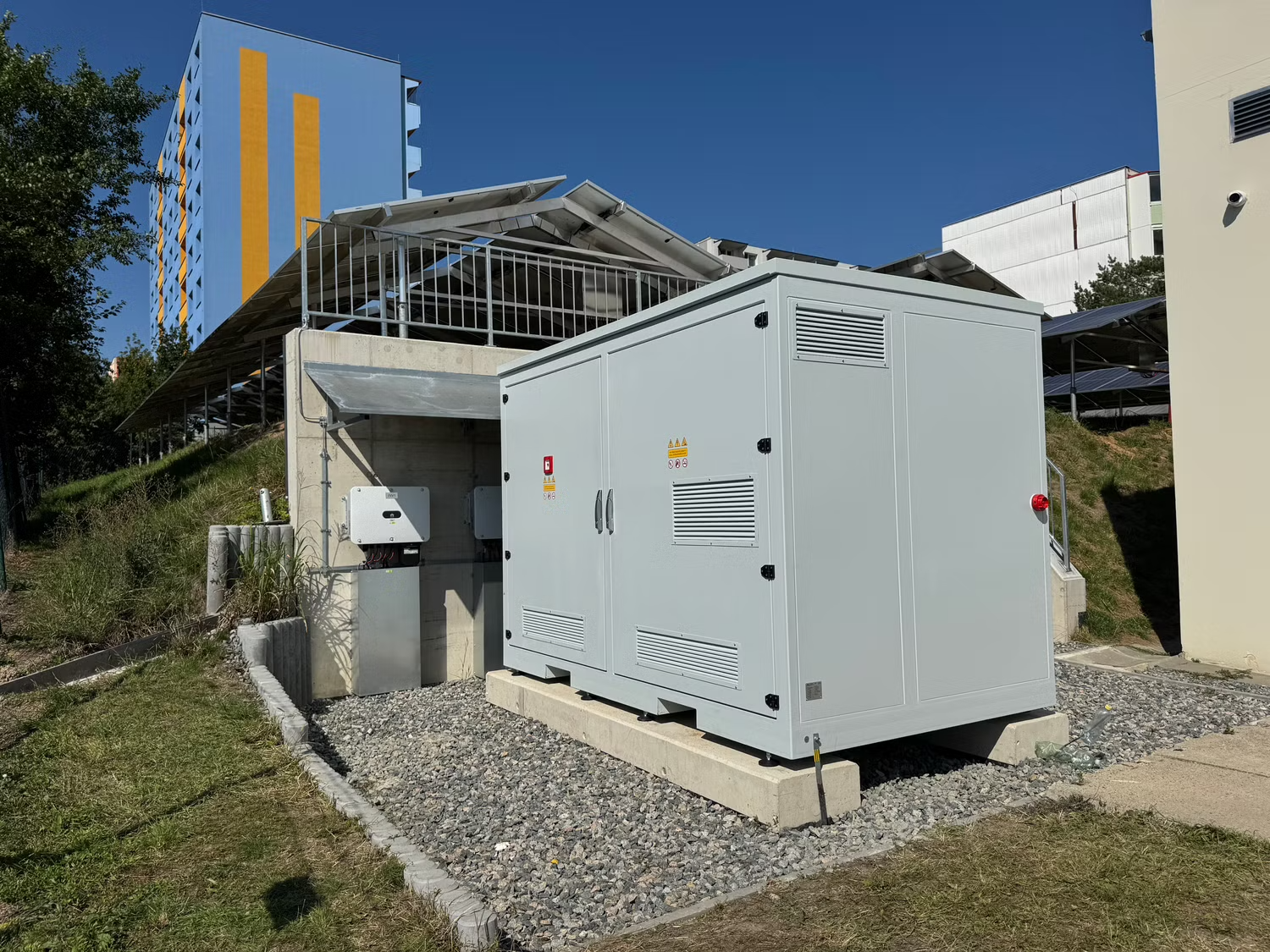
The Alfeld site has 72 battery containers and a dedicated substation equipped with two high-voltage transformers. Batteries and associated power-conversion systems operate through a controlled direct-current and alternating-current interface. Inverters manage charge and discharge, while transformers and switchgear provide the voltage transformation and protection needed for the 110kV connection. Cooling, monitoring and fault detection are essential to operating multiple containerised battery racks safely.
Locating the installation close to Avacon’s Godenau substation reduced the length of the high-voltage connection. The project built its own 110kV substation and connected it to the existing network node across the adjoining site. A shorter route can avoid some of the additional land, construction and consenting requirements associated with a distant grid connection. It does not remove the need to manage the substantial import and export power travelling through the connection equipment.
Kyon has identified primary frequency control and spot-market optimisation among the intended uses of the Alfeld installation. Frequency response requires an automated change in active power when system frequency moves away from its target, while wholesale optimisation schedules energy purchases and sales over longer periods. The operator must therefore manage the battery’s available charge and inverter headroom so that trading activity does not prevent delivery of any contracted balancing response.
A commitment to upward frequency response requires sufficient stored energy for increased export or reduced charging, whereas downward response requires the capacity to absorb power or reduce export. Market schedules also affect how many times a battery cycles and the thermal load on its components. These constraints are managed through the energy-management system and maintenance programme. Neither the published nameplate ratings nor the inauguration establishes how much balancing capacity has been contracted on a particular day.
The 110kV connection places a large flexible asset within Avacon’s distribution-network area. The local system must accommodate rapid changes in the site’s power flow while keeping equipment thermal ratings, voltage limits and protection requirements under control. Network dispatch instructions and connection conditions can restrict output even when the battery has energy available. Actual dispatch remains subject to its connection agreement, available stored energy and instructions from the relevant system operators.
Scale Fund’s financial return will depend on the services procured, market prices and how frequently the system can respond while maintaining availability. The site’s design also offers access to spot-market arbitrage, where the difference between purchase and sale prices must cover losses, operating costs and degradation. Earlier Kyon descriptions referenced possible network-charge treatment under German regulation, but that does not demonstrate a fixed or guaranteed annual revenue stream.
At plant level, commissioning establishes that the installation has moved beyond construction and initial connection tests. Operating the facility requires continuing checks on transformer performance, inverter availability, cooling systems, battery state of health and communications with market and grid-control platforms. Fault response and planned maintenance can reduce available capacity, making asset management an ongoing part of the project’s operation rather than a task completed at handover.
The Alfeld battery has now passed from network energisation to its formal operational milestone with 137.5MW of power capability and 282MWh of gross storage capacity. Its connection and control arrangements allow the operator to pursue multiple flexibility services, subject to market qualification, operating limits and the capacity available at any given time.