IN Brief:
- Spain has approved a €17.142bn transmission plan extending to 2030, including €2.010bn for international interconnections.
- The programme includes 193 new substation installations, 6,707km of new lines, and upgrades affecting 8,164km of existing circuits.
- The government expects the network programme to accommodate 47GW of additional demand, including industrial electrification and transport.
Spain’s Ministry for the Ecological Transition and the Demographic Challenge has confirmed cabinet approval of a €17.142bn programme for electricity transmission investment to 2030. The binding plan provides for new substations, additional high-voltage lines and reinforcement of existing circuits as industrial electrification and renewable generation change the demands placed on the grid. Approval on 20 November establishes a national framework for network development, with individual schemes still subject to their own engineering, environmental and construction requirements.
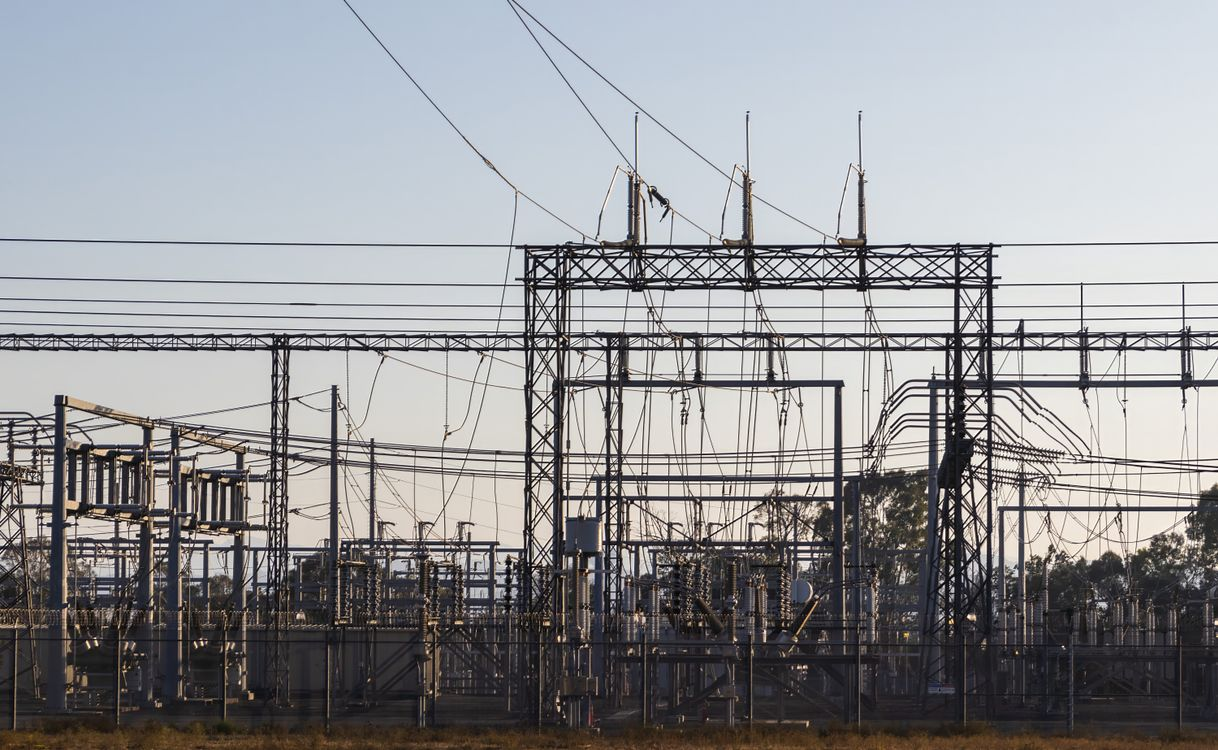
The programme provides for 193 new substation installations and 6,707 kilometres of new electricity lines, together with measures to increase capacity along another 8,164 kilometres of existing circuits. Those figures describe different forms of work: a new line extends the physical network, while uprating or modifying an existing corridor can increase the amount of power it carries without an equivalent increase in route length. The government describes nearly 15,000 kilometres of new or reinforced lines in total, reflecting both types of intervention.
Of the approved expenditure, €15.133bn is assigned to Spain’s domestic transmission network and €2.010bn to international interconnections. More than €4bn is allocated to strengthening the system for changes in power flows associated with electrification and renewable integration. Another €3.162bn supports links between electricity systems, while more than €3.3bn is associated with reinforcing connections to distribution networks and accommodating new electricity consumption. The spending categories indicate that the plan addresses both long-distance transfers and the points where high-voltage infrastructure supplies regional networks.
Additional generation or demand cannot always be connected at the point where capacity is requested, even when sufficient generating plant exists elsewhere on the system. Transfer limits depend on conductor ratings, transformer capacity, voltage support, fault levels and the configuration of the surrounding grid. Reinforcing a constrained substation can release usable capacity without building an entirely new corridor, while a new line may be necessary where there is no suitable transfer path. The approved plan combines both forms of development, reflecting the different technical constraints encountered across Spain’s transmission system.
The ministry expects the investment to make room for 47GW of additional electricity demand, including industrial sites, hydrogen production, transport and port electrification. Its plans also refer to meeting the needs of three million highly electrified homes. This 47GW figure is capacity for prospective demand, rather than a measure of continuous electricity consumption or evidence that all requesting projects have been connected. Actual demand will depend on the commissioning of customer installations, their operating patterns and the network capacity available at the relevant connection points.
Transmission reinforcement is expected to unlock 55% of the additional capacity directly, with the remaining 45% supported through distribution-related improvements. The government’s planning scenario anticipates electricity demand rising by 50% from its 2025 level, which will require coordination between transmission upgrades, local distribution reinforcements and the energisation of individual industrial and commercial loads. In practice, a completed transmission project cannot deliver its full benefit to a new customer until the associated distribution or site connection is ready to carry the load.
Spain’s updated national energy and climate plan envisages 154GW of renewable generating capacity by 2030. The transmission programme is intended to accommodate the associated flows and reduce the extent to which available renewable output must be curtailed because the grid cannot transfer it to customers. New renewable capacity can be concentrated far from large demand centres, and a network built around earlier generation patterns cannot always move electricity along the new routes without reinforcement. The resulting work encompasses substations, line equipment, protection systems and the operational controls needed to manage a changing generation mix.
The government reports that the draft programme received 2,566 representations during consultation and involved two rounds of discussions with Spain’s autonomous communities. Individual measures were assessed against cost-benefit and environmental criteria before incorporation into the approved plan. These steps establish the national investment priorities, but they do not remove site-specific environmental requirements or the engineering and procurement work necessary before equipment is installed and circuits are energised. Long manufacturing lead times for major transmission components remain a consideration when sequencing large network programmes.
Red Eléctrica estimates that the completed programme could reduce electricity system costs by more than €3.593bn annually, according to the ministry. The calculation is a modelled future benefit, dependent on improved transfer capability and the ability to use generation that might otherwise be constrained. It is neither a saving already recorded nor a guaranteed annual return on the €17.142bn investment. Equipment procurement, construction and commissioning across the planned substations and circuits will determine how much of the forecast benefit is achieved by 2030.