IN Brief:
- Lönhult comprises four Vestas V162 turbines rated at 6.2MW each, giving the wind farm 24.8MW of installed generating capacity.
- Current project reporting identifies late November 2026 as the operating target, superseding an earlier estimate of early 2027.
- NKT Cables will purchase approximately one-third of the project's generation through a ten-year power purchase agreement.
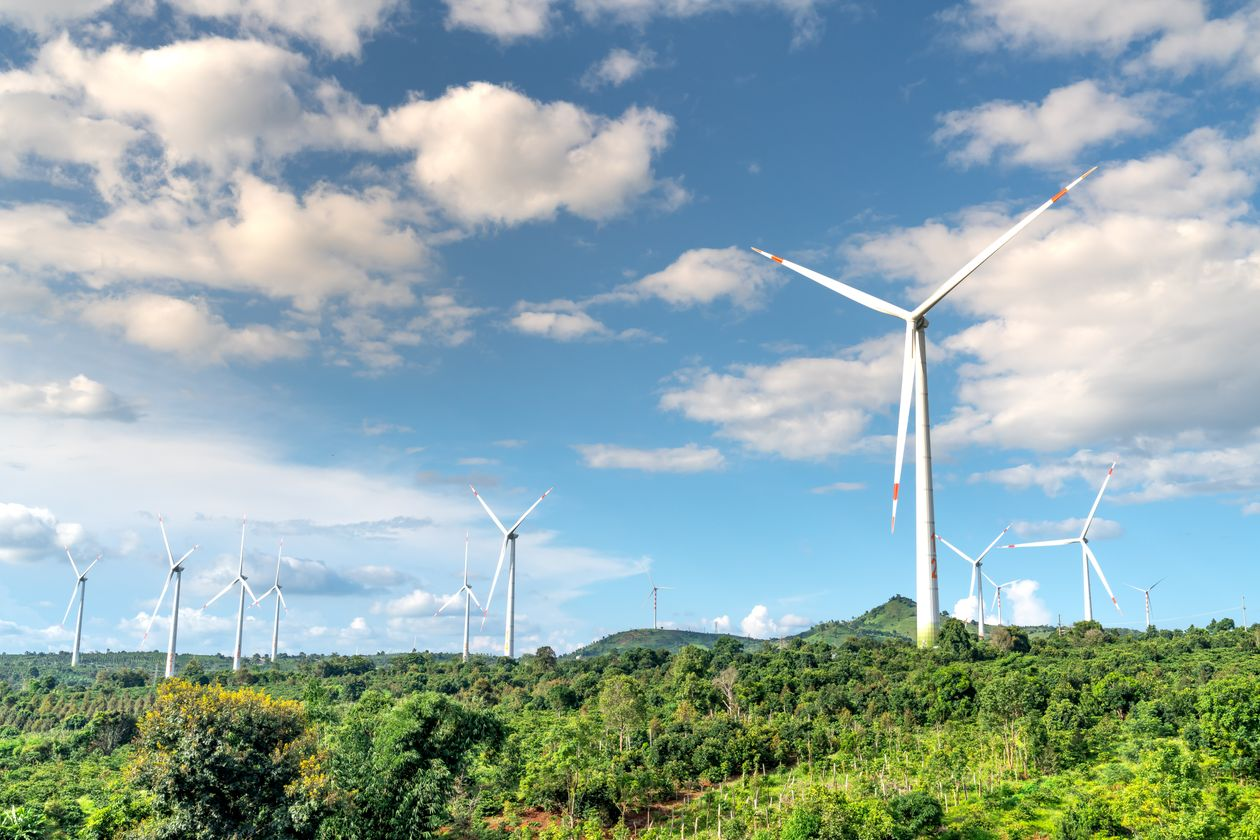
Rabbalshede Kraft is approaching the operational start of its 24.8MW Lönhult wind farm in Aneby municipality, southern Sweden, with construction entering its final stages and electricity generation expected to begin towards the end of November 2026.
The project comprises four Vestas V162 turbines, each rated at 6.2MW, and is expected to produce approximately 80GWh of electricity annually once fully operational. Construction began in 2025 following an extended development and permitting process, with Kanonaden AB responsible for the principal civil engineering works.
Rabbalshede Kraft’s latest project information places the anticipated operational start in late November, ahead of the early 2027 estimate retained on an older project webpage. The revised timetable reflects the current construction programme, although the company has not confirmed that the wind farm has entered commercial operation.
The four turbines have a total height of approximately 206 metres and use rotors with a diameter of 162 metres. Their combined installed capacity establishes the maximum nominal electrical output of the wind farm under the relevant operating conditions, rather than the quantity of electricity that will be produced continuously.
Wind turbines convert the kinetic energy of moving air into electrical energy through aerodynamic forces acting on their blades. The resulting rotor movement drives generating equipment, while turbine controls adjust blade pitch and other operating parameters to manage performance as wind speed changes.
The turbines’ electrical output must be collected and transferred through the wind farm’s connection infrastructure. That system requires appropriately rated cables, transformers, switchgear, protection equipment and controls to deliver electricity within the limits established for the connected network.
Before normal operation begins, commissioning must establish that the installed equipment performs according to its specified requirements. Mechanical inspections, electrical testing and control system verification are necessary to demonstrate that each turbine can operate safely and that the wind farm can respond appropriately to abnormal conditions.
The complete system must also satisfy the network operator’s technical requirements. These may include limits on voltage and frequency behaviour, protection settings, power quality and the ability to control electrical output when required by network conditions.
Rabbalshede Kraft has not published the full electrical connection configuration or the results of individual commissioning tests. The expected November operational start therefore remains a planned milestone rather than confirmation that all acceptance requirements have been completed.
The forecast annual generation of approximately 80GWh provides a further measure of the development’s scale. Dividing that estimate by the 24.8MW installed rating and the hours in a year produces an indicative capacity factor of approximately 37%.
That calculation compares expected annual electricity production with the theoretical maximum output if all four turbines operated continuously at their rated capacity. It does not establish the actual performance that will be achieved once the wind farm enters service.
Real generation will depend on wind conditions, turbine availability, electrical losses, maintenance requirements and any operating restrictions affecting the installation. The first year of operation may also cover only part of a calendar year, making comparisons with a full annual generation forecast dependent on the reporting period.
Lönhult’s development history illustrates the extended timescales involved in delivering new onshore wind capacity. Aneby municipality supported the project in 2016, Rabbalshede Kraft took over its development in 2018, and the final permission for four turbines was obtained in April 2022.
Construction subsequently began during 2025, after the project had progressed through the necessary development stages. The final engineering work now concerns completion of the installed equipment and the activities required to prepare the wind farm for electricity production.
Rabbalshede Kraft has identified the difficulty of securing approvals for new Swedish wind developments as part of the project’s operating context. The company reports substantial rejection rates for proposed wind farms, reflecting constraints that arise before developers can commit to construction.
Those challenges are separate from the technical requirements of delivering an approved development. Even after permissions are secured, turbine procurement, foundations, access infrastructure, electrical construction and grid connection must be completed before generating capacity can enter service.
Lönhult also has a defined commercial arrangement for part of its future electricity output. NKT Cables has agreed to purchase approximately one-third of the wind farm’s generation through a ten-year power purchase agreement, supporting renewable electricity procurement for its industrial operations in Falun.
The agreement links a new renewable generating installation with an established electricity consumer over a defined contractual period. Its precise delivery and settlement arrangements have not been disclosed, and the purchase commitment should not be interpreted as a guarantee that a fixed proportion of rated power will flow continuously to the customer.
Wind generation varies according to the available resource, while electricity is delivered through the interconnected network. Contracted electricity volumes and the associated commercial arrangements determine how generation is allocated between the parties, subject to the applicable market requirements.
The estimated 80GWh annual production gives a basis for assessing the scale of the contracted proportion, but actual energy supplied will depend on generation and the agreement’s terms. No contract price or detailed hourly delivery profile has been published.
Rabbalshede Kraft intends to retain ownership of Lönhult throughout its operating life. Long-term ownership places continuing responsibilities for maintenance, asset condition and operational performance with the company after the construction programme has been completed.
The developer has also established a local community funding arrangement through its Utvecklingskraft programme. It plans to allocate SEK60,000 annually to initiatives supporting organisations, recreation and community facilities in the surrounding area after the wind farm enters operation.
Those commitments accompany the construction and operating programme but remain separate from the electrical performance of the installation. The immediate operational priority is completion of commissioning and confirmation that the turbines can deliver electricity reliably through their network connection.
The latest timetable targets generation towards the end of November 2026. Successful electrical testing, grid readiness and operating acceptance will establish when Lönhult progresses from a construction project into Rabbalshede Kraft’s generating portfolio.