IN Brief:
- TransnetBW has completed overhead line construction across the 42km B1 section of the Ultranet transmission project in Baden-Württemberg.
- The approximately 340km connection will transfer up to 2GW using a ±380kV DC system, largely following existing electricity corridors.
- Commissioning of the complete connection remains outstanding, with initial electricity transmission targeted for late 2026.
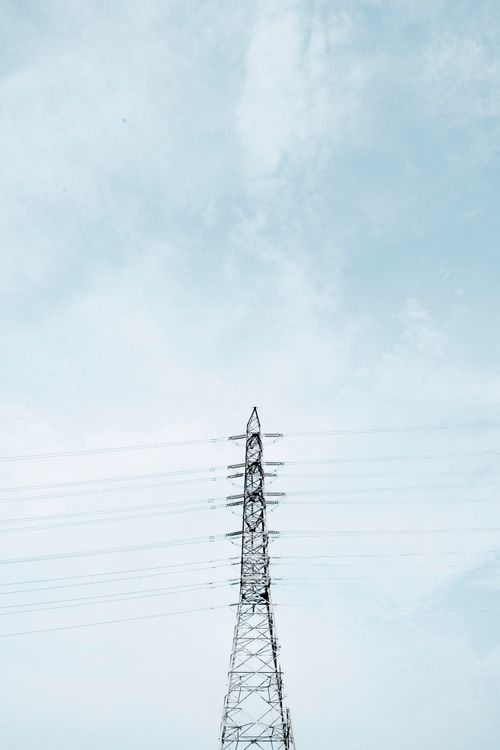
TransnetBW has completed overhead line construction on its 42km section of the Ultranet high-voltage direct current (HVDC) transmission project between Mannheim-Wallstadt and Philippsburg in Baden-Württemberg, bringing a major part of Germany’s north–south electricity infrastructure programme closer to operation.
The completed section, designated B1, forms the southern portion of an approximately 340km connection being developed with transmission system operator Amprion. Ultranet is designed to transfer up to 2,000MW at a nominal voltage of ±380kV DC, providing additional capacity for electricity flows between Nordrhein-Westfalen and southern Germany.
Construction of the section has required a combination of replacement pylons, additional conductors on existing infrastructure and limited new line construction. TransnetBW has sought to keep the route within established electricity corridors wherever practicable, reducing the need for new land corridors while retaining the transmission infrastructure already operating in the region.
Approximately 21km of the southern section between Heidelberg-Neurott and Philippsburg uses existing overhead line structures fitted with additional conductors. Elsewhere, the programme has involved replacing older pylons, building parallel sections and installing new structures where the available infrastructure could not accommodate the planned circuit.
The route’s northern portion between Mannheim-Wallstadt and Heidelberg-Neurott required extensive construction work. Existing transmission corridors could be reused, but parts of the overhead infrastructure had to be replaced to carry the new electrical configuration. The completed installation therefore combines several engineering approaches rather than following a single construction method throughout.
Ultranet’s distinctive feature is its use of a hybrid transmission arrangement in which high-voltage AC and DC circuits share supporting infrastructure. The circuits remain electrically separate, but their conductors can occupy the same pylon structures where the mechanical design, insulation clearances and electrical operating requirements permit.
Sharing infrastructure changes the construction challenge. Existing AC circuits may need to remain operational or be taken out of service under controlled arrangements while pylons and conductors are modified. Work must also account for mechanical loading, conductor movement, electrical clearances and the coordination of protection and maintenance requirements between the circuits.
One of the most complicated locations has been the railway marshalling yard in Mannheim, where the transmission route crosses numerous railway tracks. TransnetBW’s construction programme included protective structures over the railway to support conductor installation and replacement work while managing the physical risks associated with activities above rail infrastructure.
Elsewhere, specialist lifting equipment and helicopters have been used for conductor installation activities. Helicopters can position pilot ropes between structures without requiring continuous access along the entire route, although the subsequent conductor installation still depends on suitable ground equipment, tension control and appropriately prepared pylon hardware.
The completion of overhead construction does not establish that Ultranet is ready for commercial electricity transfer. Electrical testing, converter coordination, protection system validation and commissioning of the remaining sections must be completed before the entire HVDC connection can enter normal operation.
The Philippsburg converter station provides the southern interface between the DC transmission system and the established 380kV AC network. Located on the former Philippsburg nuclear power station site, the installation was developed ahead of the completion of the full overhead transmission route.
The converter entered an initial operating phase during November 2024 as a static synchronous compensator, or STATCOM. In that configuration, its power electronics provide controllable reactive power to support voltage management on the AC network, allowing some of the electrical equipment to perform a useful system function before the HVDC connection is commissioned.
When Ultranet begins active power transmission, the converter will also transfer electricity between the DC line and the AC network. Power electronic controls will regulate that exchange while maintaining the required electrical performance at the connection point. The existing STATCOM capability provides a separate contribution to voltage regulation.
High-voltage DC technology is suited to controlled bulk electricity transfer over substantial distances. Its converter stations can regulate the direction and magnitude of transferred active power, while the DC transmission line avoids the reactive power characteristics associated with long AC lines.
Those advantages must be considered alongside the cost, losses and engineering requirements of the converters. The electrical performance of an HVDC connection depends on the complete arrangement, including converter equipment, the transmission line, associated controls and the capabilities of the connected AC networks.
Ultranet is intended to increase transfer capability between regions with different electricity generation and consumption patterns. Wind generation is expanding in northern Germany, while substantial industrial and other electricity demand remains concentrated further south. Additional transmission capacity can help move electricity between these regions when generation and demand conditions require it.
The route will also support electricity transfer in the opposite direction when system conditions make that appropriate. Its purpose is to provide controllable network capability rather than establish a permanently fixed direction of electricity movement.
Although the project is designed to transfer 2GW, this rating should not be interpreted as a guarantee of continuous operation at maximum capacity. Actual electricity flows will depend on available generation, demand, network conditions, operating restrictions and the requirements of Germany’s interconnected electricity system.
Ultranet will eventually form part of a longer north–south transmission corridor, connecting with the A-Nord project towards the North Sea region. That wider programme is intended to improve the movement of renewable electricity from northern generating regions to industrial and population centres further south.
The two network developments have distinct construction and commissioning programmes. Completion of Ultranet’s 42km southern section therefore does not establish that the entire longer corridor is available, nor does it confirm that the remaining Ultranet works have been completed.
TransnetBW and Amprion have been targeting the first electricity transfer through Ultranet towards the end of 2026. Outstanding works in Nordrhein-Westfalen and final system commissioning remain important to that timetable.
The completion of B1 removes a substantial overhead construction requirement from the southern end of the project. Its next operational milestone will be successful integration with the remaining transmission sections and converter infrastructure, followed by confirmed electricity transfer through the complete HVDC connection.