IN Brief:
- Akaysha Energy has arranged a A$1.75 billion portfolio facility supported by eleven banks, replacing separate project-level borrowings.
- The refinanced portfolio comprises Brendale, Orana and Ulinda Park, which are operating, and Elaine, which remains under construction.
- The facility has five-, seven- and ten-year tenors and includes revolving liquidity and contingent-instrument arrangements for the wider development pipeline.
Akaysha Energy has completed an A$1.75 billion portfolio financing transaction covering four Australian battery energy storage projects. Eleven banks are participating in arrangements that replace existing project-level borrowing with a wider financing platform. The transaction concerns three operating installations and the Elaine battery still under construction, giving the developer a revised funding structure for its existing assets and future investment pipeline.
The named refinanced projects are Brendale, Orana, Ulinda Park and Elaine. Lenders include ANZ, BNP Paribas, Bank of China, CIBC, Commonwealth Bank of Australia, Deutsche Bank, DNB, ING, Mizuho, MUFG and Rabobank. Akaysha also reports that Waratah has reached full commercial operation, although that battery is not included in its list of the four projects covered by this refinancing.
Brendale, Orana and Ulinda Park are operating assets, whereas Elaine, in Victoria, entered construction in October 2025 and is scheduled for completion during the second half of 2027. Earlier Akaysha project details give Elaine a 311 MW power rating and 1,244 MWh of energy capacity. The four-hour configuration describes the prospective battery's physical capability; the current transaction changes the financing of its construction rather than its operational status.
The new debt arrangements have terms of five, seven and ten years, supplemented by revolving liquidity and contingent instrument facilities. Those components can serve different financial requirements, from replacing previous liabilities to meeting future liquidity and security obligations. Akaysha has not broken down the headline value into a separate amount for every existing battery or forthcoming development, so the facility should not be described as A$1.75 billion of new construction spending.
Akaysha's Australian development pipeline is approximately 6 GW of power capacity and 25 GWh of energy capacity across the National Electricity Market. These figures describe projects under development rather than batteries available for dispatch today. Individual schemes will move forward according to site design, planning, network access, offtake arrangements, capital commitment and physical construction, with each stage creating different risks for a lender or developer.
Financing several assets in one structure allows lenders to assess debt service against a portfolio rather than relying exclusively on one project's cash flows. The approach can spread exposure to differences between individual batteries in dispatch revenue, outages and contracted services. It also introduces portfolio-level reporting, security and covenant requirements. The details of those protections are governed by the loan documents and have not been published, so the practical financial flexibility cannot be quantified from the facility size alone.
Grid batteries earn income through the services they are authorised and contracted to deliver. Charging during lower-priced periods and discharging later is one option; another is maintaining energy and converter headroom for frequency regulation or other balancing services. The mix varies by location, connection terms, state of charge and market rules. A four-hour energy rating does not mean every megawatt is continuously committed to a single market service.
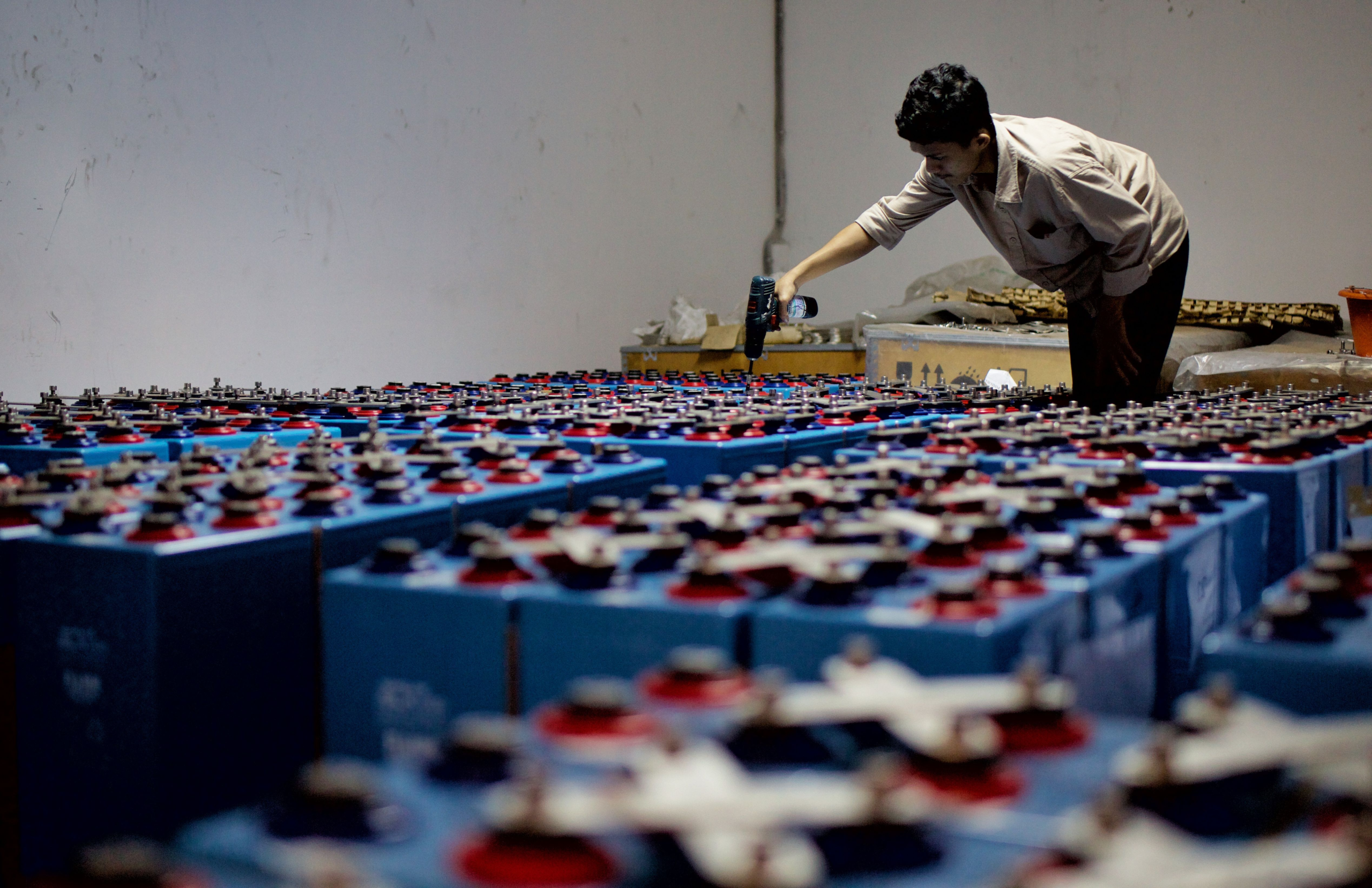
The assets remain electrically independent even while their borrowing is combined. Each installation needs power conversion equipment, transformers, switchgear, metering and protection appropriate to its grid connection. Control systems coordinate charging, discharging and response to dispatch instructions, while operators also monitor cell temperatures and degradation. Those operating parameters influence both physical availability and the financial cash flow used to service debt.
Performance across a group of battery sites can differ markedly because dispatch prices, local constraints and planned outages do not occur uniformly. Refinancing a group gives the developer a way to manage obligations across those variations, but it does not pool the battery cells or their electrical connection rights. Energy and power capacities must still be reported at the level of each installation when assessing how the portfolio can support the grid.
Elaine's construction timetable remains a particularly important dividing line within the transaction. Site works and installation must be followed by electrical testing, energisation and operating acceptance before the battery can be counted among completed generating or storage resources. Akaysha's earlier project announcement identifies Tesla and Consolidated Power Projects as delivery partners and a 15-year virtual tolling arrangement with Snowy Hydro for a contracted portion of the facility.
Akaysha says the broader financing platform is intended to support its next wave of Australian developments. Its commercial significance will be tested against the availability of capital for new projects, lenders' conditions and the ability of each proposed battery to secure a viable connection and operating contract. The A$1.75 billion figure records the refinancing transaction; the approximately 6 GW/25 GWh pipeline is a separate measure of potential physical development.
The immediate completed step is the consolidation of borrowing across Brendale, Orana, Ulinda Park and Elaine. Future project-specific disclosures should establish which additional schemes receive capital commitments, when their construction begins and when their power and energy capacities become available in the National Electricity Market. Elaine's reported second-half 2027 completion target remains the clearest near-term construction marker within the refinanced group.