IN Brief:
- CATL and Solarpro have agreed a 2GWh sodium-ion storage programme for Central and Eastern Europe.
- The partners intend to commission their first regional sodium-ion project, with Lithuania identified as an initial focus.
- The framework follows their connection of a 602MWh battery project to Bulgaria’s grid in May 2026.
CATL and Solarpro have signed a strategic agreement covering 2GWh of sodium-ion battery energy storage systems across Central and Eastern Europe.
The partners intend to commission their first regional sodium-ion project and adapt system designs to local climate, grid, and operating conditions. Lithuania has been identified as an initial focus, although individual capacities, locations, schedules, and ownership structures will be defined as the programme develops.
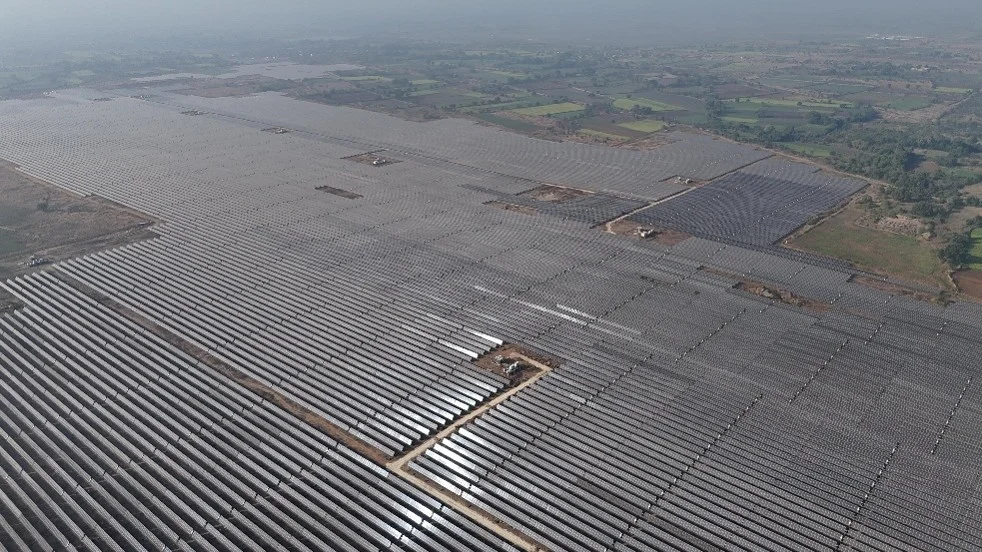
The agreement extends an existing relationship between the Chinese battery manufacturer and the European engineering, procurement, and construction company. In May 2026, they connected a 602MWh battery installation to the Bulgarian grid, increasing the country’s installed storage capacity by approximately 10%.
Sodium-ion cells use sodium-based active materials rather than lithium as the principal charge carrier. The chemistry can reduce exposure to lithium supply chains and has characteristics suited to stationary applications, including low-temperature operation and long cycle life.
System competitiveness will nevertheless depend on more than cell chemistry. Efficiency, energy density, degradation, service life, production scale, warranty terms, power electronics, installation costs, and replacement strategy all contribute to the final cost of delivered storage.
Solarpro will combine CATL’s battery technology with regional development, engineering, construction, and grid-integration capability. Each installation will still require market-specific certification, connection studies, fire strategy, control architecture, and performance guarantees before it can operate commercially.
Sodium-ion moves towards commercial deployment
European sodium-ion activity is beginning to advance from demonstration systems into multi-project procurement. A separate 5GWh framework between Alfen and CATL is also preparing the chemistry for deployment across European markets, while the Solarpro agreement establishes an EPC-led route focused on Central and Eastern Europe.
Winter performance will receive particular scrutiny in Lithuania and other northern markets. Low temperatures can restrict charging rates, reduce available power, and increase auxiliary heating demand, even where the underlying chemistry performs more favourably than conventional alternatives.
Rated capacity therefore needs to be supported by evidence covering usable power, round-trip efficiency, thermal behaviour, and charging capability across the complete operating range. Grid operators and investors will expect those characteristics to remain predictable through repeated seasonal cycles.
Stationary storage can accommodate lower gravimetric energy density more easily than electric vehicles because the equipment remains fixed. Land use, foundations, container count, cable routes, and auxiliary loads remain important, but weight and volume are generally less restrictive than they are in transport applications.
Sodium-ion systems will still compete against a rapidly developing lithium iron phosphate supply chain. LFP batteries benefit from established manufacturing volumes, recognised integrators, mature warranty structures, extensive operating data, and financial models already accepted by lenders.
New chemistries must therefore prove bankability as well as technical performance. Investors will examine degradation curves, availability guarantees, cell traceability, fire testing, warranty remedies, replacement provisions, and the financial strength of the manufacturers standing behind long-term obligations.
Early projects will carry additional value by generating operating evidence that can be incorporated into technical due diligence. Measured data on cycling, efficiency, temperature response, auxiliary consumption, and maintenance will gradually replace assumptions derived from laboratory testing or smaller installations.
Grid services add another layer of requirements. Frequency response demands rapid and accurate control, wholesale trading creates repeated cycling, capacity obligations require dependable state of charge, and congestion management may involve location-specific dispatch instructions.
The battery management system, energy management system, inverter controls, and market interface must work together regardless of the selected chemistry. Weakness at any one layer can restrict the asset’s performance even when the cells themselves meet their specification.
Supply-chain diversification remains one of sodium-ion’s strongest strategic advantages. Sodium is abundant and widely distributed, and the chemistry can reduce dependence on lithium, nickel, and cobalt. It will not remove reliance on specialised materials, manufacturing equipment, power electronics, software, or imported components, but it broadens the range of available storage technologies.
Central and Eastern Europe is already adding battery capacity as renewable generation expands and national systems require greater balancing capability. Poland is constructing capacity-backed assets, Bulgaria has added storage rapidly, and the Baltic states are strengthening flexibility following their integration with the continental European synchronous system.
The first named project under the CATL–Solarpro agreement will reveal the proposed system configuration, connection model, performance guarantees, and commercial duties. Those details will determine whether sodium-ion begins to establish a distinct role alongside lithium-ion storage or remains a supplementary option within a broader technology portfolio.
Technical information on CATL’s storage systems is available from CATL.