IN Brief:
- EURO-TIDES has received the European Commission's Go Decision following a formal programme review.
- The proposed 9.6 MW array combines three next-generation O2-X turbines with Orbital's existing O2 at EMEC.
- Deployment is targeted for 2028, subject to completion of Orbital's current investment round.
Orbital Marine Power has secured the European Commission’s Go Decision for EURO-TIDES, advancing plans for a 9.6 MW floating tidal turbine array at the European Marine Energy Centre (EMEC) in Orkney. The project has passed a formal review covering engineering, permits and financing under the Horizon Europe programme, allowing it to progress towards construction.
Orbital is targeting deployment in 2028 after completing its current investment round. The review permits the project to progress towards construction, with offshore equipment installation and commissioning remaining future milestones. Three next-generation O2-X turbines would join the existing O2 in Orbital’s first connected multi-turbine array.
EURO-TIDES was selected for Horizon Europe support in October 2023 to demonstrate floating tidal turbines operating as a coordinated array. Deployment was initially planned for 2027 and is now targeted for 2028. The Commission’s Go Decision concerns the Horizon Europe programme review; statutory marine authorisations remain governed by the relevant national authorities and consent conditions.
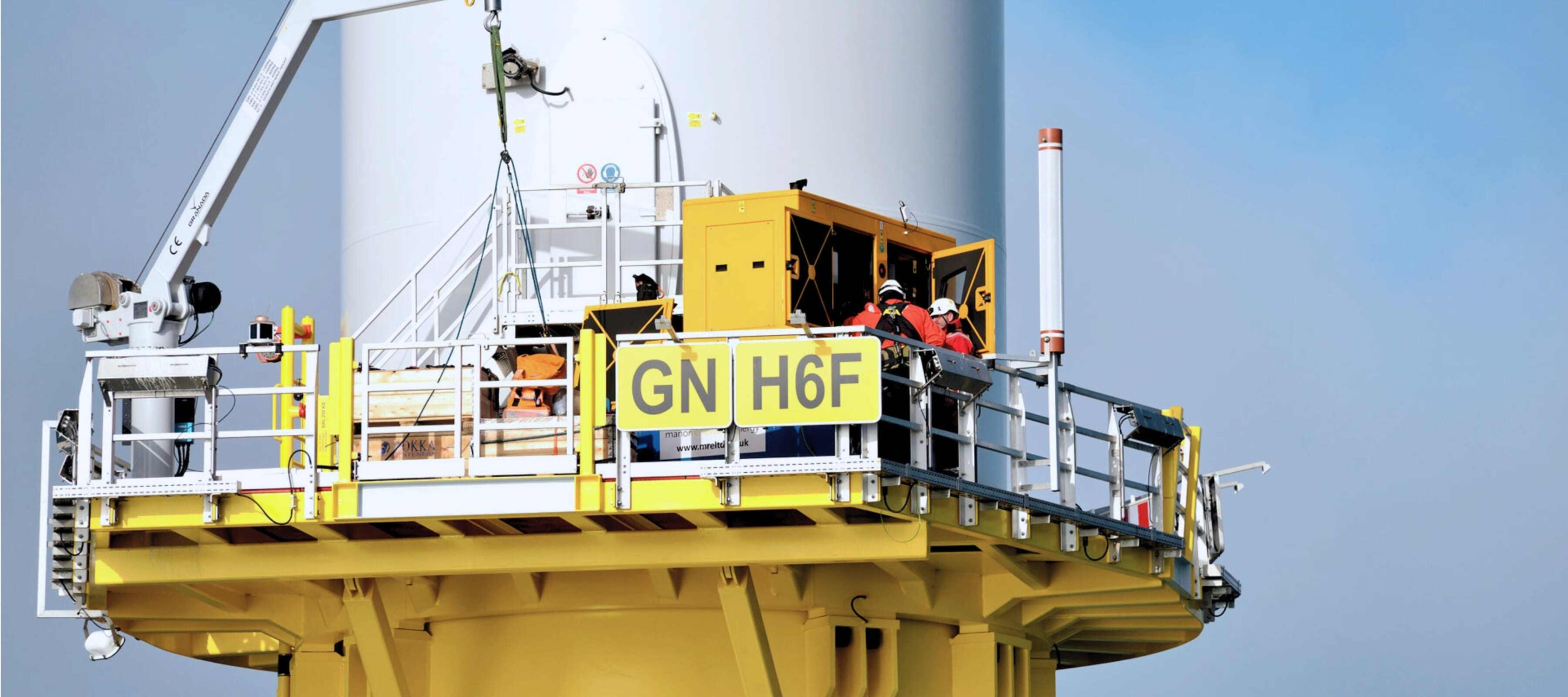
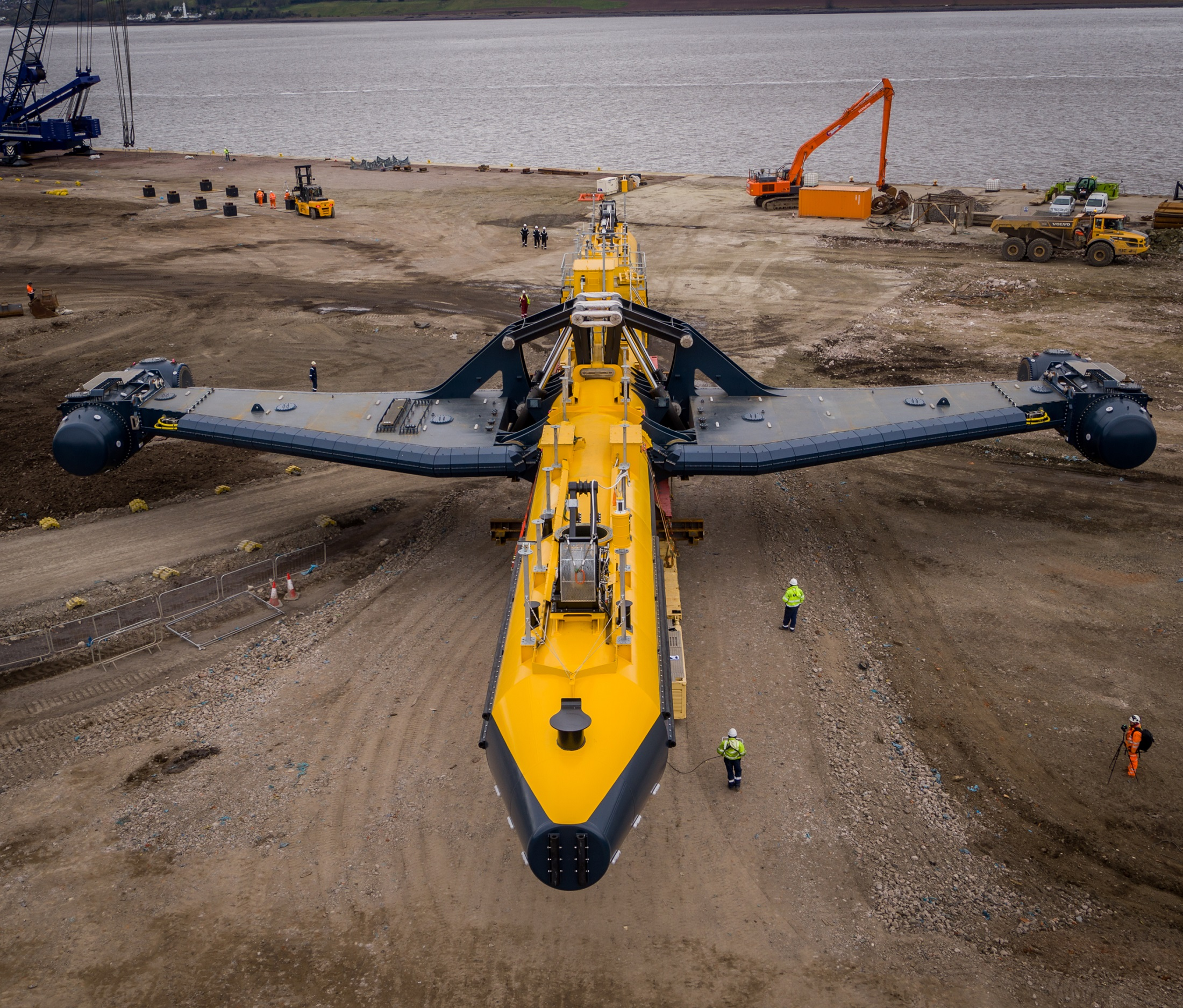
The existing O2 turbine provides an operating reference for the new installation. Connected to the electricity network at EMEC since July 2021, it comprises a 74-metre floating structure with two generating nacelles, each rated at 1 MW. Retractable support legs position the turbine rotors beneath the water, where tidal currents drive the generating machinery.
Orbital’s floating arrangement differs from tidal turbines mounted permanently on fixed seabed structures. The O2 is held in position by a mooring system, allowing the platform to remain within the tidal stream while accommodating the loads imposed by water movement. Its turbines can be raised towards the surface for servicing, reducing the need to recover major generating components from the seabed during certain maintenance activities.
Electricity generated by the O2 passes through a dynamic cable connecting the floating installation to a static cable on the seabed. The static section provides the onward route towards the shore connection. The interface must accommodate movement of the floating structure without placing excessive mechanical loads on the electrical connection.
Bringing four turbines into a coordinated array introduces additional requirements for electrical collection, protection and control. Each machine must operate within its own mechanical and electrical limits, while the combined installation must manage changing output and equipment availability without compromising the operation of the other turbines.
The final electrical collection arrangement for EURO-TIDES has not been disclosed. Its design will need to accommodate the generating equipment, subsea connections and the agreed network interface, with protection systems capable of identifying and isolating faults. The arrangement must also allow individual turbines to be taken out of service for maintenance without requiring unnecessary interruption of the entire array.
Tidal stream generation benefits from the predictability of the tidal cycle, but the available power varies as current velocity changes. Water moving through a turbine’s swept area carries kinetic energy that can be converted into mechanical rotation and subsequently electricity. The amount captured depends strongly on flow velocity, rotor characteristics and the operating condition of the generating equipment.
The existing O2 uses variable pitch rotor blades to manage power capture as tidal currents change direction and strength. Adjusting blade pitch allows the turbine to operate across different flow conditions while controlling the forces imposed on its structure and machinery. The company has not published the final control specifications for the O2-X turbines intended for the new array.
Operating several turbines together will provide additional evidence about the relationship between individual machine performance and the output of a connected installation. Maintenance intervals, equipment availability and the duration of electrical or mechanical faults all affect the energy delivered over an extended period. Array operation introduces further considerations because common infrastructure can influence the availability of more than one generating device.
EURO-TIDES is intended to gather operational data that can be used to assess these conditions. The original programme set targets including turbine availability above 95% and a reduction in the levelised cost of energy from approximately €120/MWh to below €100/MWh. These remain development objectives rather than demonstrated operating results for the proposed array.
The levelised cost of energy reflects the relationship between expenditure over a project’s operating life and the electricity it produces. Improvements in generating availability, maintenance requirements and installation methods can influence that calculation, provided they are achieved without disproportionate increases in capital expenditure. Actual performance data from a connected array will be needed to establish whether the programme’s targets are attainable.
Manufacturing forms another part of the project. Moving beyond individual demonstration turbines requires repeatable fabrication and assembly processes, with appropriate quality control across structural components, electrical machinery and supporting equipment. The original EURO-TIDES objectives include developing industrial methods capable of supporting substantially greater annual turbine production.
Environmental assessment will accompany the technology programme, including consideration of how tidal devices interact with the surrounding marine environment. Monitoring during operation can contribute information about local conditions and potential interactions with marine wildlife. The programme’s research partners will use the evidence to inform future installation and operating arrangements.
Alongside Orbital and EMEC, the consortium includes RWTH Aachen University’s Center for Wind Power Drives, Energie de la Lune, ENGIE Laborelec, MaraSoft, Ocean Energy Europe and the University of Edinburgh. Their roles cover aspects of engineering, operations, environmental assessment and commercial development, providing expertise beyond the design and manufacture of the turbines themselves.
The EURO-TIDES programme retains an aggregate designation of 9.6 MW, while the revised turbine mix now includes the existing 2 MW O2 and three O2-X machines. Orbital has yet to publish the individual O2-X nameplate ratings that would establish how the announced total is allocated across those four devices.
The 2028 programme will require manufacture and assembly of the new turbines, subsea electrical integration, installation and commissioning at EMEC. Operating data from the completed array would then provide evidence of equipment availability, electrical coordination and maintenance requirements across several connected floating turbines.