IN Brief:
- Tata Power Renewable Energy commissioned 419 MW of utility-scale renewable projects in Q2 FY27, compared with 182 MW a year earlier.
- The company executed 131.2 MWh of battery projects during the quarter, comprising 101.2 MWh for its own portfolio and 30 MWh for third parties.
- Its operational utility-scale generation portfolio reached approximately 7.2 GW, with further solar, wind and storage projects scheduled during the remainder of FY27.
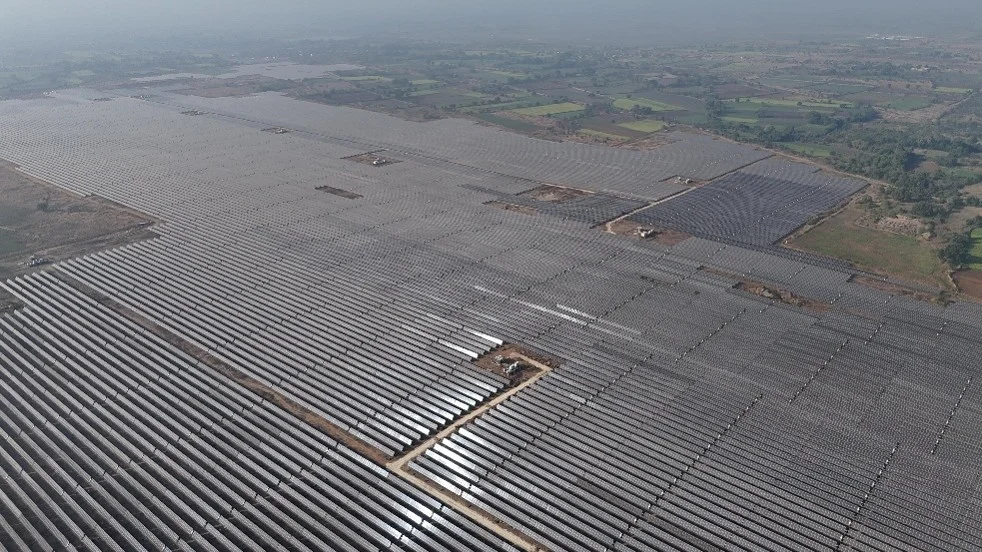
Tata Power Renewable Energy commissioned 419 MW of utility-scale renewable generation during the second quarter of India’s 2026–27 financial year, an increase of more than 130% compared with the equivalent period in 2025. The company also executed battery storage projects totalling 131.2 MWh during the three months to 30 September.
The renewable generation figure compares with 182 MW commissioned in the same quarter last year, representing an increase of 237 MW in capacity brought through the company’s project delivery programme. The results cover the September quarter and include generating assets developed through Tata Power Renewable Energy’s utility-scale business.
Of the battery projects executed during the period, 101.2 MWh related to the company’s own portfolio and 30 MWh involved third-party customers. Tata Power Renewable Energy distinguishes these storage projects from its renewable generating capacity, reflecting the different electrical quantities used to describe batteries and generation equipment.
Solar and wind generating installations are commonly rated in megawatts, which express their nominal electrical power capacity. Battery storage is often described in megawatt-hours, which represent stored energy. A battery’s power rating and its energy capacity are both needed to establish the duration for which it can discharge at a specified output.
The measures describe different electrical properties: 419 MW is the rated power of commissioned generation, while 131.2 MWh records battery energy capacity executed during the quarter. A combined dispatch assessment would require the power ratings, usable energy and operating durations of the individual storage installations.
Across the first half of FY27, from April to September, Tata Power Renewable Energy commissioned 645 MW of utility-scale generation and executed 161.2 MWh of battery storage projects. The first-half storage total comprised 101.2 MWh for its own installations and 60 MWh delivered for third parties.
The company’s first-half commissioning programme included the 100.8 MW Jewali wind project and the Kalasar firm and dispatchable renewable energy development. Kalasar combines 227.5 MW of solar capacity with a 101.2 MWh battery energy storage system, providing a generating and storage configuration intended to support contracted electricity delivery.
Firm and dispatchable renewable energy arrangements seek to provide electricity according to agreed delivery schedules rather than solely according to the instantaneous output available from solar or wind equipment. Combining generation with storage allows some electricity to be retained during periods of production and supplied later, subject to the power and energy limits of the battery.
At Kalasar, the battery control system must coordinate charging and discharging with variable solar generation and the project’s contracted delivery profile. Tata Power has not disclosed the battery’s MW power rating, which would be needed to calculate its discharge duration at full output.
Other first-half completions included the 100 MW Kayathar group captive project and a 72.5 MW captive development for Tata Steel. These installations serve customers under arrangements that differ from merchant generation, with their commercial operation linked to electricity use by specified industrial or commercial consumers.
Wind installations require turbine foundations, mechanical erection and electrical commissioning, while solar projects require photovoltaic modules, inverters, transformers and collection networks. Storage projects add battery systems and power converters whose controls manage charging and discharging in accordance with electrical limits and operating commitments.
All require suitable electricity network connections before entering normal operation. Testing must establish that the installed equipment can operate within agreed voltage, protection and power-quality requirements, while the metering and control interfaces must support the intended commercial arrangements. Completing construction is therefore a separate milestone from securing permission to export electricity.
Following the latest additions, Tata Power Renewable Energy reports an operational utility-scale portfolio of approximately 7.2 GW, comprising around 5.8 GW of solar and 1.3 GW of wind. It also identifies 281.2 MWh of battery storage capacity within its operational portfolio.
The operational portfolio is reported at approximately 7.2 GW, while solar and wind are shown as rounded components of 5.8 GW and 1.3 GW. Their displayed sum differs by 0.1 GW, and the announcement provides no more precise component breakdown to reconcile it. The separate 281.2 MWh battery figure describes stored energy.
The company’s total renewable utility portfolio stands at approximately 12.4 GW when operating projects and those under development are considered together. Within that figure, about 5.2 GW remains at various stages of implementation. The distinction is necessary because projects in development do not contribute the same operating capacity as commissioned installations.
Tata Power Renewable Energy expects to execute more than 2 GW of renewable generating projects during the second half of FY27. Its announced programme comprises 1,075 MW of solar and 969 MW of wind, together with 274 MWh of battery storage. A further 300 MW of third-party project work is planned separately.
The second-half targets cover projects that still require construction, electrical testing and network acceptance. Their contribution to the operating portfolio will be confirmed as the individual assets reach their commercial commissioning milestones.
By the end of the financial year in March 2027, the company anticipates an operational renewable generating portfolio approaching 9.3 GW. Its stated component targets include 6,899 MW of solar and 2,298 MW of wind, while battery storage is expected to reach 555.2 MWh.
For FY28, Tata Power Renewable Energy has identified a further programme containing approximately 570 MW of solar, 1,700 MW of wind and 350 MWh of battery storage. These measures describe generating power and stored energy separately; the battery figure cannot be incorporated into a combined MW total without its corresponding power rating.
The company expects the broader development programme to move its operational renewable generating capacity towards 12 GW. That remains a forward target rather than completed infrastructure, with the timing and final rating of individual assets subject to construction and commissioning.
The September-quarter results establish a substantial increase in utility-scale project commissioning alongside additional battery delivery. The next reporting periods will show how much of the planned second-half generation and storage programme reaches completion, and how the company’s operating portfolio changes as individual projects enter service.