IN Brief:
- Vattenfall has signed final development agreements with the Danish Energy Agency for Hesselø and Holmsland.
- The projects have minimum capacities of 800MW and 1,000MW respectively, in separate Danish sea areas.
- Both target operation in 2032, but construction decisions and outstanding approvals remain to be secured.
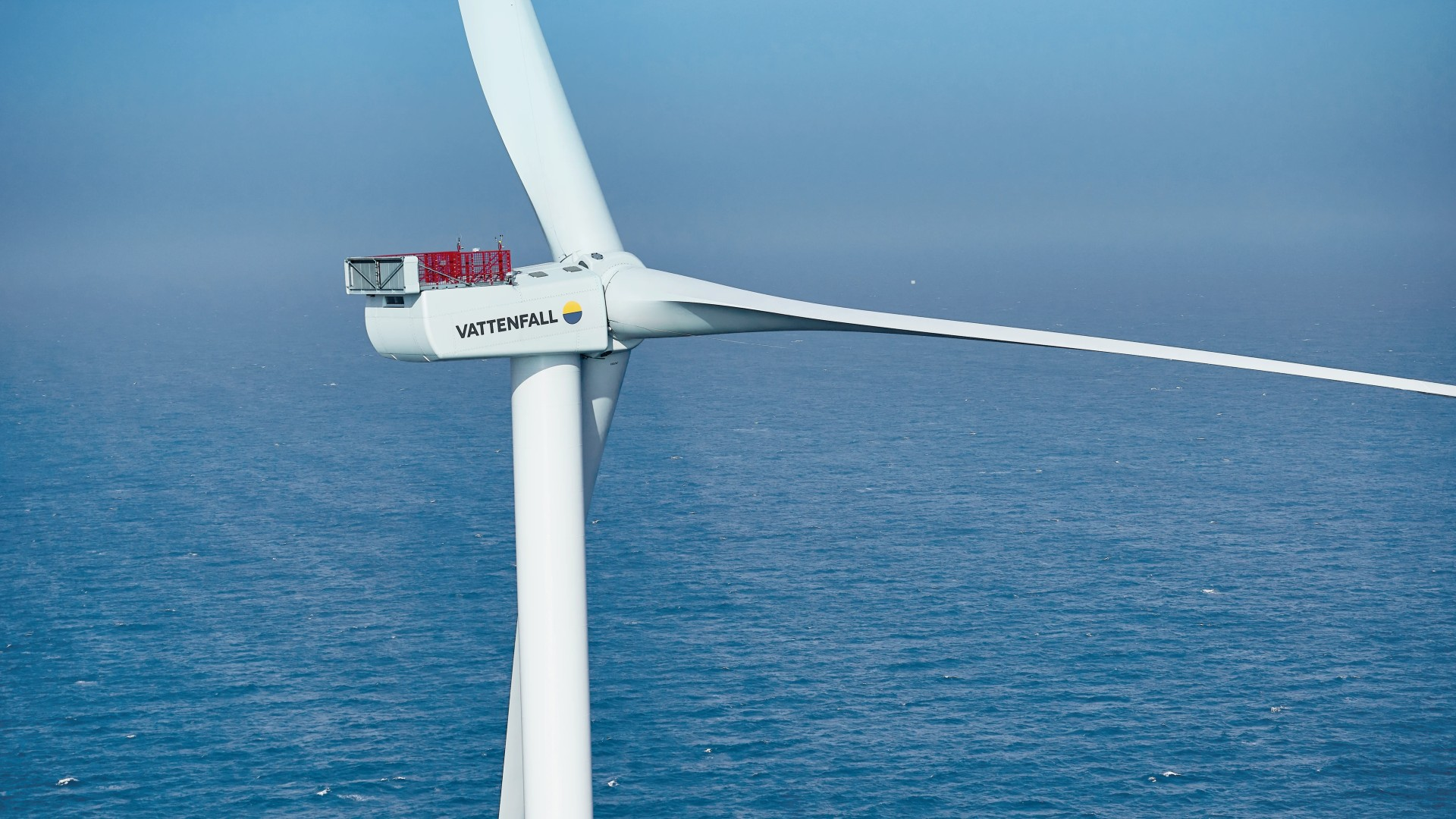
Vattenfall and the Danish Energy Agency have signed final agreements for two offshore wind developments with a combined minimum capacity of 1.8GW. The contracts cover Hesselø in the Kattegat and Holmsland in the North Sea, projects awarded to the Swedish energy company in Denmark’s August 2026 offshore wind tender. The agreement signing advances development, although neither project has reached a final construction decision.
Hesselø has a minimum planned capacity of 800MW and lies in the Kattegat between Denmark and Sweden, approximately 30km from the Danish coast. Holmsland, previously identified as North Sea I Mid, is planned for at least 1,000MW off the west coast of Jutland, near Hvide Sande. The name change was incorporated into the final agreement to identify the project with its coastal location.
The agreements were signed by Anne Mette Traberg, Vattenfall’s country manager for Denmark, and Adrian Lübbert, director general of the Danish Energy Agency. Both offshore wind farms are expected to enter operation in 2032, a timetable that leaves several years for detailed project development, permitting, investment decisions and construction. Vattenfall has confirmed that the decision to build each scheme remains conditional on the necessary approvals and its own final investment decision.
The two sites occupy different sea areas, so turbine foundations, installation logistics and export routes will need separate engineering assessments. Hesselø lies in the more sheltered Kattegat, while Holmsland faces the North Sea west of Jutland; the eventual designs must reflect the site investigations and conditions along each cable route. Vattenfall has not yet identified the turbine models, foundation suppliers, export cable contractors or construction vessels for either project. Those packages should not be described as awarded on the strength of the development agreements.
Denmark’s August tender established commercial terms before the November agreements were executed. According to the Danish Energy Agency, Vattenfall’s winning bids were DKK542/MWh for Hesselø and DKK504/MWh for the project then called North Sea I Mid. The announced tender structure provided a guaranteed bid price over 20 years after completion, with site and consent conditions governing the development programme. Those rates represent tender awards rather than current realised electricity-sale revenues.
Vattenfall confirmed in August that grid connection capacity had been reserved for both projects and referred to a connection point approximately 50km inland. It has not established that the required cable and substation works are complete. Grid reservations help define the scope and commercial feasibility of a project, but the final connection still requires engineering, procurement, installation and electrical testing before turbines can export electricity to the transmission system.
In an offshore wind farm, array cables collect output from individual turbines before power is transferred through export circuits to the onshore network. Substations, transformers, switchgear, protection and control equipment must be configured to suit the final transmission design and the network connection requirements. Export capacity and construction sequencing therefore have to match the generating plant: installing turbines would not, by itself, establish an operational 800MW or 1,000MW power station. Specific voltage levels and equipment packages for Hesselø and Holmsland were not disclosed in the signing announcement.
At Hesselø, earlier preliminary investigations addressed seabed, environmental conditions and possible cable corridors. Those studies provide information for detailed engineering but do not remove the need for project-specific assessment and permits. Foundation design, installation methods and cable protection depend on the conditions eventually confirmed across the turbine and cable routes, which can influence procurement and construction scheduling.
Vattenfall already operates five offshore wind farms in Denmark, with collective annual electricity generation of around 6.5TWh according to the company. Its established operational fleet provides a substantial domestic presence while Hesselø and Holmsland remain development projects. The company’s European offshore activity also includes Nordlicht in Germany and Zeevonk in the Netherlands, at different stages of delivery.
The 1.8GW combined figure is a minimum planned installed capacity, rather than a forecast of constant electrical output. Actual generation will depend on wind conditions, turbine availability and the ability of the export system to carry the electricity produced. The capacity figures likewise do not signify that construction has begun: the latest milestone is the execution of the development agreements following the August tender awards.
Vattenfall will continue project development with the Danish authorities and other stakeholders. Detailed assessments, remaining consents and eventual investment decisions must precede the main construction commitments, after which offshore installation, connection testing and commissioning can proceed. Both projects retain a 2032 operational target, but the company has not announced firm turbine installation dates or final construction budgets.