IN Brief:
- Deutsche Bank and Rabobank are providing a €835m multi-facility portfolio financing package for Return.
- Initial eligible developments at Herzberg, Brilon and Quedlinburg have combined power capacity of 117MW.
- Return aims to install at least 1GW a year from 2027, but that remains a target rather than commissioned capacity.
Return has secured €835m in portfolio financing from Deutsche Bank and Rabobank to expand its German battery energy storage business. The agreement combines financing for physical storage sites with the company’s Virtual Flexibility Portfolio, through which customers can obtain contracted battery flexibility across more than one installation. The financing comprises several facilities rather than a disclosed single loan for one power station.
The first three developments identified under the structure are located at Herzberg, Brilon and Quedlinburg. Their combined power rating is 117MW, and Return says work on the projects is expected to begin shortly. Additional eligible German assets could subsequently enter the same financing arrangement, subject to the conditions of the individual projects and the available facilities.
The initial 117MW is considerably smaller than the company’s longer-term development target. Return intends to install at least 1GW of battery power capacity annually in Germany from 2027, with projected annual investment of €750m to €1.2bn depending on market conditions. Those figures describe an expansion ambition and anticipated capital requirements, not systems already under construction or guaranteed by the newly announced financing.
Rather than negotiating a separate financing package from the beginning for every battery installation, Return’s structure is designed to admit additional eligible projects under a common set of facilities. The company says this makes the funding process repeatable as the German portfolio expands. Inclusion still depends on each project’s eligibility and delivery requirements; the €835m total is a financing framework, not evidence that every contemplated battery is already built, connected or drawing on the facilities.
The assets will support Return’s Virtual Flexibility Portfolio, which pools battery capacity for commercial customers through a common interface. A customer may contract for a specified flexibility service backed by more than one storage site, instead of being tied to the operation of a single dedicated battery. This arrangement combines a physical infrastructure portfolio with commercial flexibility services, although the announcement does not disclose dispatch algorithms or the precise allocation of obligations among individual German sites.
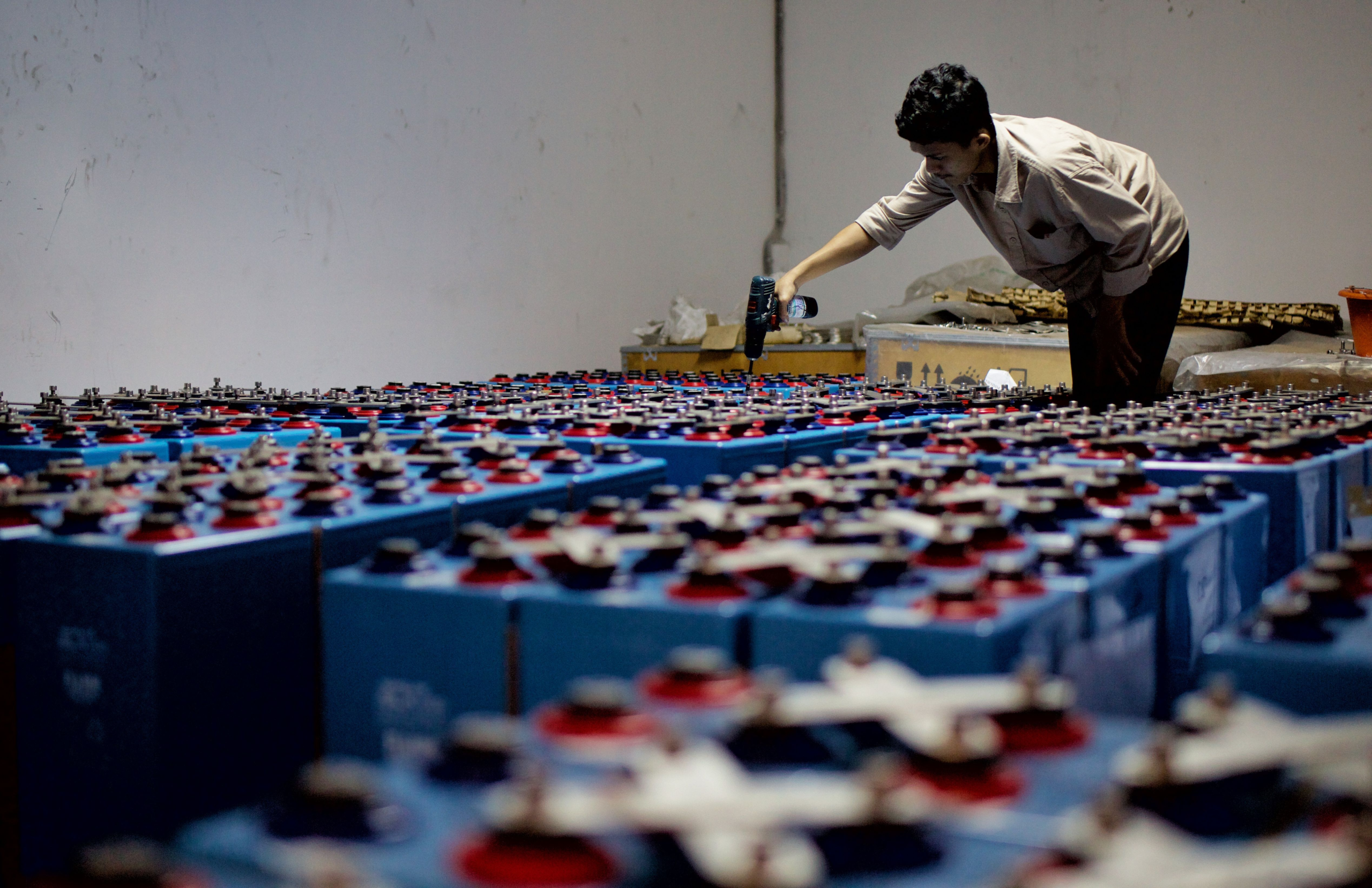
Each underlying battery nevertheless has real electrical limits. Its power rating, measured in MW, determines the maximum charging or discharging rate; energy capacity, measured in MWh, determines how long a particular output can be sustained. Battery state of charge, connection capacity, availability and commercial commitments restrict what can be delivered at any instant. Aggregating assets creates flexibility in allocating obligations but does not remove those physical constraints.
The strategy is already reflected in Return’s German contracts. In September, ENGIE expanded its virtual flexibility agreement with Return by another 300MW to a total of 400MW. Centrica Energy separately agreed access to 100MW/400MWh through a virtual tolling arrangement. These commercial volumes must not be added directly to the 117MW of initial projects as though they represented identical new generating or storage capacity.
Under the Centrica arrangement, for example, the contracted flexibility is backed by Return-owned storage sites rather than reserved from one dedicated plant. Centrica’s optimisation services are intended to participate in wholesale and ancillary services markets. The capability to shift charging and discharging across market periods can help manage renewable-generation variability, but an obligation to deliver a reserve service also requires suitable operational availability.
Deutsche Bank and Rabobank provide the financing, with Rabobank also identified as a financial adviser. The announcement names legal, technical, commercial and other advisers involved in the arrangement, consistent with a funding structure in which lenders must evaluate both project assets and portfolio-level contractual risks. It does not provide a public project-by-project split of the €835m or identify the amount immediately available to each battery site.
Return is separately developing other German battery installations, including Brietlingen in Lower Saxony. That site has been discussed in connection with its own funding arrangements and should not be presented as one of the three initial schemes listed for the new structure. For Herzberg, Brilon and Quedlinburg, the newly disclosed combined figure is 117MW of power capacity; a complete site-by-site energy-capacity breakdown and firm commissioning dates were not supplied in the financing announcement.
Return expects construction at the first three sites to begin shortly. The date at which their capacity can provide flexibility will depend on completed works, grid connection, installation testing and commissioning, followed by the commercial dispatch arrangements needed to deliver contracted services. Batteries also need to remain within their operational limits when providing balancing or market services, particularly where several obligations draw on the same physical assets.
The company has not disclosed a construction timetable for every asset that may ultimately enter the portfolio. Its stated ambition is to install at least 1GW annually in Germany from 2027, supported by projected annual investment of €750m to €1.2bn. Those are targets contingent on project execution and market conditions, separate from the initial 117MW construction group and the €835m financing agreement.