
IN Brief:
- Construction has begun at Lamminneva, rated at 36.7 MWp, and Isoneva, rated at 71.5 MWp.
- The company’s announcement gives inconsistent combined annual generation forecasts of approximately 98 GWh and 96 GWh.
- The two projects received approximately €9.1 million in EU RENEWFM support and are targeted for operation in spring 2027.
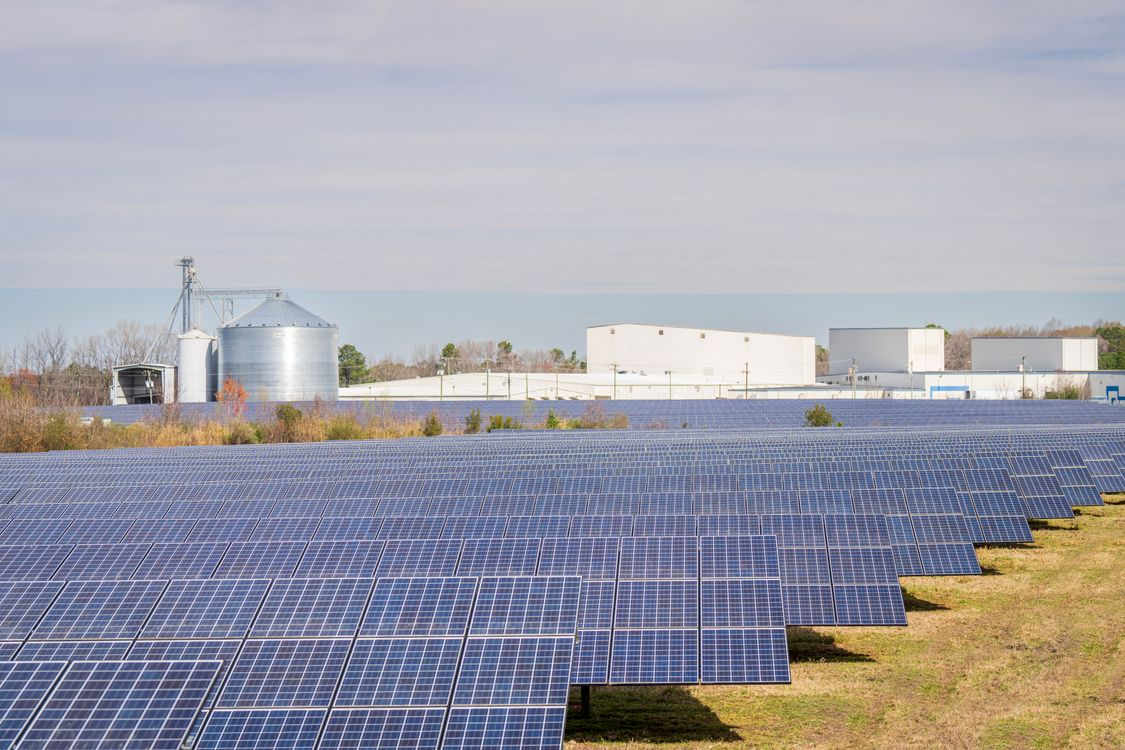
Rabbalshede Kraft has started construction of two solar photovoltaic installations in Finland with a combined peak capacity of 108.2 MWp. The Swedish renewable energy company is developing the 36.7 MWp Lamminneva plant at Lappajärvi in South Ostrobothnia and the 71.5 MWp Isoneva project at Suonenjoki in North Savo.
The start of works was announced on 15 October 2026 and represents the company’s first large solar projects to enter physical construction. Both installations are intended to begin operation in spring 2027, subject to completion of the equipment installation, network integration and commissioning.
Rabbalshede Kraft’s announcement contains an unresolved discrepancy in the combined annual generation forecast. Its introductory section gives approximately 98 GWh, while the detailed project section gives approximately 96 GWh. The two figures should not be presented as a single verified forecast until the company reconciles them.
The installed peak capacities are consistent within the new release, with Lamminneva accounting for 36.7 MWp and Isoneva 71.5 MWp. Earlier company communications used different design-stage capacities, so the figures published with the construction start provide the relevant baseline for this development milestone.
Both solar farms are located on land previously used for peat extraction. Reusing altered sites provides a new energy infrastructure function, but it does not remove the need for ground assessment, drainage design, safe access and the environmental measures required for the new developments.
The company says the projects have received approximately €9.1 million in funding through the European Union’s Renewable Energy Financing Mechanism, known as RENEWFM. The support concerns development of eligible renewable generation and does not establish that construction or commissioning has already been completed.
An earlier funding announcement reported a more precise total of €9,181,221 and different project capacities. The October announcement rounds the funding amount and updates the projects’ generating ratings; using the earlier capacities alongside the newer total would confuse two different development stages.
Rabbalshede Kraft states that the project portfolio was developed with Neova and that it assumed full ownership of the two solar projects when the investment decision was made. This supersedes earlier descriptions of joint ownership with a Neova subsidiary, which should not be reported as the current ownership position.
Photovoltaic generating stations produce direct current electricity from solar modules. That energy is collected through DC circuits and transferred to inverters, which convert it into alternating current for connection to the electricity system. Transformers and protective equipment complete the interface with the relevant network.
The combined 108.2 MWp photovoltaic rating should not be interpreted as continuous generation or as a statement of permitted AC export. Network agreements, inverter sizing, the solar resource and operating conditions determine what can be delivered at a particular time.
Finland presents a seasonal operating pattern for photovoltaic electricity generation. Long summer daylight hours increase the opportunity to produce energy during part of the year, while short winter days and potentially snow-covered equipment constrain production in other periods.
The design of an installation must account for those environmental conditions together with module orientation, ground clearance, wind and snow loading, and access for maintenance. Previous peat extraction can introduce further site-specific foundation and drainage considerations that cannot be resolved from the announcement alone.
Plant performance over a year will depend on irradiation, module temperatures, inverter availability and electrical losses. Without a reconciled annual forecast, an equivalent full-load-hour calculation using either disputed figure would risk implying greater precision than the current source supports.
The company compares anticipated combined electricity generation with the consumption of approximately 9,800 Finnish households. That is an indicative equivalence based on assumed consumption, not evidence that electricity is contracted directly to those households or that measured output has already reached the projection.
Construction will require installation of the ground-mounted arrays, electrical collection circuits, power conversion equipment, transformers and the facilities needed to connect each plant to the relevant network. Testing and commissioning follow completion of the physical installation, making the planned spring 2027 operating date a future target.
The project programme expands Rabbalshede Kraft’s generating technology mix in Finland alongside its wind-related activities. The immediate milestones remain delivery of the two individual photovoltaic stations and confirmation of their electrical readiness, rather than achievement of any annual output figure.
Until full-year operating data are available, production, emissions avoidance and household equivalence remain forecasts. The company’s release nevertheless establishes that 108.2 MWp of solar construction has begun on the two former peat sites, with first operation scheduled for the following spring.