IN Brief:
- Endesa has begun construction of the two-plant, 23.95 MW Goleta-Xalana development in Santanyí.
- The company forecasts around 42 GWh of annual generation following planned operation in the second half of 2027.
- The €14.6 million project includes bifacial modules, measures to retain grazing and a planned local financing opportunity.
Endesa has begun construction of the Goleta-Xalana photovoltaic development in Santanyí, Mallorca, comprising two solar installations with combined capacity of 23.95 MW. The company has committed approximately €14.6 million to the project, which it describes as its largest photovoltaic development so far in the Balearic Islands.
Announced on 15 October 2026, the construction start is distinct from grid energisation or commercial operation. Endesa plans to bring the installation into service during the second half of 2027, subject to the completion of physical works, electrical testing and the relevant connection requirements.
The developer expects the two plants to generate approximately 42 GWh of electricity annually once operating. It estimates this would correspond to the annual electricity requirements of around 12,000 households and avoid approximately 15,000 tonnes of carbon dioxide emissions. These are company forecasts and equivalences, not verified production or emissions outcomes.
The construction statement gives combined installed capacity of 23.95 MW, whereas the company’s standing project page describes approximately 25 MWp. The latest construction-stage figure should be used for reporting the development; the rounded page value should not be presented as a second, additional block of capacity.
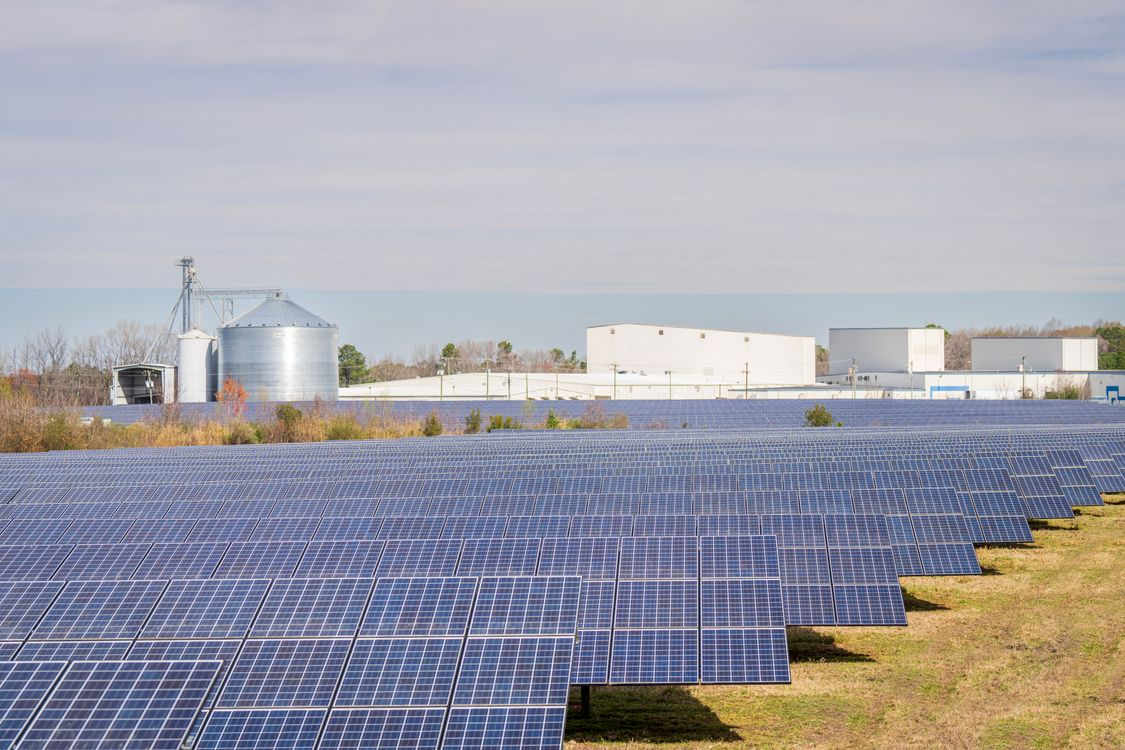
The project will use bifacial photovoltaic modules mounted on fixed structures in a three-vertical configuration. Bifacial modules collect light from both their front and rear surfaces, with the additional energy from the rear depending on reflection from the ground and the physical arrangement of the installation.
Fixed mounting equipment establishes the module position without the moving drives associated with tracking systems. Its performance depends on factors including orientation, tilt, shading, spacing, temperature and the site’s solar conditions, rather than simply on the number of modules installed.
Endesa says the layout is intended to make efficient use of available land. That is a design objective rather than a quantified reduction in land take established by the announcement. The final output will depend on the complete electrical and physical design.
Photovoltaic cells produce direct current electricity as they absorb incident sunlight. Electrical circuits collect the output, while inverters convert it into alternating current before the energy can pass through transformers and protection equipment to the connected distribution or transmission infrastructure.
Electrical capacity and annual production measure different properties. The 23.95 MW installed rating describes a generating power capacity; the 42 GWh forecast indicates energy expected over a year. Dividing the latter by the former gives about 1,754 equivalent full-load hours, but actual operation will vary across daylight hours and seasons.
Inverter ratings and the permitted AC export capability are not established by the figures published in the company’s construction statement. It would therefore be incorrect to assume that the peak installed photovoltaic rating is also the continuous power that may be injected into the electrical network.
The solar facility is being built on land where agricultural activity is to continue. Endesa describes plans to retain grazing, plant carob trees and establish vegetation barriers around and between the two installations as part of landscape and agricultural integration measures.
Those arrangements require coordination with electrical safety boundaries, access for inspection and maintenance, and the operating needs of the land. Maintaining agricultural use is a stated project measure, not a verified assessment of its eventual economic or ecological effects.
Construction activities will include equipment positioning and module installation, with robotic lifting equipment planned to assist panel placement and drones expected to support site monitoring. Endesa has not published measured productivity improvements, so the technology should be described as an intended construction method rather than proof of faster delivery.
The company anticipates more than 80 workers at periods of peak construction activity. This describes temporary site employment, not a permanent operational headcount, and it does not establish how many appointments will be filled locally.
A proposed local participation mechanism would make up to €2.7 million of financing available to eligible residents, companies and organisations. It is part of the project’s financing approach and should not be added to the €14.6 million construction investment as if it were an unrelated extra capital commitment.
Mallorca’s electricity system requires generation and demand to be managed across an island network and its wider interconnections. Additional solar capacity changes daytime supply, but the construction announcement does not provide measurements demonstrating an improvement in voltage stability or supply reliability attributable to this unbuilt project.
Following construction, the plant will require equipment inspection, protective system checks, energisation procedures and commissioning before routine generation can begin. The second-half 2027 date remains the developer’s target, while the announced October milestone confirms only that work on the Goleta-Xalana installations has started.