IN Brief:
- Qair's 20 October update confirms that its Brecks Solar Farm in Nottinghamshire is progressing through construction.
- INTEC Energy Solutions holds the engineering, procurement and construction contract for the 46.51MWp project, with an initial two-year maintenance arrangement.
- The development has a Contract for Difference and targets operation in the second quarter of 2027, with forecast annual generation of 46.08GWh.
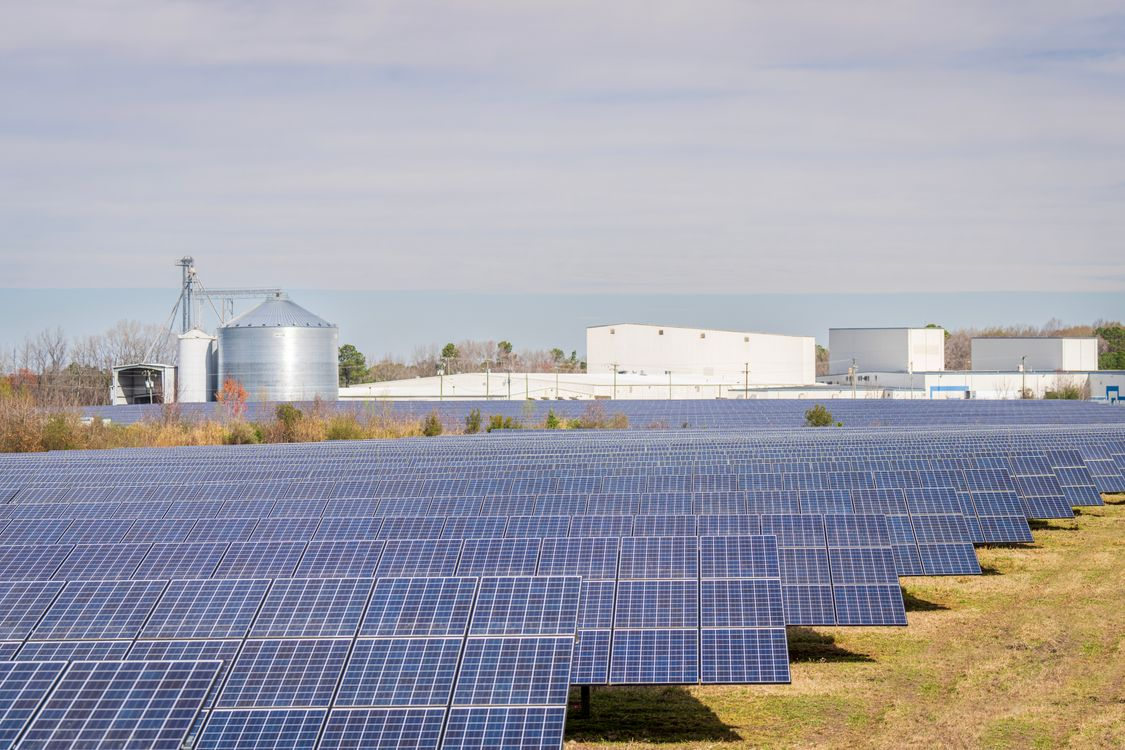
Qair has confirmed that construction is underway at its Brecks Solar Farm near Retford in Nottinghamshire, advancing an approximately 46MW photovoltaic installation towards planned commercial operation in the second quarter of 2027. The project is the company’s first UK renewable energy development to reach the construction stage.
The developer’s 20 October update identifies an expected annual electricity output of approximately 46.08GWh, equivalent to the annual consumption of 8,927 homes under Qair’s assessment. The company also forecasts annual avoided emissions of around 14,866 tonnes of carbon dioxide, subject to the assumptions used to compare its future generation with alternative electricity supply.
Engineering, procurement and construction responsibilities sit with INTEC Energy Solutions, which was appointed in May to deliver the installation. The contractor identifies Brecks as a 46.51MWp development, while Qair’s current reporting rounds the capacity to approximately 46MW.
The project reached financial close in June, supported by senior debt financing from BayernLB. At that point, construction was expected to begin during the month, following INTEC’s earlier description of the development as entering its construction phase. Qair’s October update confirms that the programme is underway without specifying the precise date when physical site works began.
This chronology distinguishes the latest developer confirmation from the earlier contract award and financing milestones. It also avoids treating the 20 October reporting date as evidence that the first construction activity occurred on that day.
The 46.51MWp rating describes the nominal peak capacity of the photovoltaic modules under standard test conditions. It is not necessarily identical to the maximum alternating current power that the completed installation will be permitted to export through its grid connection.
Photovoltaic modules produce direct current as sunlight reaches their semiconductor cells. Individual modules are connected into strings and electrical collection circuits, with the resulting output transferred towards inverter equipment for conversion into alternating current.
The inverter configuration influences how the plant responds to changes in solar irradiance and the electrical conditions of the connected network. Equipment selection must account for the expected DC operating range, conversion ratings, voltage requirements and the need to operate within the installation’s permitted export capacity.
Transformers and switchgear provide further interfaces between the generating equipment and the electricity network. Their ratings, insulation requirements and protection arrangements must accommodate the proposed operating conditions while allowing faults and abnormal electrical events to be detected and managed safely.
Plant-level controls coordinate inverter output and the electrical exchange with the network. Depending on the connection agreement, these systems may need to regulate active power, support voltage management through reactive power control and respond to instructions that restrict generation under particular network conditions.
Qair and INTEC have not disclosed the complete electrical configuration of Brecks, including the inverter suppliers, individual transformer ratings or agreed grid export capacity. These details will determine the installed conversion capability and should not be inferred from the nominal photovoltaic module rating.
The engineering programme also involves the physical infrastructure supporting the generating equipment. Ground-mounted solar panels require suitable support structures, foundations or other mounting systems, with their layout coordinated around access routes, cable installation and the site conditions established through project design.
Electrical collection infrastructure must be installed and tested alongside the photovoltaic arrays. Cable routing, conductor ratings, isolation arrangements and protection settings all contribute to the ability of the completed system to transfer electricity reliably while allowing safe inspection and maintenance.
Completing the mechanical installation will not by itself establish readiness for electricity export. The plant must progress through electrical inspections, equipment testing, protection verification and the procedures required to energise its connection before commercial operation can be confirmed.
The forecast annual generation of 46.08GWh provides an indication of the quantity of electricity Qair expects the project to produce once operational. Actual output will depend on solar conditions, plant availability, electrical losses and any restrictions affecting generation or network export.
Using the forecast output across a full year gives an average electrical production of approximately 5.3MW. That average is lower than the installation’s stated peak module capacity because solar generation changes with daylight, weather and seasonal conditions rather than remaining at its nominal rating continuously.
The difference between average annual production and peak capacity should not be used to infer the final AC connection rating. A reliable assessment of export capacity requires the project’s connection agreement and completed electrical design, neither of which has been disclosed in the current project information.
Brecks has secured a government-backed Contract for Difference following Qair’s award in February 2026. The project formed part of a wider allocation of contracts covering approximately 190MWp of solar capacity in Qair’s UK portfolio.
A Contract for Difference provides an electricity revenue arrangement linked to an agreed strike price and a market reference price, subject to the relevant contract terms. The mechanism can reduce exposure to some movements in wholesale electricity prices, although payments and obligations remain dependent on the applicable rules and qualifying generation.
The contract award establishes a commercial framework for the project but does not remove the remaining construction and commissioning requirements. Brecks must still complete its electrical infrastructure, satisfy connection conditions and enter operation before its generating equipment can deliver the expected electricity output.
Qair’s construction programme also includes landscaping and biodiversity measures intended to improve the site’s environmental characteristics. INTEC’s earlier project information identifies the creation of a pond among the planned works, alongside other measures intended to support local habitats.
These activities form part of the wider site development and must be coordinated with the delivery of the generating infrastructure. Their presence does not change the photovoltaic rating or establish that construction has reached any particular stage beyond that confirmed by the companies.
INTEC’s contract extends beyond construction to operations and maintenance for an initial two-year period, with an option for an extension. The arrangement creates continuity between delivery of the equipment and its early operating life, when inspection, maintenance and performance monitoring will be required.
Qair has expanded its UK activities through the development of solar, wind and battery storage opportunities. Brecks represents a specific project moving through construction within that wider portfolio, although the capacity of projects awaiting development cannot be treated as electricity generation already available to the network.
The company continues to target commercial operation in the second quarter of 2027. Confirmation of construction completion, grid readiness, commissioning and operational acceptance will provide the next measurable milestones for the Nottinghamshire installation.