IN Brief:
- PGE Energia Odnawialna is seeking contractors for 22 battery installations with combined capacity of 111MW/260MWh.
- The four tender packages cover projects rated between 2MW and 10MW across eastern and central Poland.
- Contractors may bid for individual packages or the complete portfolio, with submissions due on 16 November.
PGE Energia Odnawialna has opened procurement for 22 distributed battery energy storage installations across Poland, seeking contractors for a portfolio with a combined power rating of 111MW and energy capacity of 260MWh.
The tender is divided into four regional packages covering sites within the distribution areas of PGE Group in north-eastern, central and south-eastern Poland. Contractors can bid for individual packages, several packages or the complete portfolio, with submissions due on 16 November 2026.
The procurement notice was published on 19 October, followed by PGE’s public announcement on 21 October. The process concerns the selection of contractors rather than an award of construction contracts, and the company has not identified successful bidders.
Individual battery installations will range from 2MW to 10MW of rated power, with energy capacities between 5MWh and 20MWh. The programme combines numerous smaller facilities rather than concentrating the entire storage capacity at one location.
Proposed locations include Wydminy, Łuków, Siedlce, Mińsk Mazowiecki, Piaseczno, Otwock, Lublin, Świdnik, Przemyśl, Krasnystaw, Rzeszów, Białystok and Chełm. The locations span several areas of the distribution network, although their precise connection arrangements and operating responsibilities will depend on the individual projects.
Among the largest installations are the proposed batteries at Siedlce and Mińsk Mazowiecki, each rated at 10MW/20MWh. Two facilities in Rzeszów will have power ratings of 8MW and 9MW respectively, with an energy capacity of 20MWh at each site.
These specifications illustrate the relationship between battery power and energy capacity. A 10MW/20MWh installation has a nominal discharge duration of two hours at rated output, whereas an 8MW/20MWh installation has a nominal duration of two and a half hours.
Across the portfolio, dividing the stated 260MWh of energy capacity by 111MW of power gives an aggregate nominal duration of approximately 2.34 hours. That calculation describes the combined ratings, not the operating duration of every installation.
Actual discharge duration can differ because of usable energy limits, conversion losses, battery condition and operational reserve requirements. Individual facilities may also be dispatched at power levels below their maximum rating, extending the time for which stored energy can be delivered.
The geographical spread introduces electrical engineering requirements that differ from those of a single large battery park. Every installation needs a suitable connection, protection arrangements, power conversion equipment, electrical isolation facilities and a means of monitoring its operating condition.
Battery cells store electricity electrochemically in direct-current form. Power conversion systems regulate charging and discharging and interface with the alternating-current network, while transformers adapt the voltage where required by the connection design.
Switchgear and protection equipment must identify and isolate faults without creating unnecessary disturbances elsewhere on the network. The exact arrangement depends on each site’s voltage level, equipment configuration and the protection requirements of the relevant distribution operator.
Control systems also determine the power exchanged with the network. Charging and discharging instructions must account for the battery’s state of charge, available power, operating limits and any restrictions imposed through its connection agreement.
Developing 22 separate installations will require coordination between equipment supply, civil construction, electrical installation and commissioning. Site access, ground conditions, cable routes and the location of existing electrical infrastructure can affect the work needed at individual facilities.
PGE’s decision to divide procurement into four packages allows contractors to compete for regional groups of installations rather than undertaking the whole portfolio. The arrangement may make the opportunity accessible to a wider range of experienced electrical and storage contractors.
It does not establish the eventual distribution of contracts. A single contractor could secure multiple packages, or the work could be allocated among several suppliers following assessment of the submitted bids.
The portfolio forms part of PGE’s wider programme to increase electricity system flexibility as renewable generation expands. Storage can absorb electricity during selected periods and return it later, allowing some separation between the time electricity is generated and the time it is consumed.
The contribution of an individual facility depends on how it is connected and operated. A battery located close to a distribution constraint may be able to provide useful flexibility, but that benefit cannot be assumed simply because the installation is connected to a distribution network.
Network constraints are affected by circuit ratings, transformer capacity, voltage limits and the direction of power flows. Charging can relieve some conditions while worsening others, so dispatch arrangements must reflect the actual electrical requirements at the connection point.
Storage may also provide commercial services through electricity trading or balancing arrangements, subject to the relevant market rules and technical qualifications. PGE has not published a uniform dispatch strategy or market participation arrangement for all 22 facilities.
The company’s announced capacities likewise do not specify the selected battery chemistry, manufacturer, warranty conditions or lifetime performance guarantees. Those characteristics will influence the final technical design and maintenance requirements once equipment and contractors are selected.
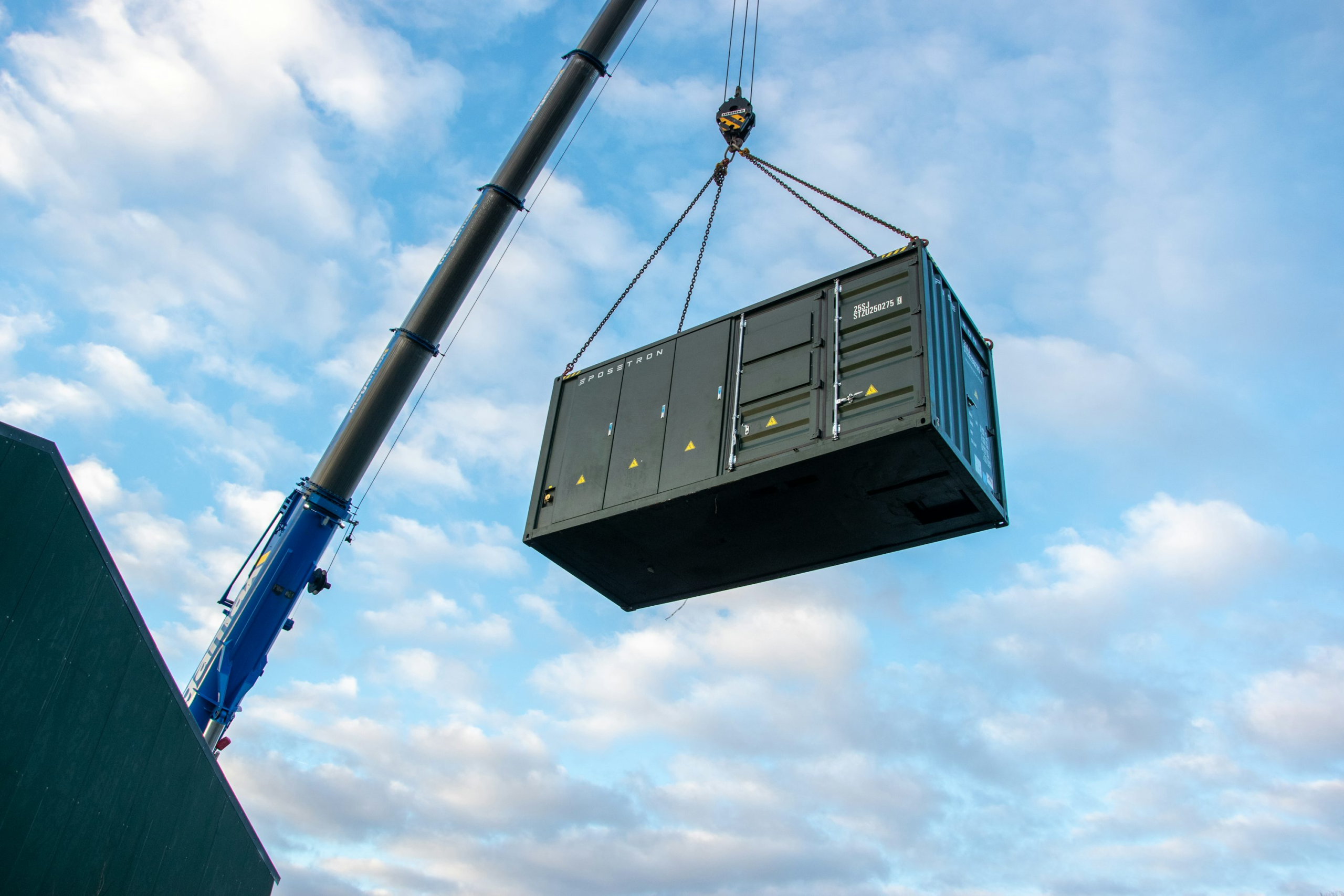
Commissioning will require testing of battery systems and their supporting electrical infrastructure before the installations can enter operation. Completion of civil works or delivery of battery containers alone would not establish that a facility is ready to exchange power with the grid.
With submissions closing on 16 November, the immediate next milestone is contractor selection. Detailed procurement outcomes and subsequent construction progress will determine when the proposed 111MW/260MWh portfolio becomes operational capacity across PGE’s network areas.