IN Brief:
- Kempower and Charge Hub will deliver fast-charging infrastructure for buses and trucks across the UK.
- Initial projects are under way at depots in Bexleyheath, Croydon, Sydenham, Thamesmead, and Peckham.
- The model combines distributed DC charging hardware with site design, installation, operation, maintenance, and software.
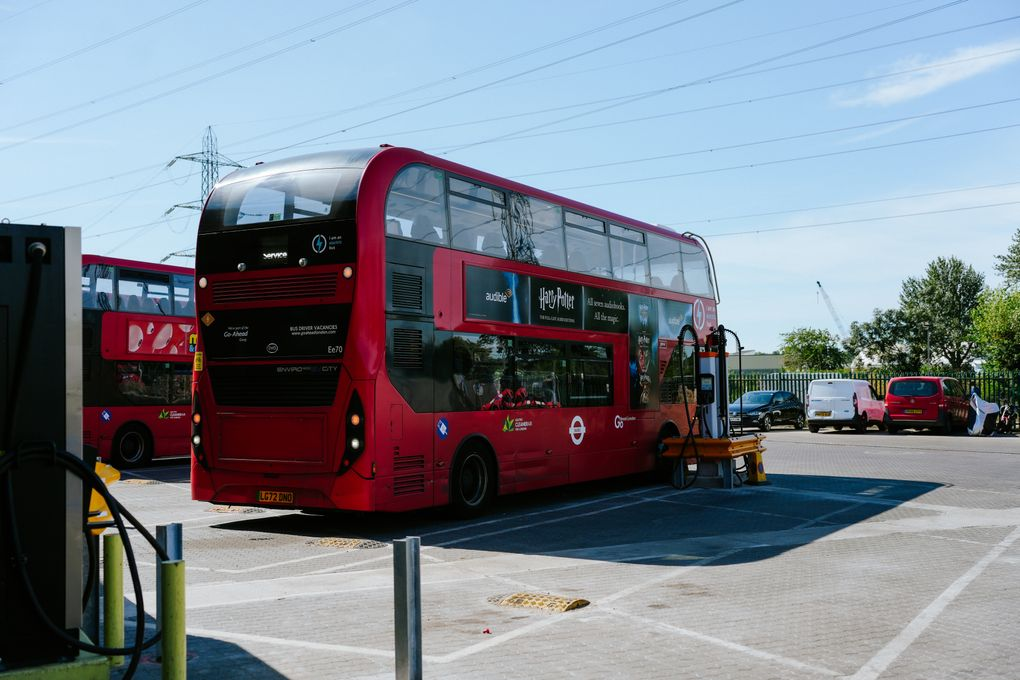
Kempower and Charge Hub have expanded their commercial fleet-charging partnership into the UK, with the first installations already under way at bus depots across South London.
The companies plan to deliver fast-charging infrastructure for buses and trucks, combining Kempower’s distributed DC charging systems with Charge Hub’s turnkey delivery model. Charge Hub’s scope includes site design, installation, operation, and maintenance, placing the partnership around complete depot systems rather than standalone chargers.
Initial projects are progressing at depots in Bexleyheath, Croydon, Sydenham, Thamesmead, and Peckham, with commissioning expected during the coming months. The UK programme builds on an established relationship in Australia, where the companies say they have delivered 100 projects containing more than 900 active connectors, with another 450 due to be installed.
Those Australian installations represent 52MW of charging capacity and have delivered 11.8GWh of electricity to vehicles, with reported uptime of 99.4%. That operating base gives the partnership experience of multi-vehicle depots before it moves further into British bus and truck fleets.
Fleet charging presents a different electrical problem from roadside or destination charging. A bus depot may receive dozens of vehicles within a relatively narrow period after service, leaving a fixed overnight window in which sufficient energy must be delivered before the next day’s timetable begins.
Truck operations can be more demanding again. Individual vehicles may require considerably more energy, while departure times, shift patterns, payloads, and route lengths can vary. The charging system has to manage those operational requirements without exceeding the electrical capacity available at the site.
A distributed architecture allows some power electronics to be separated from individual charging points, so available capacity can be allocated between connected vehicles rather than permanently assigned to each bay. Where departure times and required states of charge differ, charging power can be moved between vehicles as priorities change.
That flexibility does not create additional grid capacity. Maximum demand remains constrained by the site’s connection, transformers, switchgear, cables, chargers, and any local generation or battery storage. The value lies in using the available capacity more deliberately rather than assuming every connected vehicle needs its maximum charging rate simultaneously.
The scale of that problem rises quickly as fleets move beyond pilot deployments. A small number of chargers may fit inside an existing depot supply, while replacement of a large diesel fleet can turn a transport facility into a multi-megawatt electrical load. Distribution connection studies, transformer capacity, protection coordination, earthing, cable routes, and reinforcement then become part of fleet planning.
Depot charging also differs commercially from public charging. A public network has to deal with uncertain arrival patterns and customer dwell times, whereas a fleet operator normally knows which vehicles belong to the site, the routes they are expected to cover, and when they are due to leave again.
That operating data allows charging to be prioritised around the timetable. Vehicles with early departures can be charged first, while others can wait for cheaper tariff periods or spare connection capacity. Management software can also flag vehicles that are drawing less power than expected or have failed to reach their target state of charge.
Reliability carries a direct operational consequence at a bus or truck depot because a charging failure can remove a vehicle from service. Redundancy, remote monitoring, maintainability, spare capacity, and the ability to redistribute power therefore matter alongside the nominal output of the chargers themselves.
As fleet sites grow, the electrical architecture has to accommodate future expansion without repeated redesign. Installing spare switchgear ways, appropriately sized cable routes, scalable power units, and communications capacity during the first phase can reduce the disruption required when additional vehicles enter the fleet.
Kempower’s distributed hardware and Charge Hub’s delivery model are intended to address that broader system requirement. The five South London projects will provide an early test of how the partnership transfers from Australia and New Zealand into British depots with different network constraints, site layouts, procurement structures, and fleet schedules.
Commissioning will ultimately be measured through operational outcomes rather than connector count alone. Charger availability, energy delivered during restricted dwell periods, utilisation of the grid connection, vehicle readiness, and the ability to add further charging capacity will determine whether the first sites provide a repeatable model for larger UK fleet deployments.