IN Brief:
- Innergex, Hydro-Québec, and the Alliance de l’énergie de l’Est have signed an equal partnership agreement.
- The Wocawson development area covers around 700 square kilometres across two regional county municipalities.
- Preliminary layouts will be presented to host communities in winter 2027, alongside continuing surveys and regional transmission planning.
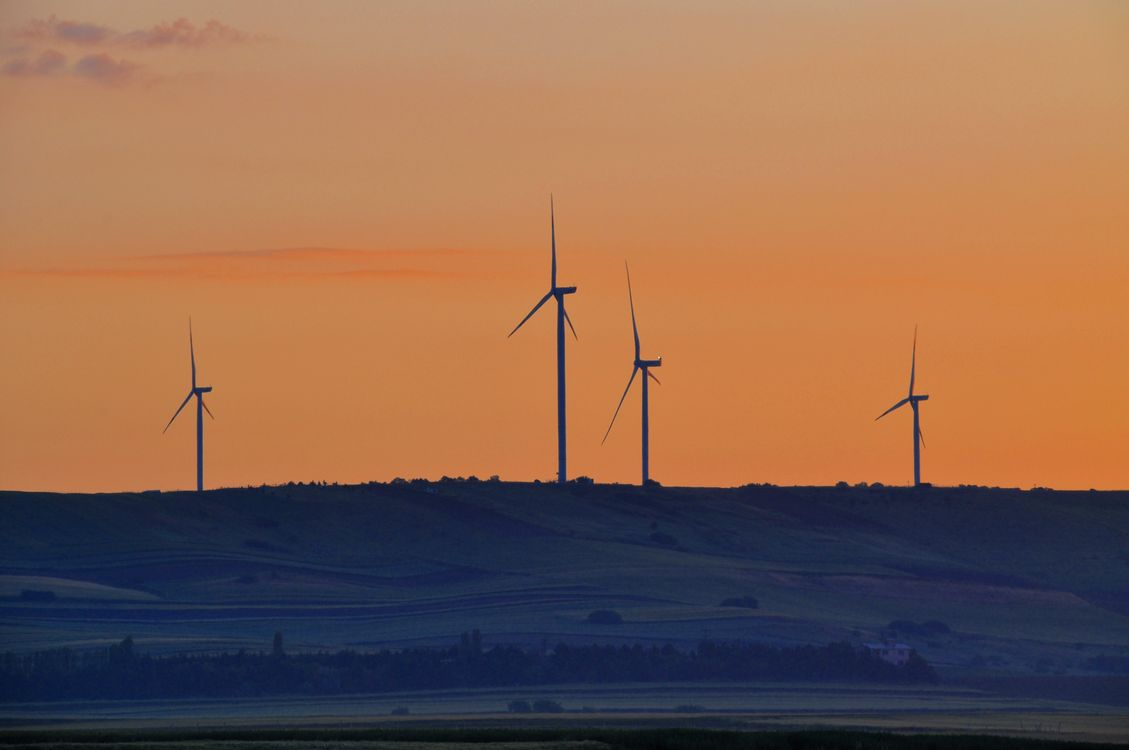
Canadian renewable electricity developer Innergex has signed an equal partnership agreement with Hydro-Québec and the Alliance de l’énergie de l’Est to develop wind generation in the Wocawson area of eastern Québec, where preliminary assessments indicate potential installed capacity of approximately 1 GW.
The agreement, signed on 24 November, concludes the exclusive negotiations initiated in June after Innergex was selected as the prospective industrial partner. The developer will coordinate project development and construction, while participating in community engagement alongside the public utility and regional alliance.
The Alliance de l’énergie de l’Est includes 209 communities across 16 regional county municipalities and the Wolastoqiyik Wahsipekuk First Nation. Its participation brings regional representatives into the project partnership rather than limiting their involvement to consultation during planning.
Wocawson extends across approximately 700 square kilometres in the Kamouraska and Témiscouata regional county municipalities. Hydro-Québec and the alliance began their collaboration on the area in October 2024, and investigations are continuing to establish the boundaries, infrastructure requirements, and generating potential of individual wind projects.
The partners intend to present preliminary layouts to local communities during winter 2027. Environmental surveys, wind measurements, and geotechnical investigations will inform the scope of the developments before decisions are made about the number of turbines, their generating capacity, and their locations.
A preliminary regional wind resource assessment does not establish the final capacity of the generating equipment that can be installed. Measurements of wind speed and direction across the development area allow engineers to calculate anticipated output and examine turbulence, which influences both electricity production and the mechanical loads experienced by turbine components.
The arrangement of turbines also affects how much energy can be extracted from the available wind. Air passing through a rotor loses some of its kinetic energy, producing a wake that can reduce generation and increase turbulence at turbines positioned downstream. Layout optimisation therefore involves a relationship between turbine spacing, prevailing wind directions, land constraints, and the cost of the infrastructure needed to connect the turbines electrically.
Within a large development, increasing the distance between turbines can reduce some wake losses but may increase the lengths of collection circuits and access roads. Ground conditions affect foundation design and construction methods, while environmental restrictions can exclude areas that otherwise appear suitable in the initial resource assessment.
The resulting layout will also establish the requirements for electricity collection and export. Turbine output must be transferred to substations through collection circuits rated for the maximum power they are expected to carry. Substation locations and the configuration of those circuits affect equipment costs, electrical losses, and maintenance arrangements throughout the operating life of the projects.
Hydro-Québec is separately planning its Appalaches–Bas-Saint-Laurent transmission reinforcement to accommodate additional wind generation and improve regional electricity reliability. The two-phase programme includes new 315 kV lines and switching infrastructure, with a proposed substation in the Saint-Honoré-de-Témiscouata area targeted for 2032.
The wider programme includes expansion of the existing Appalaches substation, where two new transformers would step voltage down from 735 kV to 315 kV and connect to the additional regional transmission circuits. The second phase includes approximately 175 kilometres of 315 kV lines and a further substation, with completion of the overall programme scheduled for 2034.
These investments concern the regional network rather than an announced dedicated connection for Wocawson. The partners have not yet disclosed the voltage, export ratings, or precise route of the infrastructure that will connect their own generating assets. Connection availability and the phasing of transmission construction will influence the dates at which individual wind farms can begin exporting electricity.
Hydro-Québec’s strategy envisages more than 10 GW of additional wind capacity by 2035. Developing large areas in partnership with municipalities and First Nations forms part of that programme, alongside more conventional competitive procurement arrangements.
On 18 November, the utility also launched a regional assessment of the cumulative effects of wind and transmission development in eastern Québec. Its public consultation runs until 31 January 2027 and covers Wocawson alongside the proposed Wetsok and Gespe’gewa’gi wind developments and the Appalaches–Bas-Saint-Laurent reinforcement.
Assessing those projects together allows their combined land use, construction activity, and infrastructure requirements to be considered before individual development layouts are finalised. The partners will present Wocawson’s preliminary configuration in 2027; the subsequent investigations and approval processes must establish how much of the estimated 1 GW resource can be developed and connected to the regional electricity system.