IN Brief:
- ENTSO-E is seeking harmonised risk assessments and minimum protection standards for critical European electricity infrastructure.
- Offshore recovery, cross-border emergency resources, and clearer responsibilities between transmission operators and authorities form key parts of the proposals.
- The association also wants security-sensitive transparency rules and dedicated funding for grid resilience.
ENTSO-E has set out seven recommendations for strengthening the security of Europe’s critical electricity infrastructure, covering physical protection, cyber risk, offshore recovery, crisis management, information controls, and investment.
The European transmission-system association is calling for harmonised risk assessments across the energy sector and minimum protection standards for critical grid assets. It also wants responsibilities between transmission system operators and public authorities to be defined more clearly before an incident occurs rather than negotiated during one.
Further recommendations cover regional arrangements for protecting and recovering offshore infrastructure, faster cross-border deployment of critical equipment and personnel during emergencies, greater control over publication of security-sensitive infrastructure information, and dedicated funding for resilience measures.
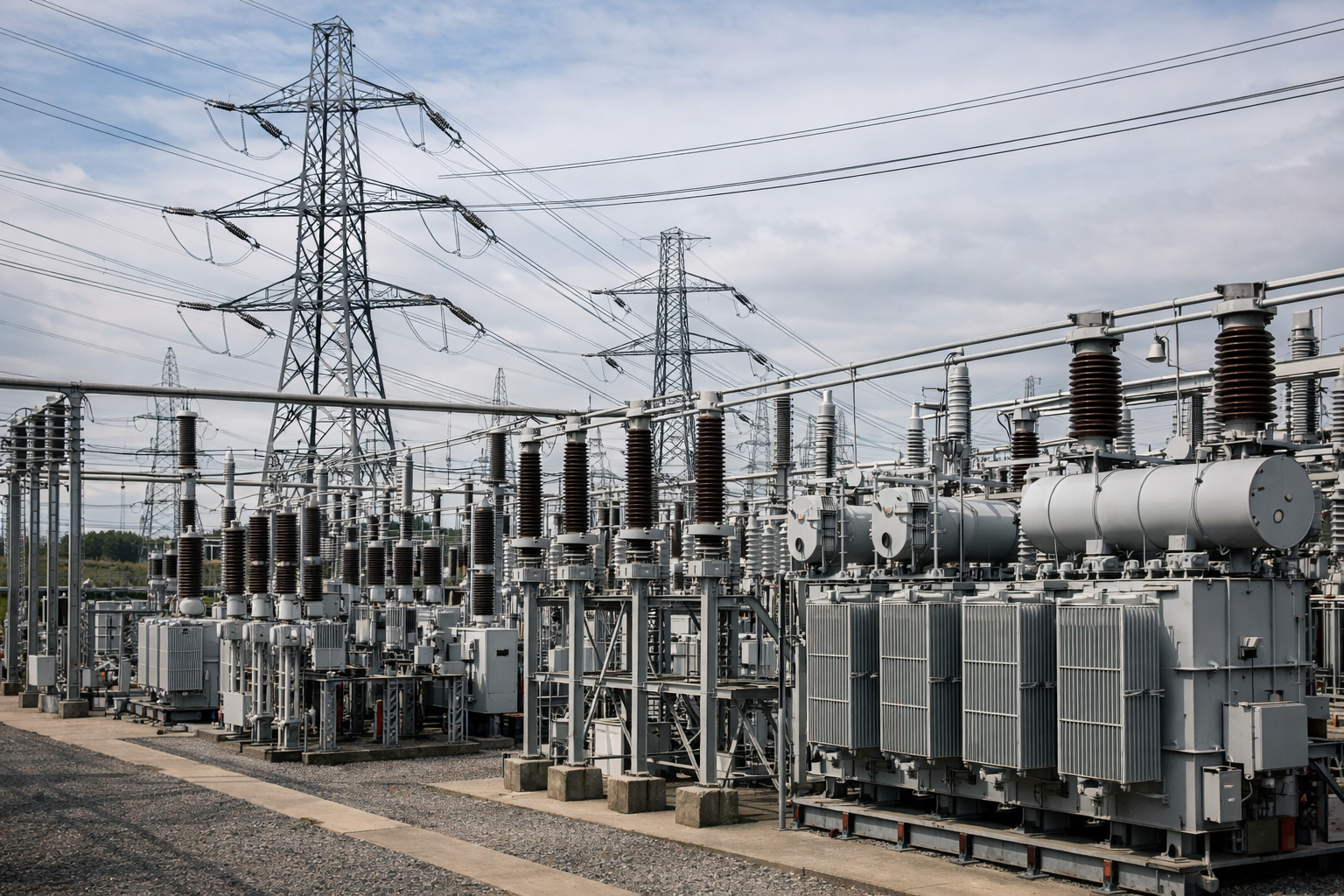
The proposals reflect an electricity system carrying more digital control, cross-border interconnection, and offshore infrastructure while dependence on continuous electrical supply continues to increase. Transmission networks now combine conventional substations and overhead lines with subsea cables, converter stations, remotely controlled assets, telecommunications systems, digital protection, and increasingly complex operational data flows.
A common risk methodology is intended to reduce differences between national approaches where the consequences of an infrastructure failure can extend across borders. An asset may sit physically inside one country while supporting electricity transfers, system stability, or generation connections used by several neighbouring systems.
Common assessment does not mean every substation, cable, or control centre requires identical protection. Asset function, location, accessibility, system criticality, replacement time, and credible threats vary substantially, so minimum standards have to provide a baseline without substituting a single engineering solution for local risk analysis.
The same problem is particularly acute offshore. Europe’s renewable build-out increasingly depends on offshore substations, converter platforms, export cables, interconnectors, and subsea communications spread across large maritime areas where inspection and repair are slower than at an accessible onshore installation.
Damage to a subsea cable cannot necessarily be rectified with equipment held by the nearest national transmission operator. Repair vessels, cable stocks, joints, specialist tooling, diving or remotely operated systems, and appropriately qualified personnel may all be located in different countries and committed to other work.
ENTSO-E’s recommendation for stronger regional recovery arrangements addresses that constraint directly. Security planning becomes partly an engineering-spares and logistics problem: operators need to know where replacement equipment is held, how quickly it can move across borders, and which organisation has authority to mobilise it during an emergency.
Large transformers create a related onshore problem because replacements are costly, difficult to transport, and can carry long manufacturing lead times. Strategic spares, interchangeable specifications, transport planning, and mutual-assistance arrangements can reduce restoration times, but they require investment before a failure occurs.
Cybersecurity runs through the same operational framework. EU NIS2 requirements already place energy operators within a wider regime for cyber risk management and incident reporting, while electricity-specific rules address cybersecurity in cross-border power flows.
Digital substations, network automation, remote access, condition monitoring, and increasingly connected protection and control equipment provide operators with greater visibility and faster control. Each connection also expands the number of technical interfaces that have to be authenticated, maintained, patched, monitored, and separated appropriately from less critical systems.
A reported cyber incident affecting a UK peaking plant recently illustrated how disruption to digital systems can reach physical generation. Transmission assets operate on a different scale, but the operational objective remains similar: cyber protection has to preserve safe and reliable electricity-system behaviour, not merely prevent disclosure of information.
ENTSO-E has also raised the tension between transparency and security. Network operators publish substantial technical information to support electricity markets, planning, development, and regulatory oversight, yet detailed data about critical locations, configurations, vulnerabilities, or recovery arrangements can create additional exposure.
Restricting unnecessary sensitive detail does not require abandoning market transparency, but it does require a more deliberate distinction between information needed for efficient electricity markets and material whose publication adds little commercial value while increasing security risk.
Funding remains the less glamorous problem behind most of the recommendations. Physical hardening, surveillance, redundant communications, cybersecurity controls, spare equipment, training, emergency exercises, and recovery capability all carry costs that compete with reinforcement and expansion programmes already under pressure from electrification and renewable connections.
If resilience measures are treated as discretionary operating expenditure, investment can be postponed behind projects that add visible network capacity. ENTSO-E’s call for dedicated funding instead places security within the core economics of transmission infrastructure, where reliability depends on the ability to withstand and recover from events as well as on the amount of capacity installed.
The offshore build-out makes that distinction increasingly difficult to ignore. A new offshore grid connection can represent billions of euros of infrastructure and carry several gigawatts of generation, concentrating more system value into individual cables, converter platforms, and landing points.
Europe’s grid expansion will therefore enlarge the asset base requiring protection at the same time as digitalisation increases technical interdependence. The engineering challenge is no longer confined to preventing individual equipment failures; operators have to design recovery routes for combinations of physical damage, communications loss, cyber compromise, and constrained access.
ENTSO-E’s seven recommendations do not specify one security architecture for Europe, nor could they. They instead place the practical questions — common risk assumptions, minimum standards, crisis authority, offshore recovery, movable resources, information discipline, and funding — alongside the more familiar transmission debate over cables, substations, and new capacity.