IN Brief:
- The €134.3 million acquisition adds 128MW operating, 34MW under construction and 147MW at advanced development stage.
- More than 90% of Escofi's operating and construction-stage capacity benefits from 20-year contracted revenues under French CfDs.
- Econergy expects approximately 300MW of the acquired portfolio to be operating by 2030 as advanced projects progress.
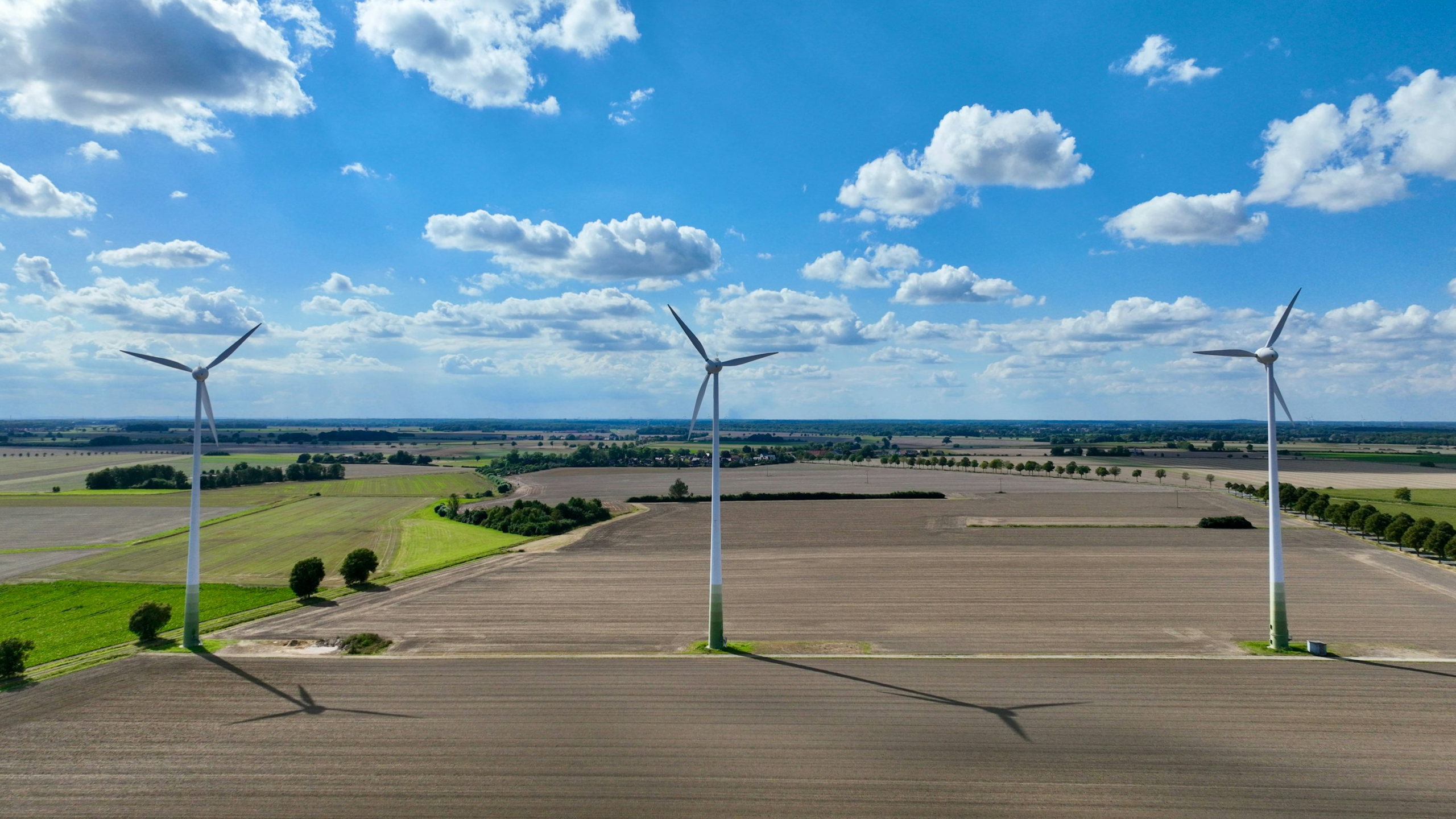
Econergy has entered the French renewable energy market through the €134.3 million acquisition of Escofi, adding an onshore wind platform with approximately 740MW across operating, construction and development-stage projects.
The portfolio includes 128MW already in commercial operation, 34MW under construction, 147MW at an advanced stage of development and approximately 432MW in earlier development. The assets are concentrated in the Hauts-de-France and Grand Est regions of northern France.
Escofi was founded in 1988 and develops, finances, builds and operates onshore wind projects. Acquiring the business gives Econergy an existing French operating platform and local development capability rather than requiring it to establish a pipeline project by project.
The more mature part of the portfolio also carries substantial contracted revenue. More than 90% of operating and construction-stage capacity benefits from 20-year arrangements under the French Contract for Difference regime.
Three additional projects totalling 46MW secured CfDs during July at prices above €80/MWh for 20 years. Those contracts add revenue visibility to projects still moving through development and construction, although delivery risk remains until the assets are completed and commissioned.
Econergy expects the 34MW currently under construction and 147MW at advanced development stage to lift Escofi’s operating capacity to approximately 300MW by 2030. The advanced projects already hold building permits and grid connection approvals, with construction expected to begin between 2028 and 2030.
The remaining 432MW sits at earlier stages and carries a different level of certainty. Those projects still have to progress through site development, environmental assessment, permitting, grid access, financing and procurement before they can add generating capacity.
That separation is important when assessing a 740MW acquisition. Only 128MW is currently generating, while the remainder ranges from active construction to projects whose final configuration and delivery timetable may still change.
Econergy expects the 309MW formed by operating, construction-stage and advanced projects to produce annual revenue of €59 million to €65 million and EBITDA of €47 million to €53 million in a representative year. Once the more mature development projects are operating, project-level EBITDA is expected to reach approximately €42 million to €44 million in 2030.
The French purchase broadens a European portfolio that has recently included significant solar and battery investment. In August, Econergy secured up to €229 million for the Părău 2 solar and storage project in Romania, supporting construction of a 342MW solar plant with a 150MW/300MWh co-located battery.
Adding established French wind assets changes that technology mix. Wind and solar output follow different daily and seasonal profiles, giving a diversified generating portfolio less dependence on the production characteristics of one renewable technology.
France also introduces a different market and regulatory environment. Grid connection, planning, land agreements and auction structures remain nationally specific even where turbine technology, finance and asset-management practices are increasingly shared across European markets.
The acquired operating capability therefore carries value beyond the nominal project pipeline. Development teams familiar with local permitting and grid processes can determine how quickly early-stage capacity moves towards construction, particularly in an onshore wind market where environmental assessment and community engagement can materially affect project timescales.
Econergy has also identified potential to repower existing Escofi projects. One repowering scheme is already progressing and another has secured a CfD, providing a route to increase production from established sites as older turbines reach the point where replacement becomes technically and commercially viable.
Repowering can improve output through larger rotors, increased ratings and newer controls while reusing aspects of an established project location and grid connection. It is not automatic, however, because changed turbine dimensions and electrical characteristics can still trigger permitting, environmental and connection requirements.
Battery storage is another option being considered around parts of the French wind portfolio. Co-locating storage could allow generation to be shifted between trading periods or connection capacity to be used more flexibly, although no defined French battery project has yet been committed through the acquisition.
Following the deal, Econergy’s European platform spans France, Romania, the UK, Italy, Germany, Poland, Spain and Greece. The transaction therefore adds another national market as well as increasing the company’s onshore wind exposure.
The distinction between acquired pipeline and delivered capacity will remain central over the next four years. Escofi provides 128MW of immediate operating assets, but reaching the expected 300MW by 2030 requires the construction and advanced projects to move through procurement, grid works and commissioning on schedule.
The €134.3 million transaction has given Econergy a substantial French platform in a single step. Its longer-term value will depend less on the headline 740MW total than on how much of the development portfolio can be converted into operating turbines alongside the established fleet.