IN Brief:
- The NIBE S2060 is an inverter-controlled R290 air-to-water heat pump available in 6kW and 10kW versions.
- It can provide flow temperatures up to 75°C and operate at outdoor temperatures down to −25°C.
- Connected controls, price-responsive operation, and retrofit-focused hydraulic design link appliance performance with wider electricity-system flexibility.
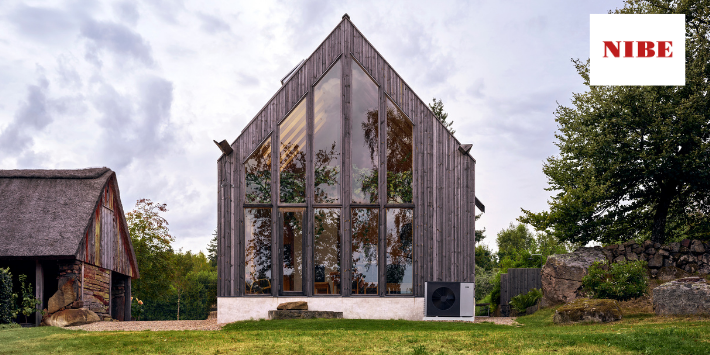
NIBE has introduced the S2060, a compact air-to-water heat-pump platform using R290 refrigerant and designed for both low-temperature systems and radiator-based retrofit applications.
Initially available in 6kW and 10kW single-phase versions, the outdoor unit measures 1,160mm wide, 916mm high, and 440mm deep, with a net weight of 84kg. NIBE lists an A+++ energy-efficiency class at 35°C and 55°C heating conditions and a seasonal coefficient of performance of up to 5.33, depending on configuration and operating point.
The inverter-controlled system can provide flow temperatures up to 75°C and continue operating at outdoor temperatures down to −25°C. At that minimum ambient condition, it can deliver a 65°C flow, extending its application to buildings where existing emitters or hot-water requirements cannot always be served by lower-temperature equipment.
R290 has a very low global-warming potential compared with many fluorinated refrigerants used in earlier heat pumps. Its flammability requires appropriate product design, siting, commissioning, and service procedures, while the S2060 has been engineered without the restrictive external protective zones associated with some propane systems. Installation must still follow the manufacturer’s instructions and applicable safety requirements.
By locating the heating circulation pump inside the building rather than within the outdoor unit, NIBE has reduced the external enclosure size and given system designers more flexibility over hydraulic layout. The pump is modulated through the control system, while the installation does not require glycol or antifreeze valves for freeze protection, removing components that can add pressure loss and maintenance.
The S2060 connects with NIBE’s S-series indoor equipment and SMO controls. Through the myUplink platform, settings and operating data can be accessed remotely, while Smart Price Adaption uses day-ahead electricity prices and forecast heating and hot-water demand to alter operation across the following 24 hours.
As heating demand moves from gas networks onto electricity distribution systems, price-responsive and network-aware control becomes increasingly useful. A building, hot-water cylinder, buffer vessel, and heating circuit can store thermal energy, allowing some consumption to be moved away from expensive or constrained periods without immediately affecting comfort.
The available flexibility depends on the quality of the complete heating design. Oversized equipment can cycle frequently during mild weather, while undersized emitters may force the system to operate at higher flow temperatures and lower efficiency. Hydraulic balancing, weather compensation, emitter sizing, control parameters, and hot-water scheduling determine whether seasonal performance approaches the laboratory rating.
Retrofit projects are particularly sensitive to those decisions because existing pipework may restrict flow, radiators may have been selected for boiler temperatures, and available outdoor space can constrain siting. Higher flow capability can reduce the extent of emitter replacement in some buildings, although routine operation at elevated temperatures still carries an efficiency penalty compared with a properly designed low-temperature system.
The same connection and diversity questions arise in networked heat-pump systems, where multiple dwellings or buildings place new coincident loads on shared electrical infrastructure. Connected controls can moderate that demand, provided equipment, tariffs, customer settings, and communications remain interoperable.
Certification data for the 10kW model records a 54dB(A) outdoor sound-power level under the relevant test conditions. Installed acoustic performance will also depend on mounting, reflective surfaces, distance, operating speed, and vibration transmission. A wall bracket with vibration dampers and heated condensate-drainage accessories are available for locations exposed to low temperatures.
Technical information and installer documentation are available through the S2060 product page. The platform combines low-GWP refrigerant, compact construction, higher-temperature retrofit capability, and connected control, although its field efficiency will remain closely tied to system design, commissioning, and operating temperatures.