IN Brief:
- The Iratoșu project will provide 48MWac, or 58MWp, of ground-mounted solar capacity.
- Ameresco Sunel’s scope covers EPC delivery, a 33kV/110kV substation, cabling, commissioning, and maintenance.
- Grid-connection infrastructure is becoming an increasingly substantial part of utility-scale solar delivery.
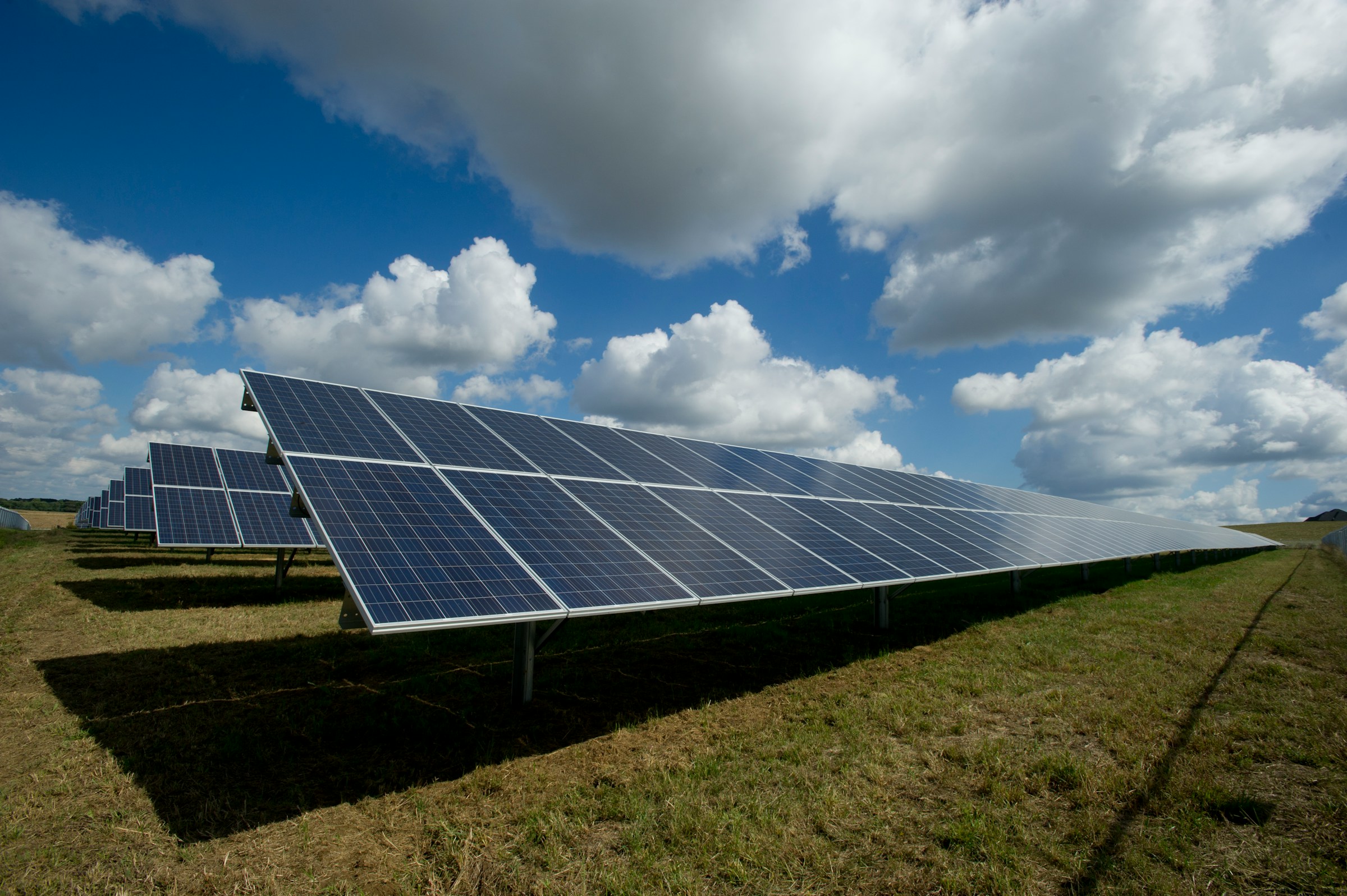
Ameresco Sunel Energy has secured an engineering, procurement, and construction contract for a 58MWp solar project at Iratoșu in Romania’s Arad County.
Developed and owned by TDI Renewables, the ground-mounted photovoltaic plant will export up to 48MWac and will remain under Ameresco Sunel’s operation and maintenance programme following commissioning. The difference between its 58MWp direct-current capacity and 48MW alternating-current output reflects a deliberate DC-to-AC ratio intended to maintain stronger inverter loading across a wider range of irradiance conditions.
The electrical package includes a new 33kV/110kV substation and underground cables linking the generating site with the wider network. Ameresco Sunel will manage design, procurement, construction, commissioning, and subsequent operational support, keeping the grid interface and generation plant within the same overall delivery structure.
Although module, inverter, transformer, and switchgear suppliers have not been identified, the project is expected to avoid approximately 53,920 tonnes of carbon dioxide emissions each year. A construction timetable and target energisation date have also yet to be published.
Iratoșu extends Ameresco Sunel’s Romanian workload beyond a previously announced group of photovoltaic projects totalling 466MWp in the south-west of the country. The latest contract moves the joint venture into western Romania, where renewable development is increasing alongside the need for stronger regional transmission and distribution infrastructure.
Connection works shape the construction programme
As utility-scale solar plants become larger, their electrical scope extends far beyond module installation and inverter commissioning. Substation civil works, transformers, medium-voltage collection systems, protection, telecommunications, metering, and grid-compliance testing increasingly determine whether a project reaches commercial operation on schedule.
Solar modules and inverter stations can be procured using comparatively standardised designs, but each point of connection presents different network conditions. Fault levels, reactive-power requirements, voltage limits, harmonic performance, operational communications, and export restrictions must therefore be incorporated into detailed engineering rather than treated as late-stage compliance work.
The 33kV collector network will aggregate output from the inverter stations before voltage is raised to 110kV for export. Protection settings must distinguish between faults within the generating site, the substation, and the external network, while the plant controller will need to manage active power, reactive power, voltage, and any export limits imposed by the network operator.
Projects elsewhere in Europe are adopting similarly substantial connection packages. A recent 132kV package for the Longpasture solar development incorporated a new substation and associated cable works, reflecting the growing proportion of project value tied to high-voltage infrastructure rather than the generating equipment alone.
Romania’s renewable expansion is placing additional demands on both transmission and distribution operators, particularly where several projects seek capacity within the same area. A consented solar plant may still require reinforcement, revised protection schemes, or staged export arrangements before its full output can be accommodated.
Including the dedicated substation within the EPC contract can reduce some interface risk because responsibility for the generation and connection packages remains under one delivery organisation. Even so, energisation will depend on coordination with the relevant network companies, approved commissioning procedures, communications testing, and completion of all compliance studies.
Long-term operation and maintenance arrangements can preserve continuity between design choices and operating practice. Decisions involving cable routes, switchgear access, spare equipment, inverter grouping, transformer monitoring, and control-system architecture will influence maintenance cost and outage duration throughout the plant’s operating life.
Romania’s development pipeline is advancing alongside projects across Central and Eastern Europe, where solar, wind, storage, and network reinforcement are competing for equipment and engineering capacity. The wider European renewable and battery pipeline is increasingly constrained by the rate at which projects can secure network access and move from development status into construction.
For Iratoșu, completion of the 110kV infrastructure will establish the practical route to first export. Successful delivery will require the substation, protection, metering, control, and underground cable systems to be commissioned as an integrated electrical installation rather than as separate packages joined at the end of construction.