IN Brief:
- SANY International acquired Spark Terminal SRL, developer of a proposed 153MW standalone battery installation near Borzești.
- EY-Parthenon Romania provided financial and tax due diligence to the buyer, with its involvement confirmed on 21 October.
- The project's battery energy capacity, current grid connection status and construction programme have not been confirmed.
EY-Parthenon Romania has confirmed its financial and tax due diligence role in SANY International’s acquisition of a Romanian battery storage development company, providing further detail on the transaction involving a proposed 153MW installation near Borzești.
The transaction transferred full ownership of Spark Terminal SRL from RNV Infrastructure SRL, part of the Renovatio Group, to SANY International (Singapore) Industrial Co. Pte. Ltd. Spark Terminal is developing a standalone battery energy storage system in Bacău County, in northeastern Romania.
The acquisition was originally disclosed on 21 September 2026, when Clifford Chance Badea confirmed its advisory work for the seller. EY-Parthenon’s statement on 21 October identifies the financial and tax due diligence undertaken for SANY, establishing the roles of advisers on both sides of the completed transaction.
Neither the purchase price nor the proposed construction budget has been disclosed. The acquisition concerns ownership of the project development company, rather than a completed battery installation or an operational electricity storage asset.
Financial due diligence examines the information supporting a transaction, including the financial position, liabilities, commitments and assumptions associated with the acquired business. Tax due diligence considers the relevant tax position and potential exposures. In an infrastructure acquisition, this work helps the buyer assess the financial and contractual basis of the investment before assuming ownership.
The development company’s principal asset is the proposed battery project, whose reported rating is 153MW. That figure describes intended electrical power capacity rather than energy storage capacity. The project’s megawatt-hour rating, which would establish the quantity of energy the batteries could hold, has not been confirmed.
Without an energy capacity figure, the installation’s discharge duration cannot be established. A 153MW battery operating at that output for two hours would need approximately 306MWh of usable stored energy, while a four-hour configuration would require approximately 612MWh. These calculations illustrate the relationship between power and energy; neither describes a confirmed Borzești specification.
The installation is described as standalone, meaning it is being developed as an electricity storage facility rather than as a battery dedicated to an individual solar or wind farm. Its operating arrangements would therefore depend on its own grid connection permissions, electrical equipment and participation in applicable electricity markets.
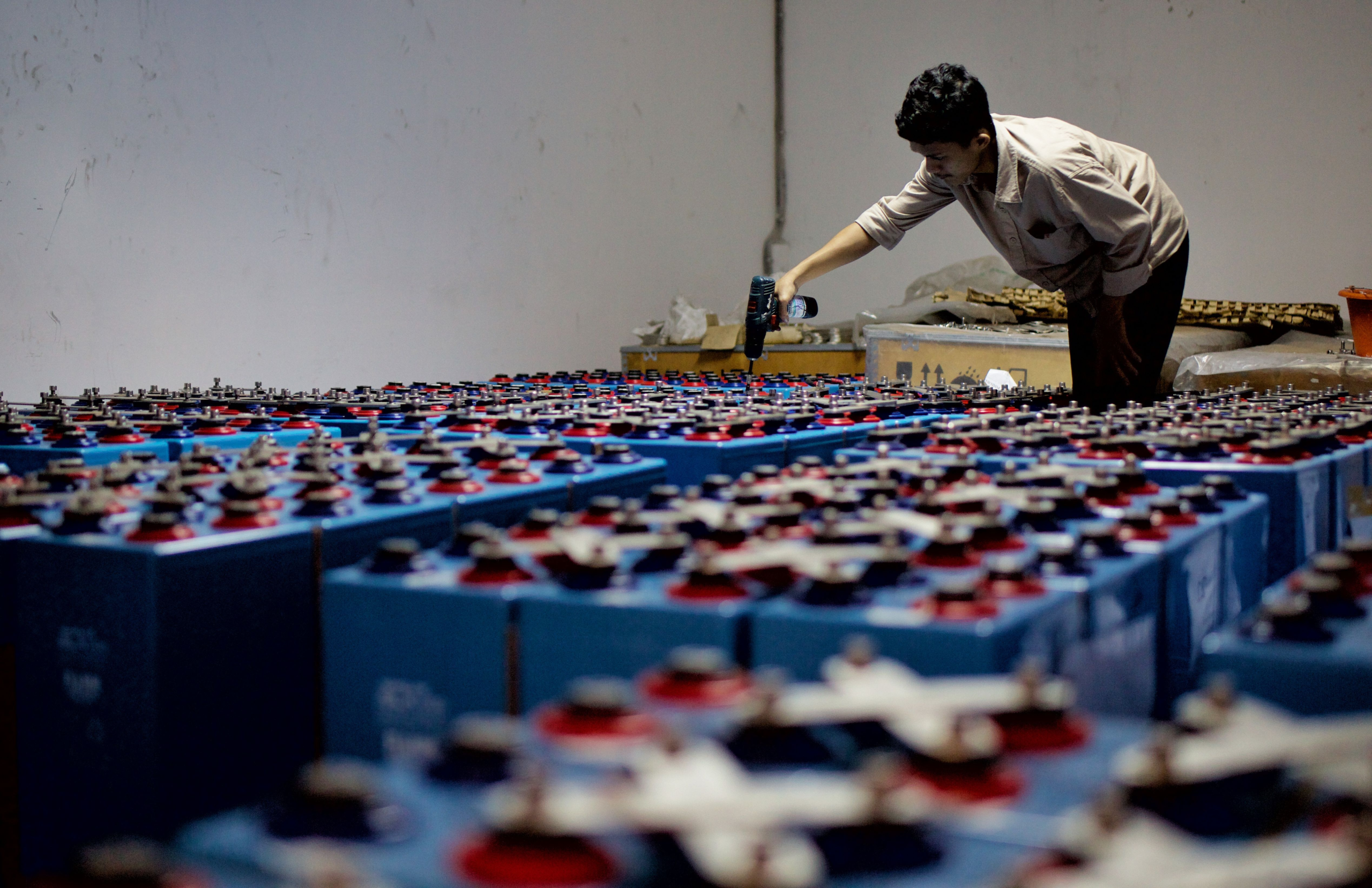
During charging, a battery installation absorbs electricity from the network and converts it into stored electrochemical energy. During discharge, that energy is converted back into electrical power. The process requires battery modules, DC electrical circuits, power conversion equipment and controls capable of coordinating operation within the authorised limits.
Battery management systems monitor cell voltage, temperature and state of charge, helping to prevent operation outside the equipment’s permitted range. Site controllers coordinate the power converters and respond to charging or discharging instructions, while protective equipment isolates faults within the installation or at its network interface.
Connection to Romania’s electricity system would require suitable transformers, switchgear, metering and protection arrangements. The project’s connection agreement would determine the maximum import and export capability and the technical conditions under which electricity could be exchanged with the network.
Earlier Romanian reporting indicated that Spark Terminal had not secured a technical grid connection approval at the time of the September acquisition. The October due diligence confirmation does not establish whether that position has subsequently changed, so the current approval status remains unverified.
Grid connection represents an important development milestone for a battery of the proposed capacity. The network operator must assess whether the relevant infrastructure can accommodate charging demand and discharge output, including the effects on voltage, fault levels, protection coordination and other operating requirements.
Where reinforcement is required, the scope and timing of network works can influence construction sequencing and investment costs. The eventual connection arrangements also affect which electrical services the completed battery might provide, although no specific commercial dispatch or ancillary service contracts have been disclosed for Borzești.
Battery systems can support different operating duties depending on their design and market access. Short-duration power adjustments, energy shifting and other balancing activities place different demands on power ratings, energy capacity, cycling and control systems. The equipment configuration selected for Borzești will determine which functions can be delivered within the applicable network requirements.
SANY’s acquisition adds another Romanian energy development to its wider renewable infrastructure interests. The group has also been associated with a separate project at Dobrești in Dolj County, involving approximately 95MWp of solar generation and 218MWh of battery storage. That project is distinct from Spark Terminal and does not establish the technology or energy capacity planned for Borzești.
The September transaction disclosure identified Renovatio as the seller through RNV Infrastructure. Renovatio’s activities cover renewable energy development and other electricity-related businesses in Romania, while the completed sale transfers the proposed Borzești storage project to SANY’s investment portfolio.
EY-Parthenon’s disclosed work was coordinated by specialist teams covering financial and tax due diligence. The assignment provides a clearer account of how the acquisition was examined, but it does not verify that the underlying battery project has reached construction readiness or secured financing for its full implementation.
Further technical and commercial decisions will be required before the proposed 153MW capacity can enter service. These include confirmation of the network connection position, selection of the battery and power conversion equipment, completion of the relevant permissions, construction arrangements and eventual commissioning.
With ownership established, subsequent project disclosures will determine the development’s delivery timetable and final electrical configuration. No confirmed construction start or operational date has been identified for the Borzești installation.