IN Brief:
- Seven international banks are providing €260 million in debt finance.
- Albatross will provide 350MW of power capacity and 1,400MWh of energy storage.
- Construction is scheduled to begin in early 2027, with operation targeted for early 2029.
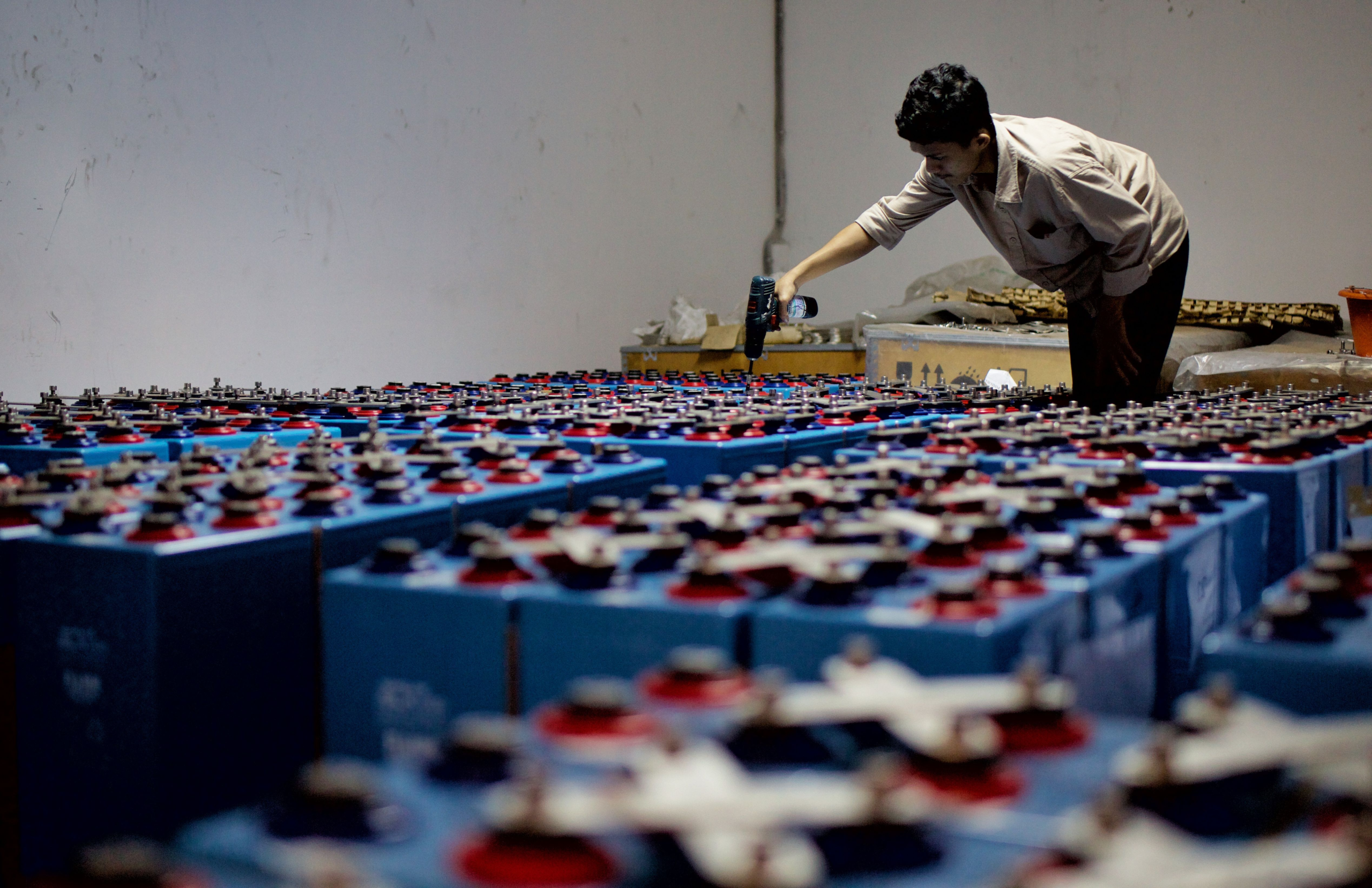
GIGA Storage has completed a €260 million debt financing agreement for its Albatross battery energy storage development in Germany, securing funding ahead of the planned start of construction in early 2027.
The project, located near Neuenkirchen in Lower Saxony, is designed for a power output of 350MW and an energy storage capacity of 1,400MWh. Financial close was achieved on 23 October 2026, with the company confirming the transaction three days later. The latest construction programme anticipates commercial operation in early 2029.
Seven international banks are participating in the financing: ABN AMRO, Hamburg Commercial Bank, ING, Rabobank, Siemens Bank through Siemens Financial Services, SMBC and Société Générale. ING also acted as financial adviser, with Clifford Chance advising GIGA Storage and White & Case representing the lending consortium.
Albatross is GIGA Storage’s first large-scale battery project in Germany. The developer has completed key requirements covering permits, land agreements and supplier contracts, allowing the project to progress towards construction. CATL has been appointed to undertake engineering, construction and maintenance, working with European subcontractors.
The facility will connect directly to the transmission network operated by Amprion through the adjacent 380kV Merzen substation. The grid connection agreement was signed on 14 October, establishing a contractual basis for the battery to exchange electricity with the high-voltage network.
The subsequent financial close provides a separate development milestone. A grid connection agreement defines the basis on which a facility may connect and operate, subject to its terms and technical requirements. Financing establishes the funding needed to construct the asset, procure equipment and complete the work required before electricity can be imported or exported.
Albatross’s 350MW rating specifies the planned maximum power transfer capability, while its 1,400MWh energy capacity determines the quantity of electricity the battery is designed to store. These figures describe different characteristics of the installation and should not be treated as interchangeable measures of generating capability.
Dividing the energy capacity by rated power gives a nominal duration of four hours at full discharge. The actual amount of usable energy will depend on the battery’s permitted state-of-charge range, conversion losses, temperature and other operating conditions. The calculation therefore describes the intended storage configuration rather than a guaranteed delivery of 350MW for exactly four hours under every operating circumstance.
A battery of this size can absorb electricity when charging is permitted and release stored energy later. The operating strategy may respond to electricity prices, generation conditions and system balancing requirements, although the developer has not disclosed the detailed revenue contracts or network services Albatross will provide.
Charging and discharging require the battery’s electrochemical equipment to exchange electricity with the alternating current transmission system. Battery cells operate using direct current, making power conversion systems necessary to control the direction and rate of electrical energy transfer.
The power conversion equipment must also interact with transformers, switchgear and protection systems at the network interface. Connection at 380kV places significant requirements on the coordination of protection, voltage control and the behaviour of the plant during disturbances affecting the wider electricity system.
Battery management systems provide a separate layer of equipment protection, monitoring cell voltages, temperature and state of charge. Plant controllers coordinate the operation of multiple battery units and power converters while maintaining the facility within its authorised charging and discharging limits.
The precise equipment arrangement at Albatross will determine how those functions are distributed across the site. Its design must also accommodate high-voltage infrastructure, internal electrical circuits, communications systems and the civil works needed to support large numbers of battery units.
Commissioning will require verification of the installed electrical equipment and the interaction between the battery and Amprion’s network. Functional testing must establish that controls and protection devices respond appropriately, including the behaviour of the installation during changes in charging demand, discharge output and network operating conditions.
The facility’s intended operating duration gives it the potential to shift electricity across longer periods than systems designed principally for very short-duration responses. That distinction affects equipment utilisation and charging requirements, because a battery delivering large amounts of energy over several hours needs sufficient time and available network capacity to replenish its stored electricity.
Germany’s electricity system increasingly combines variable renewable generation with industrial demand and electricity imports and exports across neighbouring networks. Battery storage can provide an adjustable electrical resource within that system, but its contribution to resolving network constraints depends on where it connects and how its operation is coordinated with the network operator.
The Merzen connection gives Albatross access to the transmission system rather than a lower-voltage distribution connection. Its location and import-export capability are therefore part of the project’s technical and commercial design, although connection at transmission voltage does not automatically qualify the facility for every balancing or stability service.
Construction is scheduled to begin in early 2027, with the completed facility targeted to enter operation in early 2029. The October grid connection announcement had referred to a 2028 commissioning objective, but the newer financing statement provides the current project timetable. That distinction must be maintained when reporting subsequent delivery milestones.
GIGA Storage is also developing the 300MW Leopard project in the Netherlands and the 700MW Green Turtle project in Belgium. Together with Albatross, these projects form a portfolio of approximately 1.4GW of planned power capacity and 5.6GWh of storage, with individual installations progressing through different development and construction stages.
The €260 million financing package establishes the funding position for Albatross rather than confirming that its electrical equipment has been installed. Equipment delivery, construction of the substation interface and commissioning remain ahead, with the first operational contribution to the German transmission network currently expected in 2029.