IN Brief:
- OMV has received the first electrolyser components for its 140MW renewable hydrogen plant at Bruck an der Leitha.
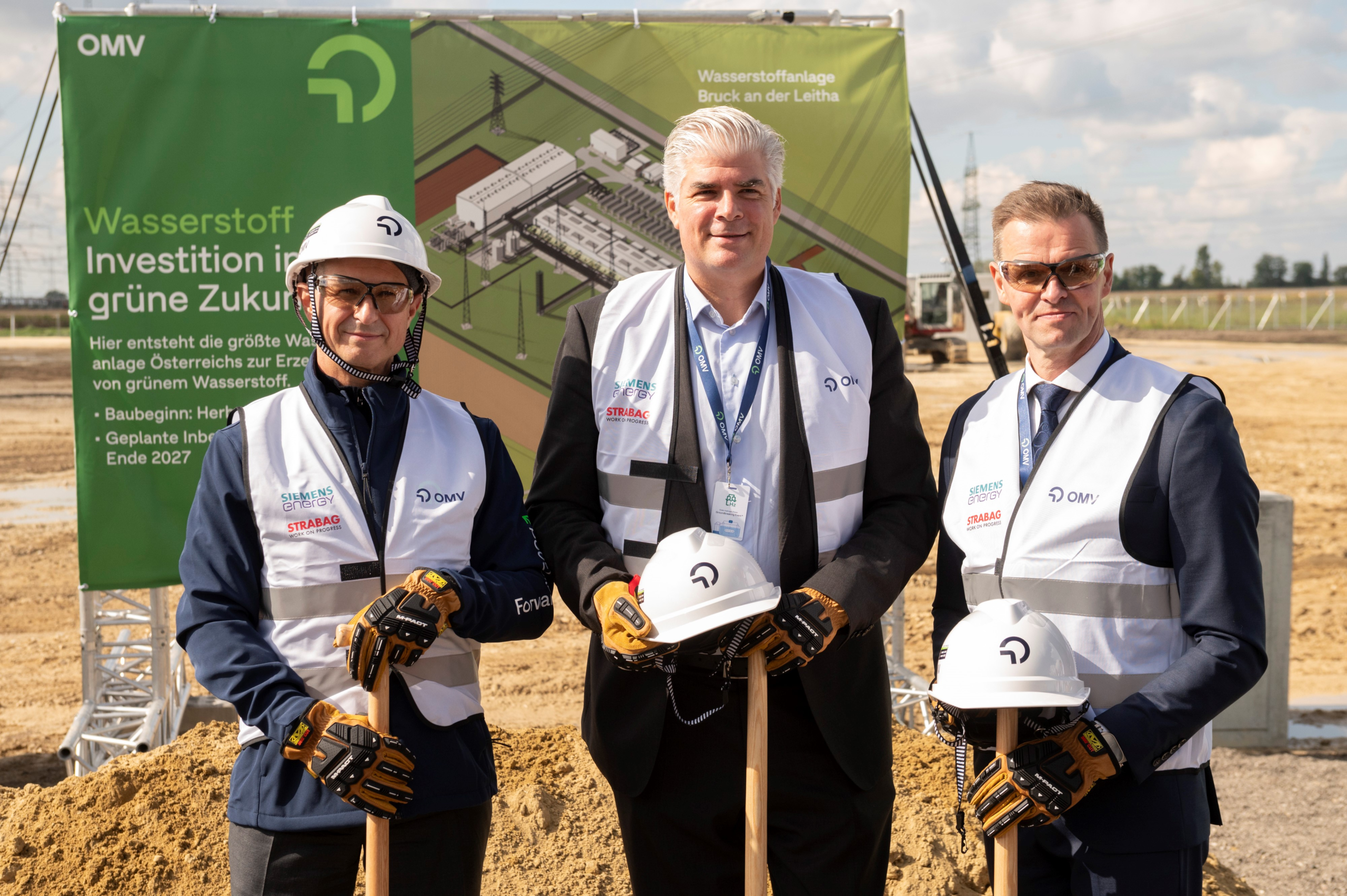
- Siemens Energy is supplying electrolysis and electrical equipment, while STRABAG is responsible for civil construction.
- The €600m development targets annual hydrogen production of up to 23,000 tonnes, with commissioning planned for the fourth quarter of 2027.
OMV has received the first electrolyser components for its 140MW renewable hydrogen plant at Bruck an der Leitha in Lower Austria, marking the beginning of core technology installation at a facility scheduled to enter operation towards the end of 2027.
The delivery follows construction work that began in September 2025 and moves the project further towards the integration of its electrical and process engineering systems. Siemens Energy is responsible for technical plant engineering and major equipment supply, while STRABAG is undertaking the civil construction programme.
The plant is designed to produce up to 23,000 tonnes of renewable hydrogen annually, which will be transported to OMV’s Schwechat refinery through a dedicated pipeline approximately 22 kilometres long.
OMV intends to use hydrogen produced from renewable electricity in refinery operations that currently depend partly on hydrogen derived from fossil fuels. The company estimates that the new facility could reduce associated carbon dioxide emissions by up to 150,000 tonnes annually when operating at its intended utilisation level.
The first equipment delivery follows a substantial financing programme for the €600 million development. In July, OMV secured a €450 million loan from the European Investment Bank, while the project also received €123 million in Austrian hydrogen support.
The Austrian contribution is a public funding award rather than an additional commercial bank loan. These are separate financing arrangements and should not be added together as though they represent two equivalent debt facilities.
Construction is proceeding under OMV’s ownership following the withdrawal of Masdar from a previously proposed joint venture. The companies had agreed a structure under which Masdar would acquire 49% of the project, but the partnership did not proceed to completion.
OMV has stated that the withdrawal will not affect the installation’s planned capacity or construction schedule. That position preserves the previously announced target for starting operations during the fourth quarter of 2027, although the remaining delivery and commissioning work has not yet been completed.
The plant will employ proton exchange membrane electrolysis, commonly known as PEM technology. Electrolysers use electricity to separate water into hydrogen and oxygen, with an electrochemical membrane and associated electrodes enabling the reaction inside individual cells.
Multiple cells are assembled into stacks to achieve the required production capacity. Their output depends on the electrical current supplied, operating temperature, pressure and the condition of the components.
The 140MW rating refers to the proposed electrolysis installation’s electrical input capacity. It is not the electrical generating capacity of the facility, because the plant consumes electricity to manufacture hydrogen.
Renewable power is expected to come from sources including wind, solar and hydropower. The environmental characteristics of the resulting hydrogen will depend on the applicable renewable electricity sourcing arrangements and the requirements governing certification.
Siemens Energy’s scope includes the electrolysis equipment and associated electrical systems, such as transformers, rectifiers and compressors. These components perform different functions in converting electricity into hydrogen and preparing the product for transport.
Transformers adapt the incoming electrical supply to the voltage requirements of the conversion equipment. Rectifiers then provide the controlled direct current required by the electrolysis stacks.
The equipment must accommodate variations in electrical demand while maintaining operating conditions suitable for the electrochemical process. Electrical protection, isolation and control arrangements also need to coordinate the power supply with the plant’s process systems.
PEM electrolysers can respond to changes in electrical input, although the operating flexibility of a complete industrial installation is constrained by supporting equipment, process requirements and manufacturer specifications.
Variations in renewable generation therefore cannot be assumed to translate directly into unrestricted variations in hydrogen output. The actual operating strategy will depend on electricity procurement, equipment capabilities and the refinery’s hydrogen requirements.
Water treatment is another important part of the process. Electrolysers require water of a suitable quality for the electrochemical equipment, while thermal management systems remove heat generated during operation.
OMV estimates that the plant will require approximately 320,000 cubic metres of water annually. The company expects roughly half of that quantity to be returned to the environment, where it could potentially be used for irrigation.
Those figures describe the proposed plant’s water arrangements rather than measured consumption from a facility already in commercial operation. Actual requirements will depend on utilisation and operating conditions.
Hydrogen leaving the electrolysis equipment must be handled through downstream processing and compression systems. Its pressure and quality need to meet the requirements of the transport infrastructure and the refinery processes receiving it.
A dedicated 22km pipeline is planned to connect Bruck an der Leitha with Schwechat. The connection will enable hydrogen produced at the new site to enter the refinery’s industrial supply system without relying on road transport for the planned continuous volumes.
Hydrogen is already used in refining processes, including the removal of sulphur from petroleum streams and other chemical conversion operations. Changing the method used to produce that hydrogen can reduce associated emissions while retaining its role as an industrial feedstock.
OMV’s projected annual emissions reduction of up to 150,000 tonnes should therefore be understood as an estimate based on hydrogen substitution and future operation. It is not a verified reduction achieved by the new facility.
The development builds on the company’s experience with a smaller 10MW PEM electrolyser at Schwechat, which began production in 2025. That installation has a planned annual production capacity of up to 1,500 tonnes of renewable hydrogen.
The two facilities differ considerably in scale. The new plant requires a substantially larger electricity supply, hydrogen processing system and connection to the refinery, alongside more extensive construction and commissioning activities.
Completion of civil works will be followed by further equipment installation, electrical integration and testing. The plant’s power conversion systems, electrolysis stacks, cooling systems, water treatment equipment and hydrogen handling infrastructure must operate together before commercial production can begin.
The October component delivery marks progress within that sequence, but does not establish that the electrolysers are energised or producing hydrogen. The next milestones remain equipment installation, system integration and commissioning ahead of the planned start of operation in late 2027.