IN Brief:
- Germany added approximately 8.2GWh of battery energy capacity during January–September 2026, an increase of 91% year on year.
- Large storage installations contributed around 3.8GWh, with commissioned projects increasing from 63 to 220.
- BSW-Solar has proposed 15 regulatory reforms covering battery connections, substation installations and congestion management.
Germany added approximately 8.2GWh of battery storage energy capacity during the first nine months of 2026, an increase of 91% against the equivalent period last year, according to an assessment published by the German Solar Industry Association (BSW-Solar).
The analysis draws on Germany’s Federal Network Agency registration data and identifies rapid expansion in large battery installations as the principal contributor to the increase. BSW-Solar has also published 15 proposed reforms covering grid connections, storage operation and the treatment of batteries within electricity network management.
The figures describe newly commissioned storage capacity between January and September rather than the total energy capacity of Germany’s operational battery fleet. Additional installations may also be added retrospectively as registration records are updated.
Approximately 493,000 new battery installations covering the first three quarters had been registered by 12 October. Allowing for expected late registrations, BSW-Solar estimates that the final total for the period could reach around 534,000.
The distinction between registered installations and the estimated final count is important because the number of systems recorded immediately after a reporting period may understate actual commissioning activity.
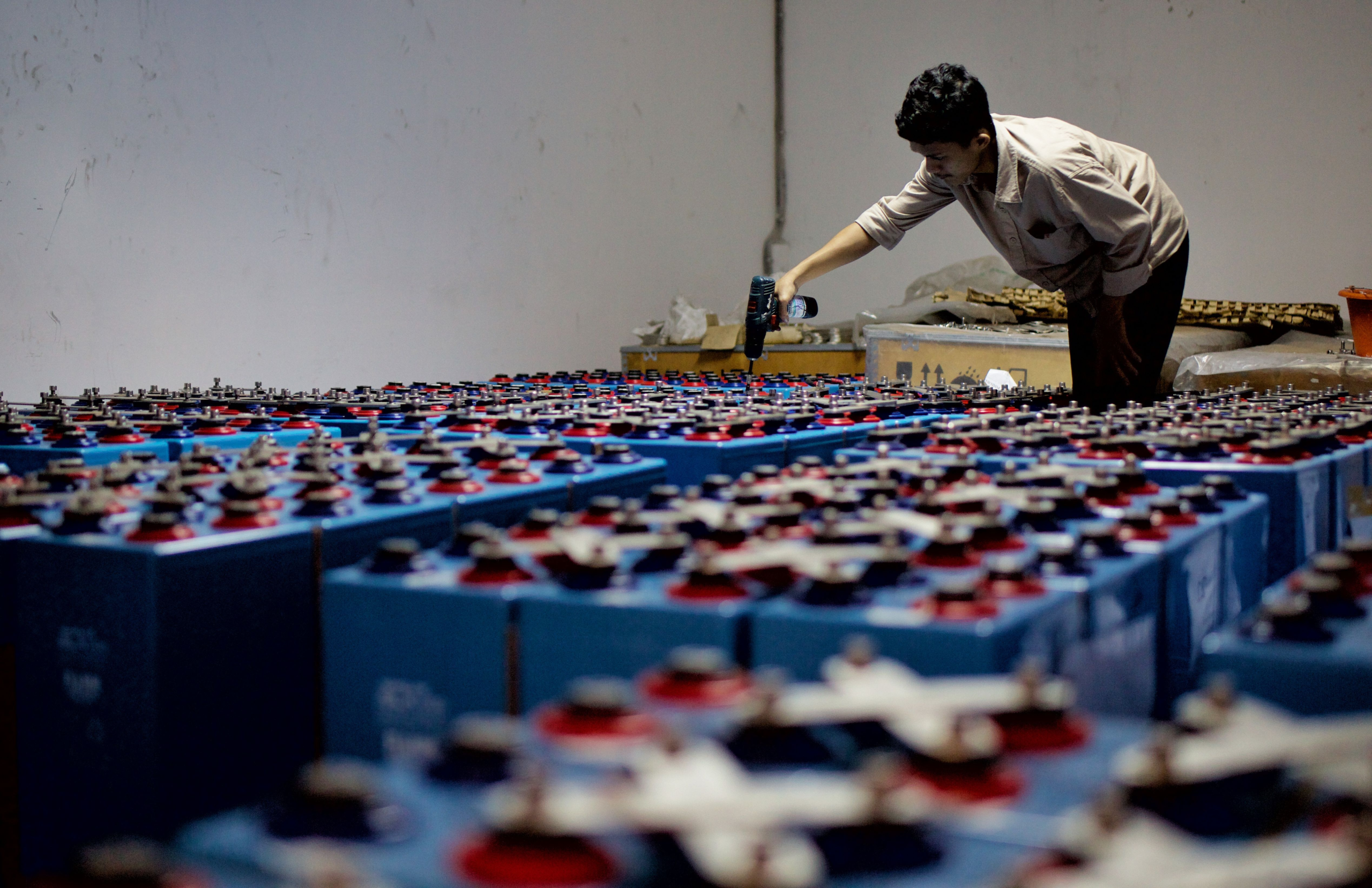
Large batteries experienced particularly strong growth. Installations with power ratings exceeding 1MW contributed approximately 3.8GWh of new energy capacity during the nine months, compared with around 0.9GWh in the corresponding period of 2025.
The number of newly commissioned installations in this category increased from 63 to 220. BSW-Solar estimates that new energy capacity in the large battery segment rose by approximately 350%, although the rounded capacity figures do not support an exact recalculation of that percentage.
Large systems accounted for roughly 46% of the reported 8.2GWh total. Their share demonstrates how the energy capacity of newly installed equipment can increase substantially without a comparable rise in the overall number of batteries.
Household storage remained a major contributor, adding approximately 3.2GWh during the period, up 20% year on year. Commercial installations contributed around 0.7GWh, representing growth of 67%, while the smallest storage systems added approximately 0.5GWh.
The four reported capacity categories collectively account for the approximately 8.2GWh total, subject to rounding. They also reveal different rates of expansion between domestic installations, commercial systems and the larger batteries intended for broader electricity system applications.
Measuring storage development in gigawatt-hours describes the amount of energy the installed batteries are designed to hold. It does not establish the maximum power those installations can supply, which is measured separately in megawatts or gigawatts.
An installation rated at 100MW/200MWh, for example, has a nominal discharge duration of two hours at its rated power. A different battery with the same energy capacity but a lower power rating could deliver electricity over a longer period.
Actual discharge duration is influenced by usable energy capacity, operating limits and electrical conversion losses. Battery availability, charging opportunities and dispatch instructions also affect how much flexibility can be supplied during a particular operating period.
The growing share of large installations is particularly relevant to electricity systems with increasing wind and solar generation. Batteries can absorb electricity during selected periods and discharge it later, changing the timing of energy exchanged with the network.
Their ability to provide that service depends on the state of charge and the capacity available through their grid connections. A battery that has already reached its permitted maximum charge cannot absorb additional generation until it has discharged sufficiently.
Similarly, the ability to discharge during higher demand depends on the amount of energy available and whether the network can accommodate the resulting power flow.
BSW-Solar expects Germany to add substantially more than 10GWh of battery capacity over the full year. That forecast requires additional commissioning activity in the final quarter and remains separate from the 8.2GWh already recorded for January to September.
The association argues that deployment must accelerate further to accommodate renewable generation efficiently. It cites research by the Fraunhofer Institute for Energy Economics and Energy System Technology indicating that annual additions of flexibility may need to reach four to five times the amount expected for 2026 by the end of the decade.
That estimate reflects the assumptions used in the research and should not be interpreted as an enacted government target or a confirmed requirement for one particular battery technology.
BSW-Solar’s 15 reform proposals are intended to remove barriers to investment and improve the use of existing electricity networks. Three measures receive particular emphasis: flexible grid connections, battery procurement at substations and changes to congestion management.
The first proposal calls for clearer rights to fair and flexible connection agreements, allowing batteries to operate alongside solar and wind generation or at electricity consumption sites.
Such installations can coordinate storage with local generation or demand. A battery connected alongside a solar farm may charge when photovoltaic output is available and export electricity later, provided its controls and connection agreement permit that operating pattern.
The electrical effect depends on the permitted import and export capacity at the connection point. Co-locating storage does not automatically remove network constraints, although suitable operating limits may allow generating and storage equipment to share infrastructure more effectively.
BSW-Solar also proposes requiring distribution network operators to tender for batteries specifically intended to support network operation at substations.
Storage connected at an appropriate location can potentially alter power flows through equipment approaching its operating limits. Whether this reduces reinforcement requirements depends on the duration and timing of the constraint, the battery’s available capacity and the reliability of its dispatch arrangements.
A battery capable of providing several megawatts for two hours cannot necessarily resolve a restriction lasting throughout an extended period of high demand or generation. Network assessments must therefore distinguish between temporary flexibility requirements and infrastructure limitations that require physical reinforcement.
The third proposal concerns redispatch, the interventions used to manage electricity network congestion by adjusting generation or other controllable resources.
BSW-Solar wants arrangements to consider the net power flow at the grid connection point rather than treating each generating installation independently. Under appropriate conditions, a battery could absorb locally generated electricity during a constraint instead of requiring equivalent renewable generation to be curtailed.
This approach depends on control systems coordinating generation, storage and connection limits. It also requires operating arrangements that recognise when charging genuinely reduces the relevant network flow.
The association has linked its reform proposals to potential savings in electricity system expenditure. It cites Fraunhofer modelling suggesting that a substantially larger storage fleet could reduce costs by improving renewable electricity utilisation and the operation of existing networks.
Those figures represent modelled outcomes under defined assumptions, not savings already achieved by the battery installations commissioned in 2026.
BSW-Solar is calling for its proposals to be considered in forthcoming legislation affecting electricity networks and renewable generation. None of the 15 measures should be treated as implemented solely because the association has published its position.
The next registration update will establish how far German battery deployment progressed during the final quarter. BSW-Solar’s forecast of more than 10GWh for 2026 remains dependent on further installations and the completion of registration records, while its proposed changes to grid access and operation await legislative consideration.